

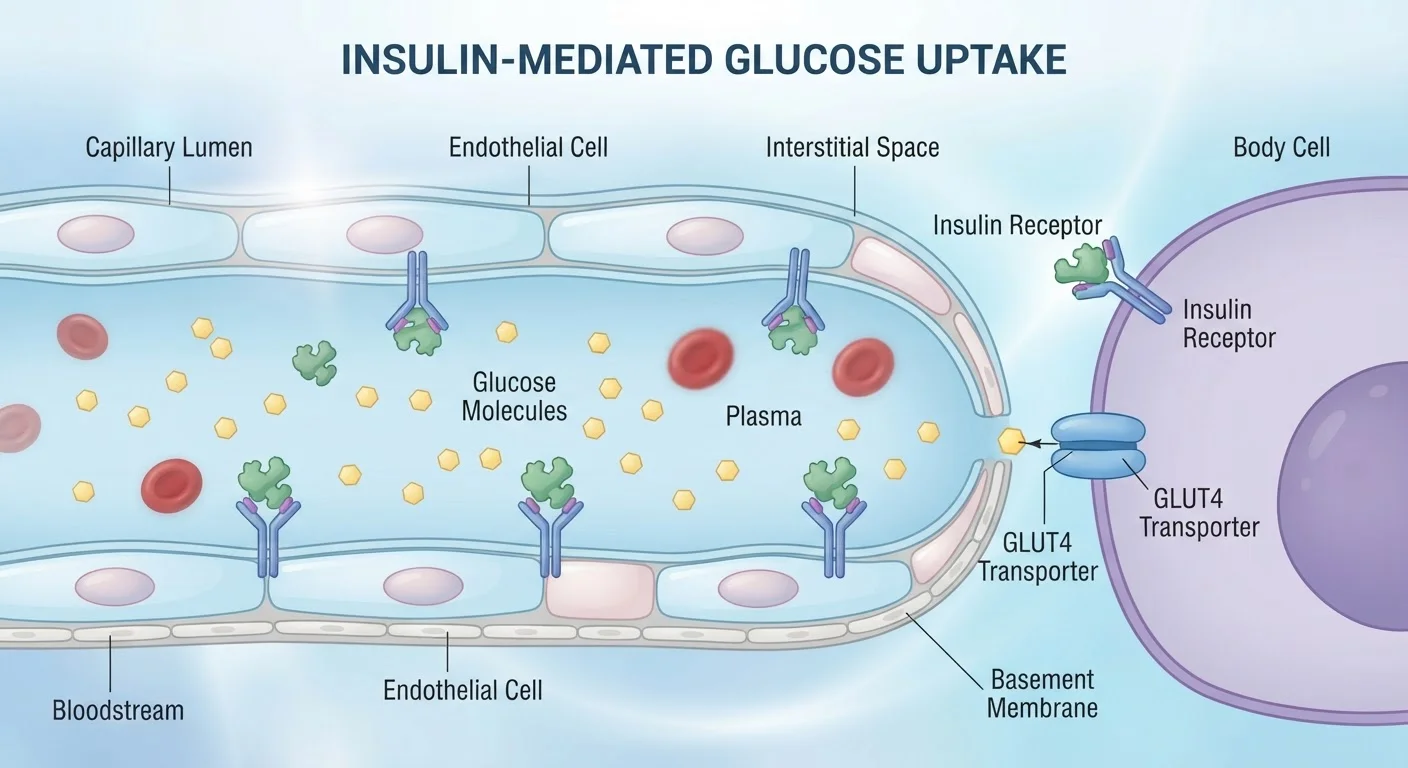
How Insulin Works — and Where the Process Breaks Down
When you eat carbohydrates, your digestive system breaks them down into glucose, which enters the bloodstream. In response, the pancreas releases insulin — a hormone whose job is to act like a key, unlocking cells so they can absorb glucose and use it for energy.
In type 2 diabetes, this system falters in two ways. First, cells in muscles, fat, and the liver develop insulin resistance — they stop responding normally to insulin's signal. Second, the pancreas initially compensates by producing more insulin, but over time its beta cells become exhausted and output declines. The result: glucose accumulates in the blood rather than entering cells where it's needed.
This isn't an overnight event. The process typically unfolds over many years, often beginning with a prediabetes stage where blood sugar is elevated but not yet in the diabetic range.
Know Your Risk Before Symptoms Appear
Because type 2 diabetes often causes no symptoms in early stages, regular blood sugar screening is recommended for adults over 35 or anyone with known risk factors such as excess weight, a sedentary lifestyle, or a family history of the condition. Talk to your healthcare provider about appropriate screening intervals for your situation.
Risk Factors: Who Is More Susceptible?
Type 2 diabetes has both modifiable and non-modifiable risk factors. Understanding them helps explain why some individuals develop the condition and others do not.
- Excess body weight — particularly visceral fat (fat stored around internal organs) — is one of the strongest modifiable risk factors. Fat tissue, especially in the abdomen, releases inflammatory signals that impair insulin signaling. Men are particularly susceptible to this mechanism; our article on abdominal fat and diabetes risk in men explains the metabolic mechanics in detail.
- Physical inactivity reduces the muscles' ability to use glucose efficiently, compounding resistance.
- Family history and genetics increase susceptibility — having a parent or sibling with type 2 diabetes meaningfully raises your own risk.
- Age — risk increases after 45, partly due to natural declines in muscle mass and physical activity levels.
- Ethnicity — African American, Hispanic, Native American, Asian American, and Pacific Islander populations face statistically higher risk, though the reasons are multifactorial.
38 million
Americans living with diabetes
According to the CDC's National Diabetes Statistics Report, approximately 38 million Americans have diabetes, with type 2 accounting for 90–95% of cases.
90–95%
Diabetes cases that are type 2
The CDC estimates that the vast majority of diagnosed diabetes in the United States is type 2, underscoring its status as the predominant form of the condition.
1 in 5
People with diabetes who are undiagnosed
The CDC estimates approximately 1 in 5 people with diabetes in the U.S. are unaware they have the condition, highlighting the importance of routine screening.
What Sustained High Blood Sugar Does to the Body
Chronically elevated blood glucose isn't merely a number — it causes cumulative damage to tissues and organs throughout the body.
Blood vessels: High glucose is toxic to the inner lining of blood vessels (endothelium). It promotes inflammation, stiffness, and the buildup of arterial plaques — sharply raising the risk of heart attack and stroke. People with type 2 diabetes face two to four times the cardiovascular risk of those without the condition, a connection explored in our piece on diabetes and heart disease.
Kidneys: The kidneys filter blood constantly; sustained high glucose strains this system, potentially leading to diabetic nephropathy and, in severe cases, kidney failure.
Nerves: High blood sugar damages small blood vessels that supply nerves, causing peripheral neuropathy — often experienced as tingling, numbness, or pain in the feet and hands.
Eyes: Damage to the tiny blood vessels of the retina can cause diabetic retinopathy, a leading cause of preventable vision loss in adults.
Understanding your blood sugar lab values is key to tracking this risk over time. Our plain-language guide to fasting glucose and HbA1c explains what those numbers mean and why clinicians monitor them closely.
Not All Complications Develop at the Same Rate
The risk and timeline of diabetes-related complications varies significantly between individuals, depending on how well blood sugar is controlled, genetic factors, and whether other conditions like high blood pressure are also present. Some people live for decades with well-managed type 2 diabetes and experience minimal complications, while others face greater challenges. This variability underscores why personalized care from a healthcare team matters.
Managing Type 2 Diabetes Day to Day
Type 2 diabetes is a long-term condition, but it is manageable. Clinical guidelines consistently emphasize that lifestyle factors — diet quality, physical activity, and weight management — remain foundational alongside any medical treatment a healthcare provider may recommend.
Older adults face additional considerations when managing blood sugar safely, including medication interactions and fall risk. Our senior's roadmap to living with type 2 diabetes addresses those specific challenges in detail.
Regular monitoring, consistent follow-up with a healthcare team, and understanding your individual numbers are all part of effective long-term management. If you have symptoms of high or low blood sugar, or have not yet been screened and carry risk factors, speak with a qualified healthcare professional.
This article is for general informational and educational purposes only and does not constitute medical advice. Always consult a qualified healthcare professional for diagnosis, treatment, or guidance specific to your health situation.
Frequently Asked Questions
Insulin resistance develops when cells in the muscles, liver, and fat tissue stop responding normally to insulin signals. Excess body fat — particularly around the abdomen — inflammation, and physical inactivity are key contributors. Genetic predisposition also plays a role, meaning some people are more susceptible than others.
Early symptoms can include increased thirst, frequent urination, unexplained fatigue, blurred vision, and slow-healing cuts or infections. However, many people with type 2 diabetes experience no noticeable symptoms in the early stages, which is why routine blood sugar screening is recommended for those with risk factors.
Some individuals achieve normal blood sugar levels through significant lifestyle changes such as weight loss, improved diet, and regular physical activity — a state sometimes called remission. However, this is not a cure; the underlying predisposition remains, and ongoing monitoring is essential. Always work with a healthcare provider to determine what goals are appropriate for your situation.
Diagnosis is typically made through blood tests measuring fasting glucose, a glucose tolerance test, or an HbA1c test, which reflects average blood sugar over roughly three months. See our <a href="/common-diseases/heart-and-diabetes/blood-sugar-numbers-decoded-fasting-glucose-hba1c-and-what-they-mean">guide to blood sugar numbers</a> for a plain-language explanation of these values.
No — they share elevated blood sugar as a common feature but differ significantly in cause, mechanism, and management. Type 1 is an autoimmune condition causing total insulin deficiency, while type 2 involves insulin resistance and gradual beta-cell decline. Learn more in our article <a href="/common-diseases/heart-and-diabetes/type-1-vs-type-2-diabetes-understanding-the-core-differences">comparing type 1 and type 2 diabetes</a>.
Chronically elevated blood sugar damages blood vessels and nerves throughout the body. This can lead to cardiovascular disease, kidney disease (diabetic nephropathy), vision loss (diabetic retinopathy), and peripheral neuropathy. Cardiovascular risk is particularly significant — see our article on <a href="/common-diseases/heart-and-diabetes/the-link-between-diabetes-and-heart-disease">the link between diabetes and heart disease</a>.
The content on this site is for informational purposes only and is not a substitute for professional advice. Always consult a qualified professional for guidance specific to your situation.