

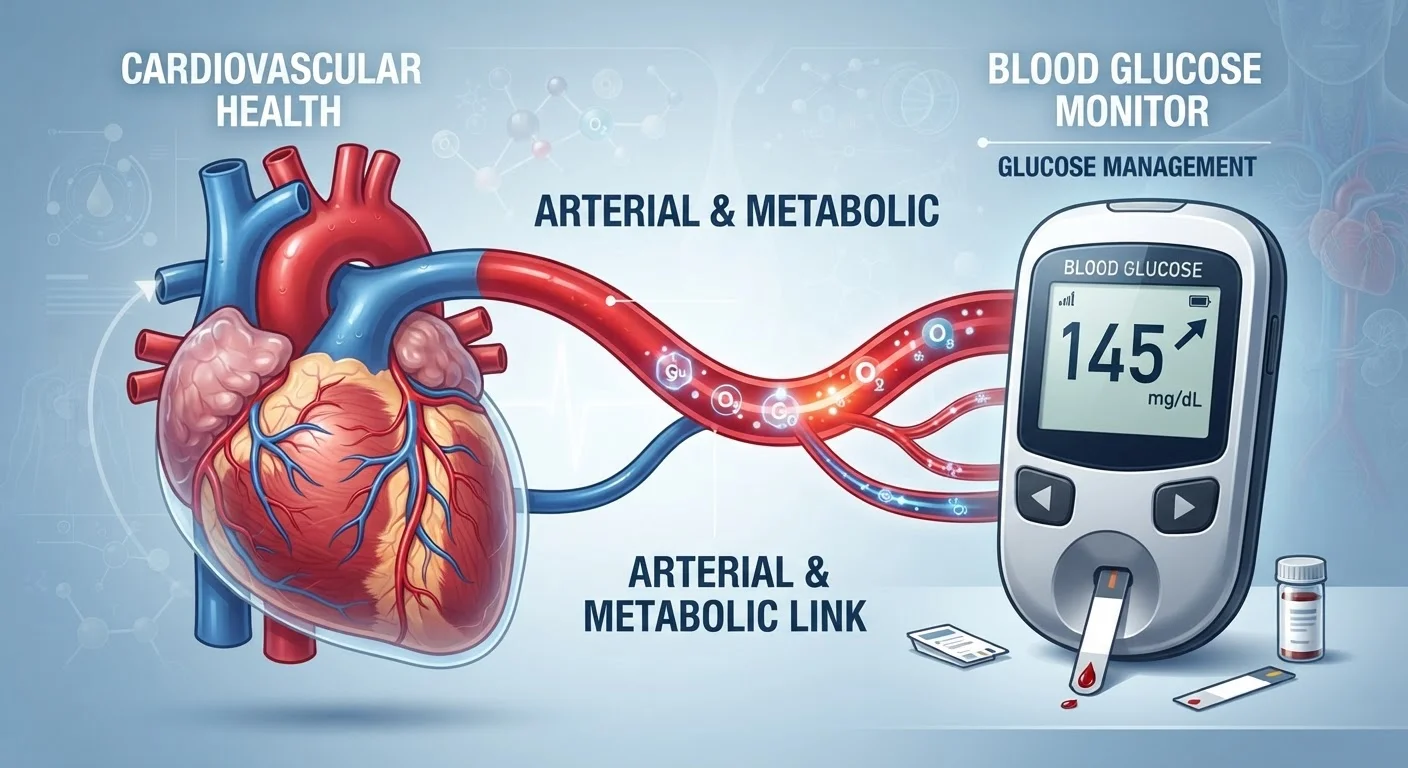
Why These Two Conditions Are Deeply Connected
Diabetes and heart disease are not merely conditions that happen to coexist frequently — they share overlapping biological roots. To understand why, it helps to consider what happens inside the body when blood sugar remains elevated over time. For a fuller picture, see our explainer on how type 2 diabetes develops inside the body.
When glucose circulates in excess, it chemically interacts with proteins in the arterial walls — a process called glycation. This stiffens and inflames vessel tissue, disrupting the smooth inner lining (the endothelium) that normally prevents clot formation and regulates blood flow. Damaged endothelium becomes a prime site for atherosclerosis — the gradual narrowing of arteries that underlies most heart attacks and strokes.
Beyond direct blood vessel damage, diabetes rarely travels alone. Insulin resistance — the hallmark of type 2 diabetes — is typically accompanied by elevated triglycerides, reduced HDL ("good") cholesterol, high blood pressure, and central obesity. This cluster of risk factors, often called metabolic syndrome, significantly multiplies cardiovascular risk beyond what any single factor would cause independently.
2–4×
Higher heart disease risk with type 2 diabetes
Established epidemiological data consistently shows adults with type 2 diabetes face two to four times the cardiovascular risk of those without the condition.
68%
Of diabetes-related deaths involve heart or vessel disease
According to American Heart Association data, cardiovascular disease accounts for approximately 68% of death certificates among people aged 65 or older with diabetes.
~50%
Of people with type 2 diabetes have metabolic syndrome
Research estimates that roughly half of individuals with type 2 diabetes also meet criteria for metabolic syndrome, compounding their cardiovascular risk.
The Role of Inflammation and Clotting
Chronic low-grade inflammation is a central mechanism linking diabetes to cardiovascular disease. Elevated blood sugar stimulates the production of inflammatory molecules, which accelerate the progression of arterial plaques and make existing plaques more likely to rupture — the immediate trigger of most heart attacks.
People with diabetes also tend to have altered clotting dynamics. Platelets — the blood cells responsible for clot formation — are often more reactive in diabetic conditions, raising the risk that a ruptured plaque will trigger a vessel-blocking clot rather than a manageable one.
“Cardiovascular disease and type 2 diabetes are so tightly linked that some researchers have proposed treating them as a single cardiometabolic condition rather than separate diseases. The shared pathophysiology — insulin resistance, inflammation, endothelial dysfunction — demands a unified treatment approach.”
— Dr. Mikhail Kosiborod, Cardiologist and cardiovascular outcomes researcher, Saint Luke's Mid America Heart Institute
This combination of accelerated plaque formation, heightened inflammation, and increased clotting tendency explains why adults with type 2 diabetes are estimated to be two to four times more likely to develop cardiovascular disease than those without the condition, according to established epidemiological data.
Silent Heart Disease: A Particular Concern
One aspect of this connection that warrants special attention is the phenomenon of "silent" cardiac events. Diabetic neuropathy — nerve damage resulting from prolonged high blood sugar — can impair the pain signals that normally warn a person of a heart attack. As a result, some individuals with diabetes experience a myocardial infarction (heart attack) without classic chest pain, making the event harder to recognize and respond to quickly.
Instead, symptoms may present as unusual fatigue, mild shortness of breath, nausea, or discomfort in the jaw, neck, or arm. Any of these symptoms should prompt immediate medical evaluation. Because of this risk, routine cardiac monitoring is particularly important for people managing diabetes — an area explored further in our guide to relevant health screenings.
Know the Atypical Warning Signs
If you have diabetes, do not wait for classic chest pain to seek care. Unexplained fatigue, shortness of breath, jaw or arm discomfort, or nausea can all be cardiac symptoms in people with diabetic neuropathy. When in doubt, contact your healthcare provider or seek emergency care promptly.
Managing Both Risks Together
The encouraging reality is that many of the same interventions that improve blood sugar control also benefit the heart. Physical activity improves insulin sensitivity and lowers blood pressure. Dietary patterns that moderate refined carbohydrates and saturated fat help both glycemic and lipid profiles — a topic examined in depth in our article on dietary patterns in cardiovascular and diabetes care.
Healthcare providers often focus on three interconnected targets in people with both conditions: blood glucose (tracked via HbA1c), blood pressure, and LDL cholesterol. Achieving reasonable control across all three has been shown in clinical research to substantially reduce the likelihood of heart attack, stroke, and cardiovascular death.
For those already navigating both diagnoses, coordinated care becomes essential. Our companion article on daily management when living with diabetes and heart disease offers practical guidance on how to approach that coordination. And to understand the full spectrum of cardiovascular conditions that may be relevant, see our comprehensive overview of cardiovascular disease.
This article is for general informational and educational purposes only and does not constitute medical advice. Always consult a qualified healthcare professional for guidance specific to your health situation, symptoms, or treatment decisions.
Frequently Asked Questions
Persistently high blood sugar damages the inner lining of blood vessels, making them more susceptible to plaque buildup and narrowing. Diabetes also tends to cluster with other risk factors — high blood pressure, elevated triglycerides, low HDL cholesterol, and excess abdominal weight — that further strain the heart.
While no outcome can be guaranteed, evidence consistently shows that managing blood glucose, blood pressure, and cholesterol reduces cardiovascular risk substantially. Lifestyle changes — including physical activity, dietary patterns, and not smoking — play a meaningful role alongside any medications a healthcare provider prescribes.
Diabetic neuropathy — nerve damage caused by chronic high blood sugar — can blunt pain signals, meaning some people experience a 'silent' heart attack without typical chest pain. Shortness of breath, unexplained fatigue, or jaw and arm discomfort may be the only signals. Always seek prompt medical attention for any unexplained cardiac-type symptoms.
Yes. People with type 1 diabetes also face elevated cardiovascular risk, particularly if blood sugar control has been poor over many years. Both types of diabetes involve chronic hyperglycemia that can damage blood vessels, though the mechanisms and timelines differ somewhat from type 2.
Regular monitoring typically includes blood pressure checks, lipid panels, kidney function tests, and periodic assessments of blood sugar control (such as HbA1c). A healthcare provider may also recommend an electrocardiogram or other cardiac assessments depending on individual risk. See a structured overview in our <a href="/common-diseases/heart-and-diabetes/annual-check-in-health-screenings-relevant-to-heart-and-diabetes-risk">annual screening guide</a>.
Evidence suggests that even modest weight loss — in the range of 5–10% of body weight — can improve blood sugar control, lower blood pressure, and improve cholesterol levels in people with type 2 diabetes. These changes collectively reduce the burden on the cardiovascular system, though individual results vary and should be pursued under medical guidance.
The content on this site is for informational purposes only and is not a substitute for professional advice. Always consult a qualified professional for guidance specific to your situation.