

Why Belly Fat Is Different From Other Fat
Not all body fat carries the same metabolic weight. Subcutaneous fat — the soft fat you can pinch under your skin — behaves relatively passively. Visceral fat, stored deeper in the abdominal cavity around the liver, pancreas, and intestines, is a different matter entirely.
Visceral fat acts almost like an endocrine organ. It releases fatty acids directly into the portal blood supply feeding the liver, which disrupts how the liver processes glucose and produces lipids. It also secretes inflammatory proteins that blunt the body's response to insulin — the hormone responsible for moving glucose from the bloodstream into cells.
This matters disproportionately for men. Testosterone, the primary male sex hormone, promotes abdominal fat deposition as levels shift through midlife. The result is that men tend to accumulate visceral fat earlier and in greater quantities than premenopausal women facing similar lifestyle factors. For context on how hormonal shifts affect fat distribution differently across sexes, see how hormones reshape fat distribution in midlife.
BMI Has Real Limitations for Men
BMI is calculated from height and weight alone and cannot account for fat distribution. Two men with identical BMIs can have vastly different amounts of visceral fat depending on muscle mass and where their fat is deposited. Clinicians increasingly use waist circumference or waist-to-height ratio alongside BMI to get a more complete metabolic picture.
The Mechanics of Insulin Resistance
Insulin resistance means cells throughout the body — particularly in muscle, fat, and liver tissue — no longer respond efficiently to insulin signals. The pancreas compensates by producing more insulin, but over time it cannot keep pace. Blood glucose levels creep upward, first into the prediabetes range, and eventually into Type 2 diabetes territory.
Visceral fat accelerates this process through two main pathways. First, the excess free fatty acids it releases impair insulin receptor function in muscle and liver cells. Second, the inflammatory cytokines it secretes interfere with the intracellular signaling cascade that insulin triggers.
~50%
Of U.S. adults with prediabetes are unaware of their status
According to the CDC, approximately 98 million American adults have prediabetes, and more than 80% do not know it — highlighting the silent nature of early blood sugar dysregulation.
2–3x
Greater visceral fat risk in men vs. premenopausal women
Research published in endocrinology literature consistently shows men accumulate visceral abdominal fat at significantly higher rates than age-matched premenopausal women.
40 in.
Waist circumference threshold for elevated metabolic risk in men
A waist measurement at or above 40 inches (102 cm) is used by major health bodies including the NIH as a clinical marker for increased cardiometabolic risk in men.
Critically, this metabolic deterioration can occur gradually and silently. Men often have no obvious symptoms until blood sugar has been elevated for years. This underscores why routine screening — not self-reported symptoms — is the primary detection tool.
Measuring What Actually Matters
Body mass index (BMI) is a useful population-level screening tool, but it has a significant blind spot: it cannot distinguish between muscle mass and fat, or between subcutaneous and visceral fat. A man with a normal BMI but a high waist circumference may carry significantly more metabolic risk than his weight alone suggests.
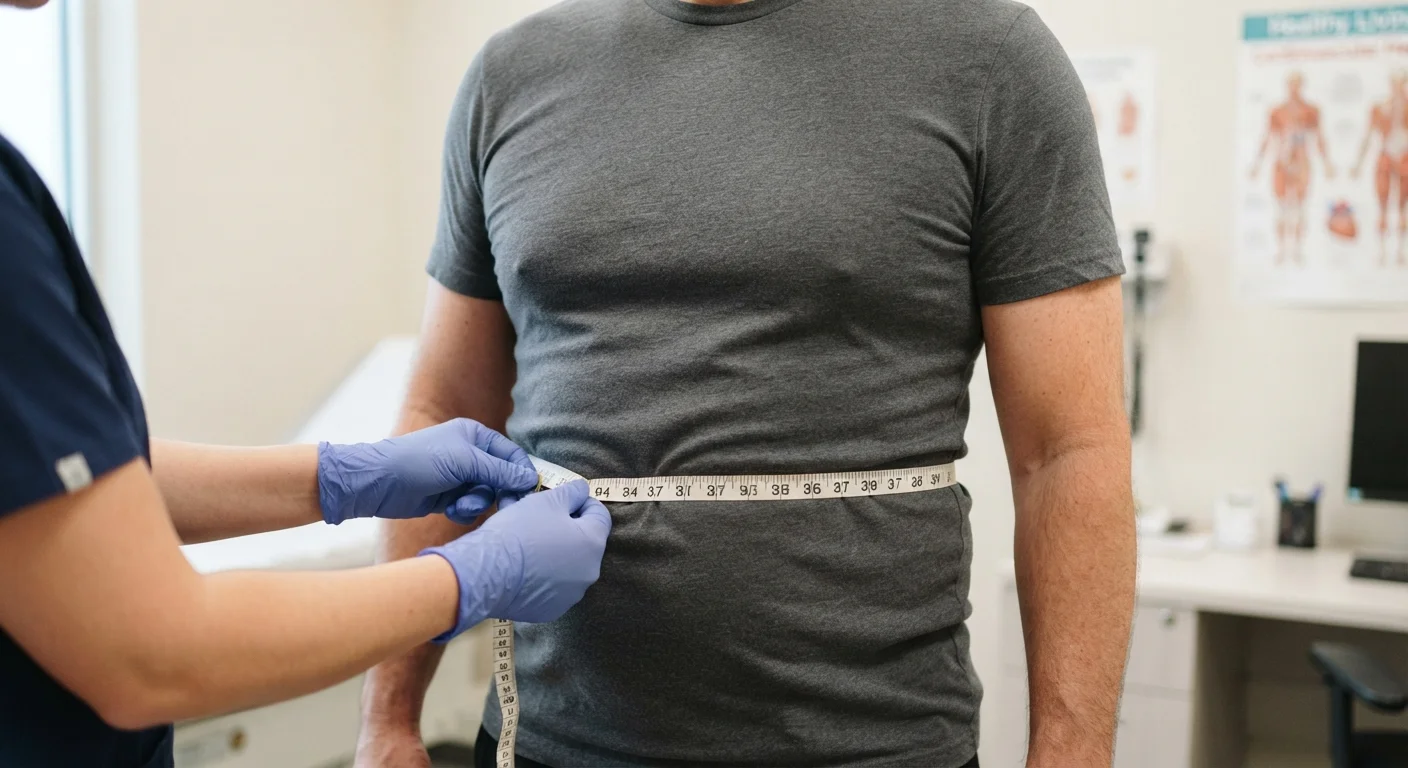
Waist circumference is a more direct proxy for visceral fat. A measurement at or above 40 inches (102 cm) in men is an established threshold associated with elevated risk for insulin resistance, Type 2 diabetes, and cardiovascular disease. Waist-to-height ratio is another practical metric gaining clinical traction.
Blood tests remain the definitive diagnostic standard. An HbA1c test reflects average blood glucose over approximately three months and can identify both prediabetes and diabetes. Fasting glucose tests and lipid panels round out a routine metabolic workup. If you have risk factors — abdominal obesity, a family history, high blood pressure, or sedentary habits — discussing earlier screening with a healthcare provider is worthwhile.
How to Measure Your Waist Correctly
Stand upright and exhale normally. Place a tape measure around your bare abdomen just above your hip bones — at the level of your navel, not your belt line. The tape should be snug but not compressing the skin. Take the reading at the end of a normal breath out. A measurement at or above 40 inches warrants a conversation with your healthcare provider.
What the Evidence Says About Reducing Risk
The relationship between visceral fat and Type 2 diabetes is serious, but it is not fixed. Research consistently shows that visceral fat is among the more responsive fat depots to lifestyle change — it tends to shrink earlier than subcutaneous fat with sustained modifications.
Aerobic exercise is one of the most well-documented tools for reducing visceral fat and improving insulin sensitivity, independent of weight loss. Resistance training also improves glucose uptake in muscle tissue. Dietary patterns that limit refined carbohydrates and ultra-processed foods, while emphasizing fiber and whole foods, support better blood sugar regulation. Sleep quality and chronic stress management also influence insulin sensitivity, though these factors are often underemphasized in men's health conversations.
The downstream stakes extend beyond diabetes itself. Poorly controlled blood glucose significantly amplifies cardiovascular risk — a connection explored in depth in our article on the link between diabetes and heart disease. For older adults already managing a diagnosis, a practical roadmap for living well with Type 2 diabetes offers condition-specific guidance.
This article is for general informational and educational purposes only and is not a substitute for professional medical advice, diagnosis, or treatment. Always consult a qualified healthcare provider with questions about your health or before making changes to your diet, exercise routine, or medical care.
Frequently Asked Questions
Hormonal differences, particularly testosterone and estrogen ratios, influence where the body stores fat. Men are biologically predisposed to deposit excess fat in the abdominal region, while women more often store it in the hips and thighs — at least before menopause. This distribution pattern makes men statistically more susceptible to visceral fat accumulation and its downstream metabolic effects.
Yes. This is sometimes called being "metabolically obese, normal weight" (MONW). A person can have a normal BMI yet carry a disproportionate amount of fat around internal organs. Waist circumference and waist-to-height ratio are better indicators of this risk than weight alone.
A waist circumference of 40 inches (102 cm) or more is widely used as a clinical threshold indicating elevated metabolic and cardiovascular risk in men. Some guidelines suggest lower thresholds for men of certain ethnic backgrounds. A healthcare provider can help interpret your individual measurements in context.
Type 2 diabetes is typically diagnosed through blood tests, including fasting blood glucose, an oral glucose tolerance test, or HbA1c (a measure of average blood sugar over roughly three months). A prediabetes range exists before full diabetes is diagnosed, which is an important window for lifestyle intervention.
Evidence consistently shows that reducing visceral fat improves insulin sensitivity and can lower blood glucose levels. Even modest reductions in abdominal fat — without reaching an "ideal" weight — have been associated with measurable improvements in metabolic markers. Your doctor can help you set realistic, sustainable goals.
Major health organizations generally recommend screening for adults aged 35–45 and older, or earlier if risk factors such as excess abdominal fat, family history, or high blood pressure are present. Your primary care provider can determine the right screening schedule for your individual situation.
The content on this site is for informational purposes only and is not a substitute for professional advice. Always consult a qualified professional for guidance specific to your situation.