

Start here
What Prediabetes Actually Is
Next
How It's Detected
Then
Risk Factors You Should Know
Understand symptoms
What Prediabetes Feels Like — and Doesn't
Take action
Lifestyle Changes That Can Make a Difference
What Prediabetes Actually Is
Prediabetes is a metabolic condition in which blood glucose (sugar) levels are higher than normal but not high enough to meet the clinical threshold for type 2 diabetes. It reflects a state of impaired glucose regulation — the body's cells are responding less effectively to insulin, the hormone that moves sugar from the bloodstream into tissues for energy.
This reduced responsiveness, known as insulin resistance, forces the pancreas to produce more insulin to compensate. Over time, if the pancreas can't keep up, blood glucose rises further. Understanding prediabetes is best viewed as understanding a spectrum: blood sugar exists on a continuum, and prediabetes occupies the middle ground. For a broader look at how different diabetes types compare, see how type 1 and type 2 diabetes differ.
Insulin resistance
A condition in which the body's cells don't respond as well as they should to insulin, requiring the pancreas to produce more to achieve the same effect on blood sugar.
Blood glucose
The concentration of sugar (glucose) circulating in the blood, used by cells as a primary energy source and regulated by insulin.
A1C
A blood test that measures your average blood sugar level over the past two to three months, expressed as a percentage.
Fasting plasma glucose
A blood sugar measurement taken after not eating for at least eight hours, used to assess baseline glucose levels.
Acanthosis nigricans
A skin condition marked by dark, velvety discoloration in body folds; can be a visible indicator of insulin resistance in some individuals.
How It's Detected
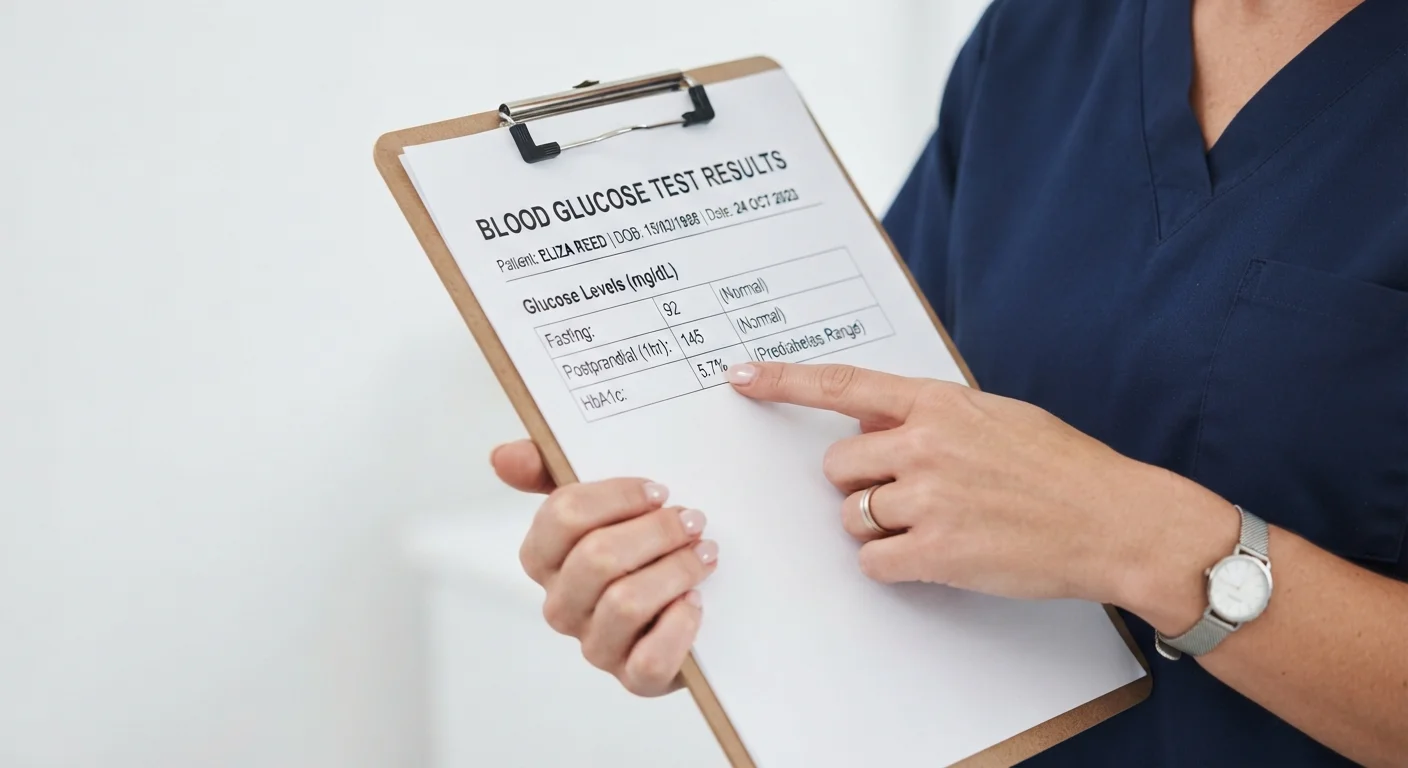
Prediabetes is identified through routine blood tests ordered by a healthcare provider. Three common tests are used:
- Fasting Plasma Glucose (FPG): Measures blood glucose after an overnight fast. A reading of 100–125 mg/dL falls in the prediabetes range.
- A1C Test: Reflects average blood sugar over the previous 2–3 months. An A1C of 5.7%–6.4% indicates prediabetes.
- Oral Glucose Tolerance Test (OGTT): Blood sugar is measured two hours after consuming a glucose drink. A level of 140–199 mg/dL suggests prediabetes.
No single test is universally superior; your clinician will select based on your health history and circumstances. Confirmation sometimes requires a repeat test.
Test Results Require Clinical Interpretation
Blood glucose ranges used to define prediabetes are clinical reference thresholds, not absolute cutoffs. Minor lab-to-lab variation exists, and a single borderline result is rarely the whole picture. Your healthcare provider will consider your full medical history, symptoms, and risk profile when interpreting results and deciding on next steps.
Risk Factors You Should Know
Prediabetes affects tens of millions of American adults, and a large proportion are undiagnosed. Certain factors increase the likelihood of developing it:
- Being overweight, particularly with excess weight carried around the abdomen
- Physical inactivity
- Family history of type 2 diabetes
- Age 35 or older
- History of gestational diabetes or giving birth to a baby over 9 pounds
- Polycystic ovary syndrome (PCOS)
- Certain racial and ethnic backgrounds, including Black, Hispanic, Asian American, and Indigenous American populations, which carry statistically higher risk
Having one or more of these factors doesn't mean a diagnosis is certain — it means routine screening becomes especially valuable.
Don't Wait for Symptoms
Because prediabetes typically causes no noticeable symptoms, waiting until you 'feel something' before getting tested can mean missing a critical intervention window. If you have one or more known risk factors, ask your doctor about scheduling a blood glucose screening — even if you feel perfectly healthy.
What Prediabetes Feels Like — and Doesn't
One of the most clinically significant aspects of prediabetes is that it usually produces no symptoms. Most people feel entirely well, which is why the condition often goes undetected without proactive blood testing.
In some individuals, a skin condition called acanthosis nigricans — darkened, velvety patches in body folds such as the neck, armpits, or groin — may signal underlying insulin resistance. However, this is not universal and is not diagnostic on its own.
Because silent progression is the norm, clinical guidelines from organizations such as the American Diabetes Association recommend that adults meeting certain risk criteria be screened regularly, even when they feel healthy.
Lifestyle Changes That Can Make a Difference
The evidence base here is unusually encouraging. The National Institutes of Health-funded Diabetes Prevention Program trial demonstrated that participants with prediabetes who made modest lifestyle changes — including approximately 5–7% body weight reduction and 150 minutes of moderate physical activity per week — reduced their risk of progressing to type 2 diabetes by about 58%. That is a meaningful, clinically validated finding.
Approaches consistently supported by research include:
- Increasing daily movement, particularly aerobic activity
- Choosing a dietary pattern rich in vegetables, fiber, and whole foods while limiting refined carbohydrates and added sugars
- Achieving and sustaining even modest weight loss if overweight
- Prioritizing consistent, adequate sleep, since sleep disruption is associated with impaired glucose metabolism
- Managing stress, which can influence glucose regulation through hormonal pathways
Small Steps, Real Impact
You don't need to overhaul your entire lifestyle overnight. Research supports that even modest, consistent changes — like a 15-minute walk after meals or swapping refined grains for whole grains — accumulate into meaningful improvements in blood sugar regulation. Talk to your healthcare team about structured programs, such as CDC-recognized diabetes prevention programs, which may be available in your area.
Older adults navigating blood sugar management may find additional context in the senior's guide to living well with type 2 diabetes.
This article is for general informational and educational purposes only and does not constitute medical advice. Always consult a qualified healthcare professional regarding any health concerns, test results, or before making changes to your diet, exercise routine, or medications.
Frequently Asked Questions
Research indicates that prediabetes can often be reversed with lifestyle changes such as modest weight loss, increased physical activity, and dietary adjustments. Some people return to normal blood sugar levels without medication. However, outcomes vary by individual, and a healthcare provider can offer personalized guidance.
In general, a fasting blood glucose of 100–125 mg/dL or an A1C of 5.7%–6.4% is considered the prediabetes range. Values above those thresholds typically indicate type 2 diabetes. Your doctor will interpret your specific results in the context of your overall health.
No — prediabetes does not automatically progress to type 2 diabetes. Studies, including the landmark Diabetes Prevention Program, have shown that behavioral changes can lower the risk of progression by a meaningful amount. Early intervention is key.
Most people with prediabetes have no symptoms at all, which is why it's often detected only through blood tests. In some cases, darkened skin patches in body folds (acanthosis nigricans) may appear, which can be associated with insulin resistance. Routine screening is the most reliable detection method.
Major clinical guidelines recommend screening adults who are overweight or obese, those with a family history of type 2 diabetes, physically inactive individuals, and adults over 35 years old. Talk to your doctor about when and how often you should be tested.
Lifestyle changes are typically the first-line approach recommended by clinical guidelines. In certain cases, a doctor may consider medication as part of an individualized plan, but this is determined on a case-by-case basis. Never start or stop any medication without consulting your healthcare provider.
The content on this site is for informational purposes only and is not a substitute for professional advice. Always consult a qualified professional for guidance specific to your situation.