

Option A
Type 1 Diabetes
An autoimmune condition present from early life.
Best for: Understanding a lifelong autoimmune diagnosis requiring daily insulin therapy from onset.
Option B
Type 2 Diabetes
A progressive metabolic condition often tied to lifestyle factors.
Best for: Readers exploring risk reduction, early detection, and long-term management of insulin resistance.
Different Causes, Same Name
Diabetes mellitus is an umbrella term for conditions characterised by chronically elevated blood glucose (blood sugar). But type 1 and type 2 diabetes arise through entirely different biological processes — understanding that distinction matters for prevention, diagnosis, and treatment.
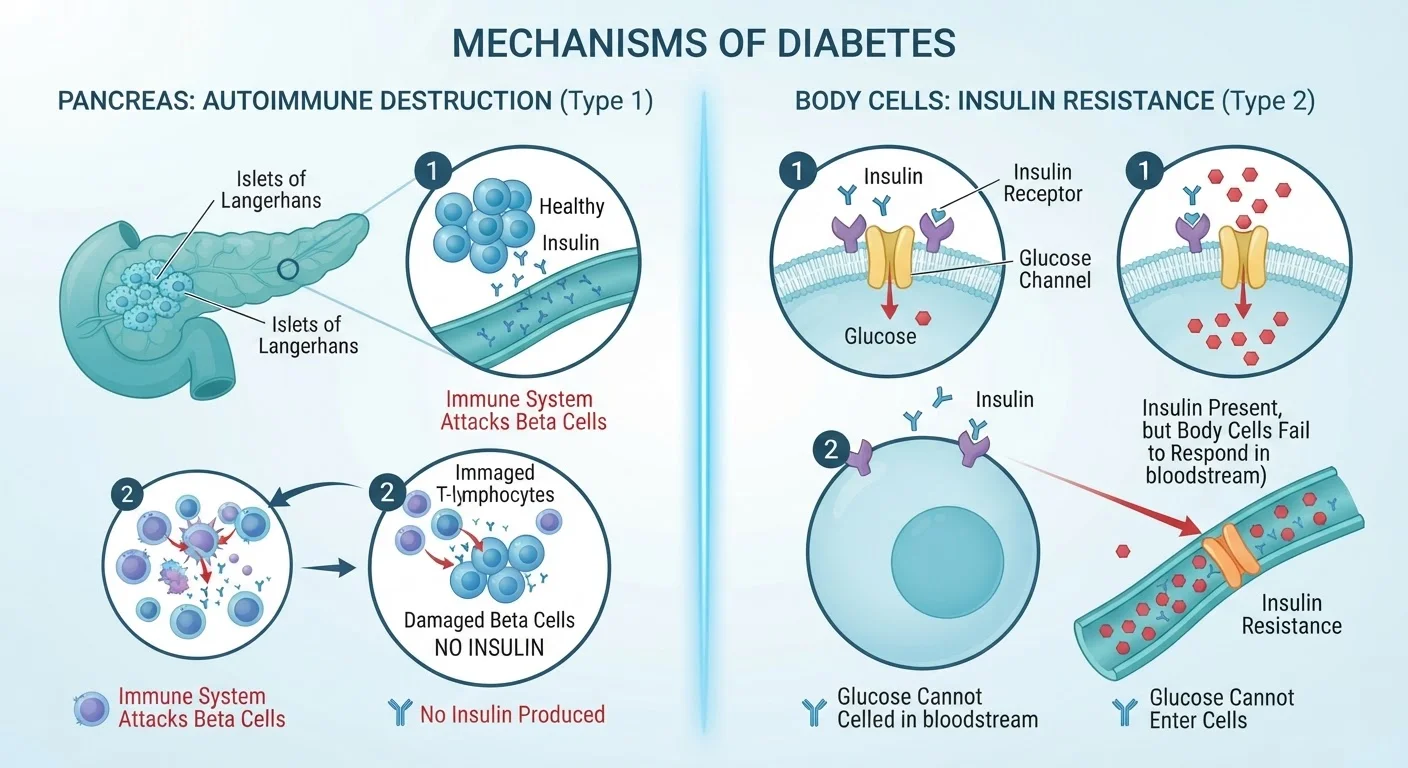
Type 1 diabetes is an autoimmune condition. The body's immune system mistakenly attacks and destroys the beta cells in the pancreas responsible for producing insulin. Without insulin — the hormone that allows glucose to enter cells for energy — blood sugar rises to dangerous levels. The exact triggers are not fully understood, but genetic susceptibility and environmental factors, including certain viral infections, are thought to play a role. Crucially, type 1 cannot be prevented.
Type 2 diabetes develops when the body's cells become resistant to insulin's effects, and the pancreas gradually loses the capacity to compensate by producing more. The result is the same: blood glucose accumulates. Unlike type 1, type 2 has well-established modifiable risk factors, including excess body weight — particularly visceral fat — physical inactivity, and poor dietary patterns. Genetic predisposition also contributes. For a deeper look at the internal mechanics, see how type 2 diabetes develops inside the body.
| Criterion | Type 1 Diabetes | Type 2 Diabetes |
|---|---|---|
| Underlying cause | Autoimmune destruction of beta cells | Insulin resistance and progressive beta cell decline |
| Preventable? | No | Risk can be reduced with lifestyle changes |
| Typical age of onset | Childhood, teens, young adults | Adults 45+; rising in younger groups |
| Symptom onset | Rapid (days to weeks) | Gradual, often silent for years |
| Insulin production | Little to none | Present but ineffective (initially) |
| Primary treatment | Insulin therapy (lifelong, mandatory) | Lifestyle changes, oral medications, insulin if needed |
| Proportion of diabetes cases | Approx. 5–10% of all cases | Approx. 90–95% of all cases |
Onset, Symptoms, and Diagnosis
Type 1 diabetes most commonly emerges in children, teenagers, and young adults, though it can occur at any age. Symptoms typically develop rapidly over days to weeks and may include extreme thirst, frequent urination, unintended weight loss, blurred vision, and fatigue. In some cases, the first presentation is diabetic ketoacidosis (DKA) — a medical emergency requiring immediate care.
Type 2 diabetes, by contrast, tends to develop slowly over years, often with no noticeable symptoms in early stages. Many people are diagnosed incidentally through routine blood tests. When symptoms do appear — increased thirst, slow-healing wounds, or frequent infections — significant insulin resistance may already be established. It most commonly affects adults over 45, though rates in younger populations are rising. Readers interested in the grey area between normal glucose and a type 2 diagnosis may want to explore what a prediabetes diagnosis actually means.
Diagnosis for both types involves blood glucose testing, including fasting glucose and HbA1c (a measure of average blood sugar over roughly three months). Additional tests — such as autoantibody screening and C-peptide levels — help clinicians distinguish type 1 from type 2 when clinical presentation is ambiguous.
~37M
Americans living with diabetes
According to the CDC's National Diabetes Statistics Report, approximately 37 million Americans have diabetes, with type 2 accounting for the large majority.
5–10%
Share of diabetes cases that are type 1
The American Diabetes Association estimates type 1 represents 5–10% of all diagnosed diabetes cases in the United States.
1 in 5
People with diabetes who are undiagnosed
The CDC estimates approximately 8.5 million Americans — roughly 1 in 5 people with diabetes — are unaware they have the condition, underscoring the importance of routine screening.
Management: Where the Paths Diverge
Because their underlying mechanisms differ, type 1 and type 2 diabetes require distinct management strategies.
People with type 1 diabetes require lifelong insulin therapy — there is no alternative, since their bodies produce none. This involves carefully balancing insulin doses (delivered via injection or pump) with food intake, physical activity, and blood glucose monitoring. Continuous glucose monitors (CGMs) have significantly improved day-to-day management for many patients.
Management of type 2 diabetes may begin with structured lifestyle changes: dietary modification, increased physical activity, and — where relevant — weight reduction. If these are insufficient, oral medications (such as metformin) or injectable therapies, including GLP-1 receptor agonists, are typically prescribed. Some people with type 2 diabetes do eventually require insulin, particularly as the condition progresses. For older adults managing type 2, a dedicated senior management guide offers relevant context. Men concerned about abdominal fat and insulin resistance risk can explore how visceral fat affects type 2 risk in men.
Both conditions carry significant long-term complication risks — including cardiovascular disease, kidney disease, and nerve damage — making consistent monitoring and a collaborative relationship with a healthcare team essential.
This article is for general informational purposes only and does not constitute medical advice. If you have concerns about blood sugar, diabetes symptoms, or your personal risk, please consult a qualified healthcare professional.
The content on this site is for informational purposes only and is not a substitute for professional advice. Always consult a qualified professional for guidance specific to your situation.