

Our Verdict
Hormonal contraception offers a well-documented range of non-contraceptive benefits — from managing chronic gynecological conditions to reducing certain cancer risks — that make it a genuinely therapeutic tool for many women. However, real risks exist, particularly around cardiovascular health and mood, and these are not uniform across all formulations or individuals. The decision requires an honest, individualized conversation with a qualified healthcare provider.
Best for women seeking both reliable contraception and management of conditions like endometriosis, PCOS, or heavy menstrual bleeding, provided their personal health history makes hormonal methods appropriate.
More Than Birth Control: The Wider Clinical Picture
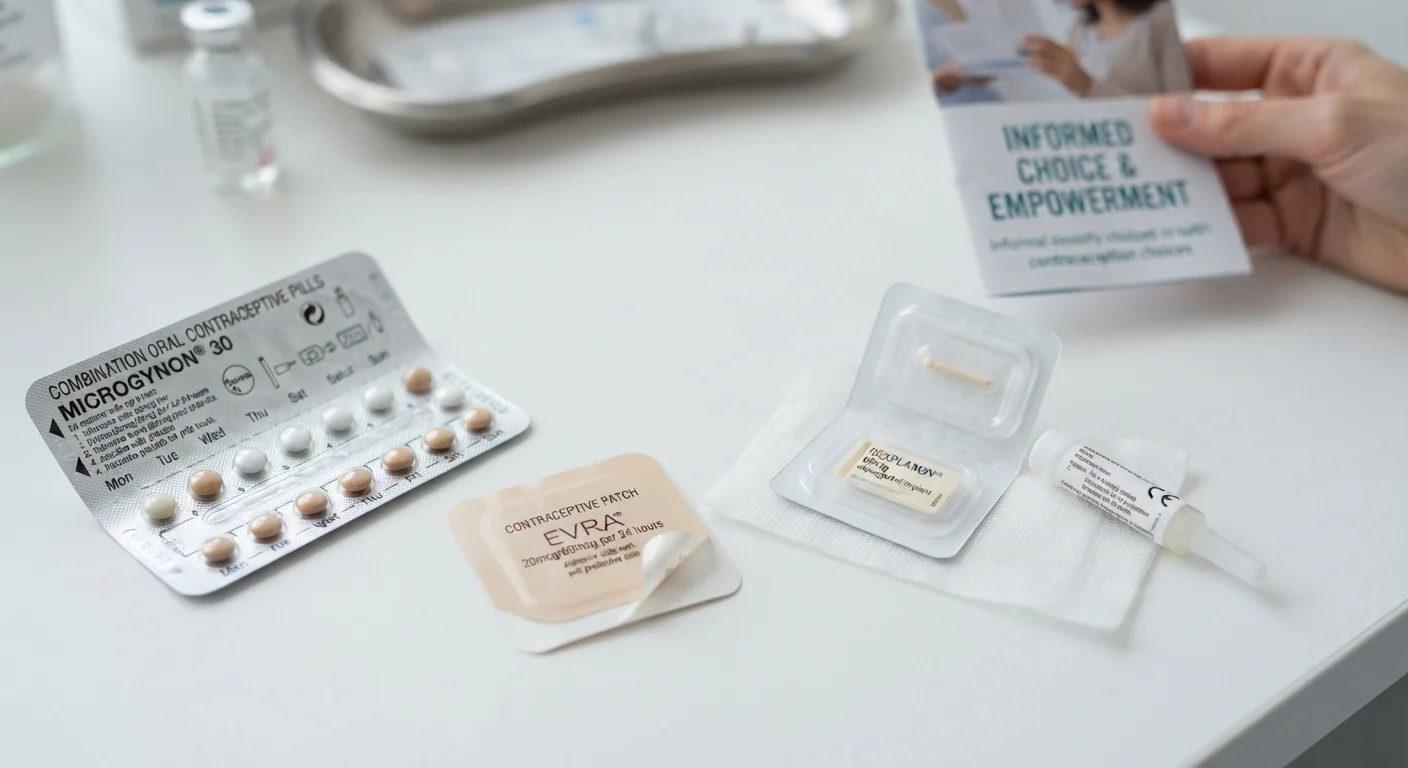
When most people hear "hormonal contraception," pregnancy prevention is the first use that comes to mind. But clinicians have long prescribed combined oral contraceptives, progestin-only pills, hormonal IUDs, patches, injections, and vaginal rings for a range of gynecological and medical indications beyond contraception.
Common non-contraceptive uses — supported by clinical guidelines — include managing endometriosis, polycystic ovary syndrome (PCOS), primary dysmenorrhea (painful periods), and heavy menstrual bleeding. Understanding both what these medications can offer and where they carry real trade-offs is essential to making an informed, autonomous health decision. For a broader look at how these methods compare with non-hormonal options, see our overview of hormonal vs. non-hormonal contraception.
This article provides general health information only and is not a substitute for advice from a qualified healthcare professional.
Documented Benefits
The evidence base for non-contraceptive benefits of hormonal contraception is substantial, though it varies by condition and formulation.
Reduces painful menstruation significantly
Combined oral contraceptives suppress ovulation and reduce prostaglandin production, which is a primary driver of cramping. Clinical trials show meaningful pain reduction in women with primary dysmenorrhea.
Treats endometriosis symptoms effectively
Hormonal suppression can reduce the growth and activity of endometrial-like tissue outside the uterus, easing chronic pelvic pain and potentially protecting fertility over time.
Lowers ovarian and endometrial cancer risk
Long-term data consistently associate combined oral contraceptive use with reduced risks of both ovarian and endometrial cancers, with protective effects persisting for a decade or more after discontinuation.
Controls heavy menstrual bleeding
Hormonal IUDs are a guideline-recommended treatment for heavy periods; many users experience significantly lighter bleeding or amenorrhea (no periods), improving quality of life and reducing anemia risk.
Manages PCOS symptoms and hormonal irregularity
Combined pills help regulate menstrual cycles in women with PCOS, reduce excess androgen effects such as acne and unwanted hair growth, and protect the uterine lining from unopposed estrogen.
May reduce acne and androgen-related symptoms
Certain combined formulations are FDA-approved for acne treatment, as estrogen increases sex hormone-binding globulin, which lowers free androgen levels circulating in the body.
Cancer risk reduction is one of the most significant long-term findings. Studies consistently show that combined oral contraceptives are associated with reduced risk of ovarian and endometrial cancers; this protective effect appears to persist for years after stopping. The mechanism involves suppression of ovulation and reduction of endometrial proliferation.
For women with endometriosis — a condition in which tissue similar to the uterine lining grows outside the uterus — hormonal suppression can meaningfully reduce pain and slow lesion progression, according to guidelines from the American College of Obstetricians and Gynecologists (ACOG). Similarly, hormonal IUDs are a first-line treatment for heavy menstrual bleeding, with many users experiencing significant reduction or elimination of periods over time.
Real Risks to Weigh
Benefits must always be considered alongside a method's risk profile, which differs across formulations and is shaped by individual health history.
Increased venous thromboembolism risk
Combined estrogen-progestin methods raise the risk of blood clots (deep vein thrombosis, pulmonary embolism), particularly in women who smoke, have inherited clotting disorders, or are immobile for extended periods.
Possible mood changes and depression risk
Some users report mood changes, emotional blunting, or depressive symptoms, and observational studies have suggested a modest association between hormonal contraceptive use and increased depression diagnosis, though causality is not firmly established.
Small increase in certain breast cancer risk
A large Danish cohort study found a modestly elevated relative risk of breast cancer in current and recent users of hormonal contraception; absolute risk remains low in younger women, but history of BRCA variants warrants careful discussion.
May affect libido or sexual function
Some women report decreased sexual desire with combined pills, possibly related to lower free testosterone levels; this effect varies by individual and formulation.
Contraindicated for some cardiovascular conditions
Combined methods containing estrogen are contraindicated in women with a history of stroke, migraine with aura, uncontrolled hypertension, or certain heart conditions, making progestin-only or non-hormonal options necessary for these groups.
Temporary delay in return to fertility after injection
Unlike pills or IUDs, the injectable progestin (depot medroxyprogesterone acetate) can delay the return of regular ovulation for several months after stopping — relevant for those planning pregnancy in the near term.
Progestin-Only Methods: A Different Profile
Progestin-only pills, hormonal IUDs, and implants do not contain estrogen and carry a substantially lower blood clot risk, making them suitable options for women with cardiovascular contraindications to combined methods. However, they have their own considerations, including irregular spotting, particularly in the first months of use. A clinician can help determine which formulation aligns with your health history and goals.
Women should always discuss their cardiovascular and clotting history with a clinician before starting any hormonal contraceptive. For a related discussion of how estrogen affects the cardiovascular system more broadly, see cardiovascular health and the hormonal connection.
Navigating the Decision With Your Provider
No hormonal contraceptive method is universally right or wrong. Formulation matters enormously: progestin-only methods carry a different risk profile than combined estrogen-progestin options, and long-acting methods like hormonal IUDs deliver hormones locally rather than systemically, which changes the risk calculus for many users.
~40%
Reduction in ovarian cancer risk
Meta-analyses published in peer-reviewed journals estimate that ever-use of combined oral contraceptives is associated with roughly a 40% reduction in ovarian cancer risk compared with never-use.
3–4×
Increased VTE risk vs. non-users
Combined oral contraceptives carrying estrogen are associated with a 3- to 4-fold increase in venous thromboembolism risk, though absolute incidence remains low in healthy, non-smoking women.
~90%
Users reporting lighter bleeding with hormonal IUD
Clinical data indicate that the majority of hormonal IUD users experience significantly reduced menstrual flow, with many achieving amenorrhea within the first year of use.
If you are considering stopping hormonal contraception and thinking about future pregnancy, our preconception health overview covers key steps to discuss with your provider. For a comparison of how short- and long-acting methods differ in practice, see our guide to long-acting vs. short-acting contraceptive methods.
Women approaching midlife should also know that contraceptive needs and hormonal contexts shift with perimenopause. Understanding the hormonal timeline from perimenopause through postmenopause can help frame those conversations with a provider.
Always consult a licensed healthcare provider before starting, stopping, or changing any contraceptive or hormonal therapy. Individual risk factors significantly affect which options are appropriate for you.
The content on this site is for informational purposes only and is not a substitute for professional advice. Always consult a qualified professional for guidance specific to your situation.