

Our Verdict
Long-acting methods offer high effectiveness with minimal day-to-day involvement, making them well-suited for those seeking low-maintenance, durable protection. Short-acting methods provide more flexibility and are easier to discontinue quickly, which appeals to those with near-term family planning goals or specific medical considerations. There is no single best approach — personal health needs and lifestyle should guide the decision, ideally in partnership with a clinician.
| Best for | Recommended |
|---|---|
| Those wanting low-maintenance, highly effective protection for several years | Long-Acting Methods (IUDs, Implant) |
| Those planning pregnancy in the near term or wanting quick reversibility | Short-Acting Methods (Pills, Patch, Ring) |
| Those who prefer hormone-free contraception | Copper IUD (Long-Acting, Non-Hormonal) |
| Those who want additional hormonal health benefits alongside contraception | Short-Acting Hormonal Methods or Hormonal IUD |
What Defines Long-Acting vs. Short-Acting Methods
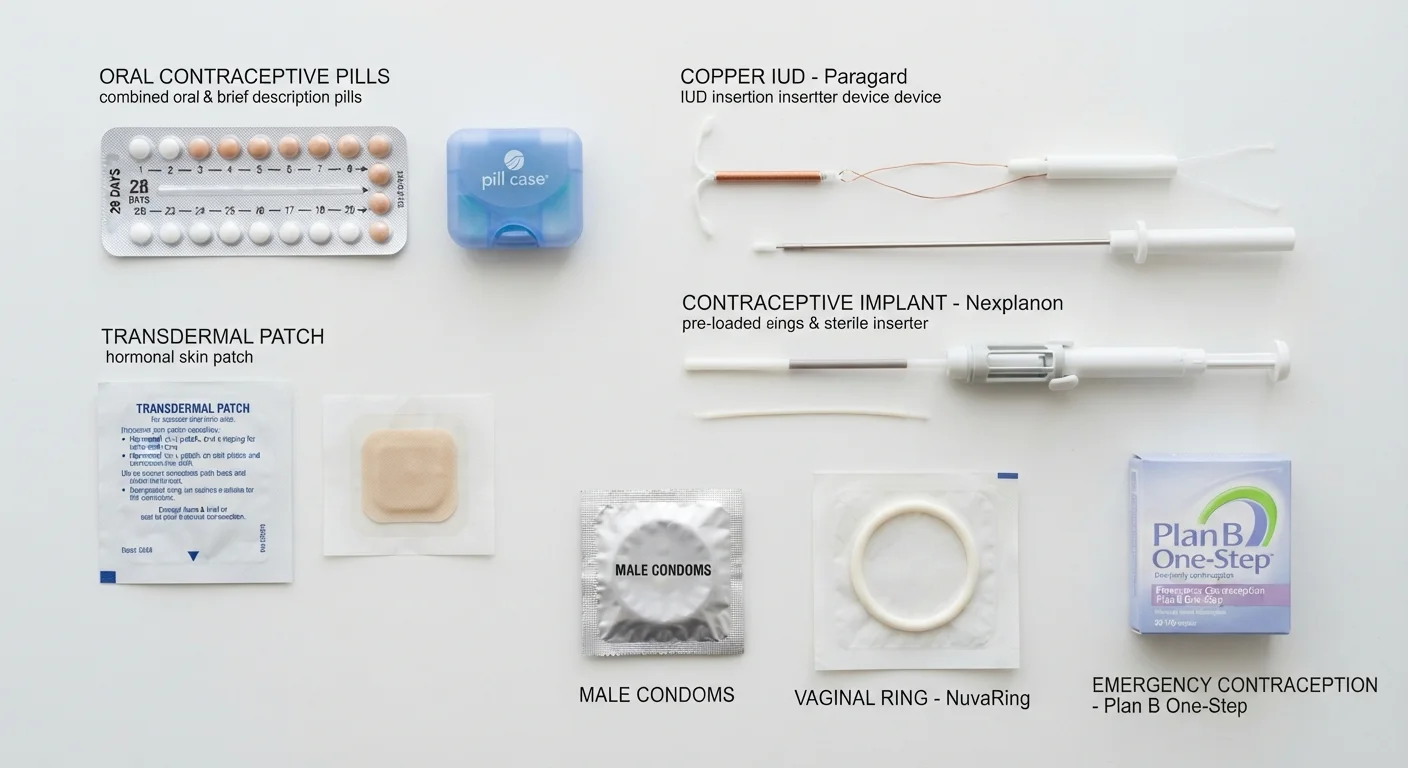
Contraceptive methods are broadly categorized by how long a single use provides protection. Long-acting reversible contraceptives (LARCs) include intrauterine devices (IUDs) and the hormonal implant. Once placed by a clinician, they remain effective for years without requiring ongoing action from the user. Short-acting methods — including combined oral contraceptive pills, progestin-only pills, the transdermal patch, and the vaginal ring — must be taken or applied on a daily, weekly, or monthly schedule to maintain effectiveness.
This foundational difference in duration shapes almost every other characteristic: effectiveness in typical use, convenience, reversibility, and suitability for different life stages. Understanding where these methods diverge is the first step toward a well-informed conversation with your healthcare provider.
How Each Category Works
Long-Acting Methods
- Hormonal IUDs (levonorgestrel-releasing): Thicken cervical mucus, suppress the uterine lining, and may inhibit ovulation. Approved durations range from 3 to 8 years depending on the specific device.
- Copper IUD: The only hormone-free LARC. Copper ions impair sperm motility and fertilization. Approved for up to 10 years and also used as emergency contraception within 5 days of unprotected sex.
- Subdermal implant: A small, flexible rod inserted under the skin of the upper arm that releases progestin, primarily preventing ovulation. Effective for up to 3 years.
Short-Acting Methods
- Combined oral contraceptive pills: Contain estrogen and progestin; taken daily to suppress ovulation and alter cervical mucus.
- Progestin-only pills (mini-pill): Must be taken at the same time each day; work mainly by thickening cervical mucus.
- Transdermal patch: Applied weekly for three weeks, followed by one patch-free week; delivers hormones through the skin.
- Vaginal ring: Inserted monthly; releases estrogen and progestin locally.
To explore how hormonal and non-hormonal mechanisms compare in greater depth, see Hormonal vs. Non-Hormonal Contraception: Understanding Your Options.
| Copper IUD | Hormonal IUD | Implant | Combined Pill | Patch | Vaginal Ring | |
|---|---|---|---|---|---|---|
| Duration | Up to 10 years | 3–8 years | Up to 3 years | Daily | Weekly | Monthly |
| Hormones | None | Progestin only | Progestin only | Estrogen + Progestin | Estrogen + Progestin | Estrogen + Progestin |
| Typical-use failure rate | < 1% per year | < 1% per year | < 1% per year | ~7–9% per year | ~7–9% per year | ~7–9% per year |
| User action required | None after insertion | None after insertion | None after insertion | Daily pill | Weekly application | Monthly insertion |
| Clinician procedure needed | Yes (insertion/removal) | Yes (insertion/removal) | Yes (insertion/removal) | No | No | No |
| Effect on menstruation | May increase flow | Often reduces flow | May cause irregular bleeding | Variable | Variable | Variable |
Effectiveness: Typical Use vs. Perfect Use
One of the most clinically significant differences between these categories is the gap between perfect use (method used correctly every time) and typical use (real-world conditions). LARCs virtually eliminate user error: once placed, they work continuously. Published data from the American College of Obstetricians and Gynecologists (ACOG) consistently place LARC failure rates at less than 1% per year in both perfect and typical use.
Short-acting methods, by contrast, show a wider gap. Combined oral contraceptives have a perfect-use failure rate of about 0.3%, but typical-use failure rates are estimated at around 7–9% per year — meaning missed pills, late starts, or drug interactions can meaningfully reduce effectiveness. The patch and ring carry similar profiles.
< 1%
Annual LARC failure rate (typical use)
According to ACOG, IUDs and implants fail in fewer than 1 in 100 users per year under real-world conditions.
~7–9%
Annual pill failure rate (typical use)
Real-world estimates from the CDC and ACOG reflect the impact of missed doses and inconsistent use on oral contraceptive effectiveness.
This does not mean short-acting methods are inadequate — millions of people use them successfully — but it does highlight why consistency and correct use are critical factors to discuss with a clinician.
Reversibility, Side Effects, and Other Considerations
Reversibility: Both categories are reversible, but on different timescales. Fertility generally returns quickly after stopping pills, removing a ring, or removing an IUD or implant. However, individual experiences vary, and some people may experience a brief adjustment period after discontinuing hormonal methods.
Side effects: Hormonal short-acting methods may affect mood, libido, or cause nausea, breast tenderness, or spotting, particularly in the first few months. Hormonal IUDs often reduce menstrual flow significantly; the copper IUD may increase flow and cramping, especially initially. The implant is associated with irregular bleeding patterns in some users.
Beyond contraception: Some hormonal methods are prescribed for conditions such as endometriosis, PCOS-related symptoms, or heavy menstrual bleeding. The Pros and Cons of Hormonal Contraception Beyond Pregnancy Prevention provides a balanced look at these applications.
No Method Protects Against STIs
Contraceptive methods — including LARCs — do not protect against sexually transmitted infections (STIs). Barrier methods such as condoms remain the primary tool for STI prevention. If you have questions about STI risk alongside contraception, discuss both topics openly with your healthcare provider.
This article is for informational purposes only and is not a substitute for personalized medical advice. Always consult a qualified healthcare provider to discuss which contraceptive method is appropriate for your individual health history, medications, and reproductive goals.
The content on this site is for informational purposes only and is not a substitute for professional advice. Always consult a qualified professional for guidance specific to your situation.