

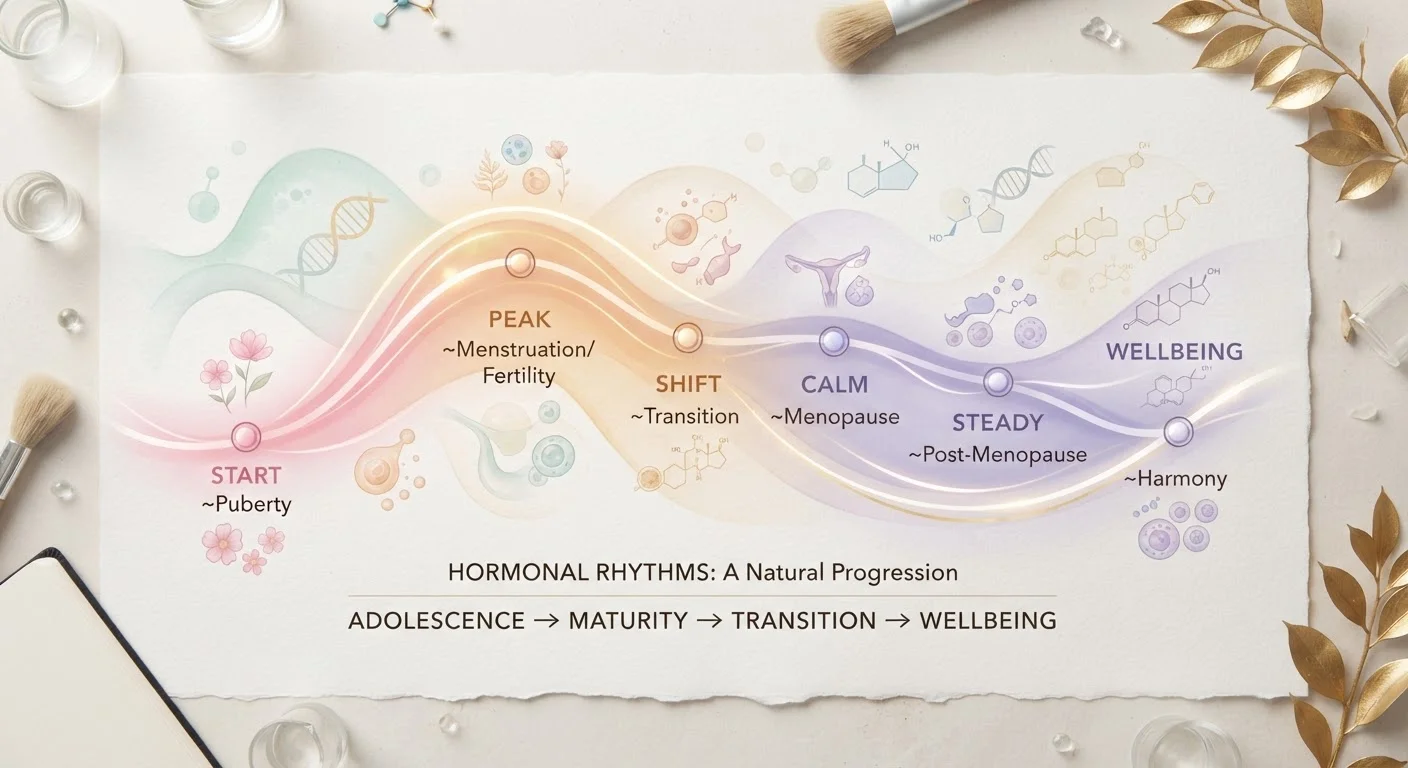
Perimenopause: The Transition Begins
Perimenopause — literally "around menopause" — is the first and often longest phase of the menopausal transition. It typically spans 4 to 10 years and can begin as early as the early 40s. During this phase, the ovaries start producing estrogen and progesterone in less predictable patterns, and the number of viable egg follicles declines sharply.
Rather than a steady drop, estrogen levels during perimenopause are erratic. They can spike higher than typical premenopausal levels before falling, which explains why symptoms can be so variable and confusing. Progesterone tends to decline more consistently, since it depends on ovulation — which becomes increasingly irregular. This relative estrogen dominance (high estrogen against low progesterone) can cause heavier periods, breast tenderness, and mood shifts in earlier perimenopause.
For a detailed comparison of what distinguishes this stage from the next, see how perimenopause differs from menopause.
Track Cycle Changes Early
Keeping a simple log of your menstrual cycle length, flow, and any new symptoms can give your clinician valuable information when evaluating where you are in the transition. Apps or even a paper calendar work equally well. Patterns matter more than any single data point.
As follicle-stimulating hormone (FSH) climbs in response to declining ovarian output, menstrual cycles shorten initially, then become increasingly irregular. This is one of the most reliable early signs that the transition has begun.
The Menopause Milestone and Its Hormonal Signature
Menopause itself is a single point in time — defined as 12 consecutive months without a menstrual period, not caused by illness, surgery, or medication. In the United States, the average age at natural menopause is approximately 51, though the range of 45–55 is considered typical.
By the time menopause is confirmed, estradiol (the primary form of estrogen produced by the ovaries) has fallen significantly. FSH levels are persistently elevated — often above 30 mIU/mL — as the pituitary continues its attempt to stimulate ovaries that are no longer responding. Progesterone is now very low because ovulation has essentially ceased.
~51
Average age of natural menopause in the U.S.
According to the Study of Women's Health Across the Nation (SWAN), the median age of natural menopause in the United States is approximately 51 years.
4–10 years
Typical duration of perimenopause
Research from the SWAN cohort and related longitudinal studies suggests perimenopause spans an average of 4 to 10 years, though this varies considerably by individual.
Up to 3–5%
Annual bone density loss in early postmenopause
The National Osteoporosis Foundation notes that women can lose up to 3–5% of bone density per year in the first several years following menopause due to estrogen withdrawal.
This hormonal shift is responsible for the cluster of vasomotor symptoms — hot flashes, night sweats — that peak around the menopause milestone for many women. These symptoms are directly tied to estrogen's role in hypothalamic thermoregulation. The menopause symptom glossary offers plain-language definitions of these and other related terms.
Postmenopause: A New Hormonal Baseline
Once a woman enters postmenopause, her hormone profile stabilizes at a new, lower set point. Ovarian estrogen production is minimal; the primary circulating estrogen becomes estrone, produced in small amounts by peripheral tissues including fat cells and the adrenal glands. This estrone level is far lower than premenopausal estradiol.
Progesterone is essentially absent in postmenopause, and FSH and LH remain elevated. Androgens — including testosterone and DHEA — also continue their gradual decline. These sustained low estrogen levels have far-reaching implications beyond symptom management: bone mineral density decreases at an accelerated rate in the first few years after menopause, and changes in lipid profiles and arterial flexibility increase cardiovascular risk over time.
The brain is also affected. Estrogen plays a modulatory role in serotonin and dopamine signaling, which is why many women report cognitive and emotional changes during and after the transition. Read more about those effects in our coverage of mood, memory, and the hormonal roots of cognitive change.
Surgical and Medical Menopause
Not all menopause is natural. Surgical menopause — caused by removal of both ovaries — results in an abrupt, immediate drop in estrogen rather than a gradual transition. Menopause can also be induced by certain chemotherapy or radiation treatments. In these cases, symptoms may be more sudden and intense. Management considerations differ; always consult a specialist.
If you are just beginning to notice changes and want a broader starting point, this introductory guide to menopause covers the basics and how to approach your first conversation with a clinician.
This article is for general informational and educational purposes only and does not constitute medical advice. Always consult a qualified healthcare professional for guidance specific to your health history and symptoms.
Frequently Asked Questions
Perimenopause most commonly begins in the mid-to-late 40s, but some women notice changes as early as their late 30s. Factors like genetics, smoking history, and certain medical conditions can influence timing. If you experience irregular cycles or symptoms before age 40, speak with a healthcare provider to rule out other causes.
Hormone tests — particularly FSH — can provide supporting evidence, but they are not definitive on their own because levels fluctuate significantly during perimenopause. Clinicians typically diagnose perimenopause based on a combination of age, symptom pattern, and menstrual history rather than a single blood test.
No. After menopause, estrogen drops to a persistently low — not zero — level. The adrenal glands and adipose (fat) tissue continue to produce small amounts through a conversion process involving androgens. This residual estrogen, however, is significantly lower than premenopausal levels.
Testosterone levels decline gradually throughout a woman's reproductive years and continue to decrease during and after menopause. Lower testosterone can contribute to reduced libido and changes in energy or mood, though research on testosterone therapy in women is still evolving.
Hot flashes (vasomotor symptoms) are linked to estrogen fluctuation and decline, which affects the hypothalamus — the brain's temperature-regulation center. The exact mechanism involves norepinephrine and serotonin pathways. Estrogen stabilization through hormone therapy is one evidence-based option for managing severe symptoms, to be discussed with a clinician.
Postmenopause is the rest of a woman's life after menopause is confirmed. Many women spend 30 or more years in this phase. While acute symptoms like hot flashes often ease within a few years, the long-term health implications of low estrogen — including effects on bone density and cardiovascular risk — persist throughout.
The content on this site is for informational purposes only and is not a substitute for professional advice. Always consult a qualified professional for guidance specific to your situation.