

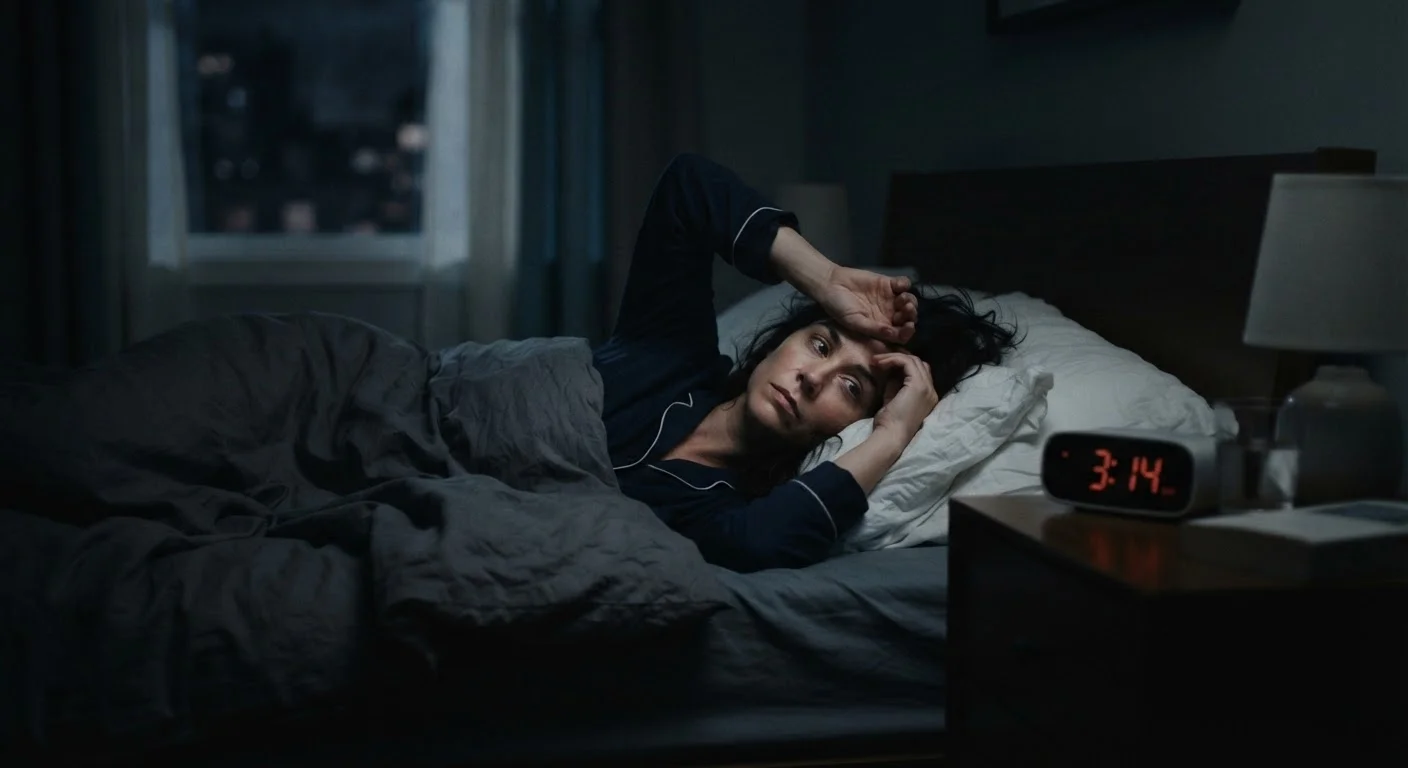
Why Sleep Timing Matters as Much as Sleep Duration
Most of us have heard that adults need seven to nine hours of sleep each night. What gets far less attention is when those hours happen — and how much variability in your sleep timing matters for emotional health. Research published in journals such as npj Digital Medicine and Sleep suggests that inconsistent sleep schedules are independently linked to poorer mood, higher anxiety, and reduced ability to manage everyday stress, even when total sleep time looks adequate on paper.
Your brain's emotional regulation machinery — including the amygdala, prefrontal cortex, and the systems that process cortisol and serotonin — is tightly synchronized to circadian rhythms. When your sleep window shifts unpredictably from night to night, those rhythms fall out of alignment. The result isn't just tiredness; it's a quietly reduced capacity to tolerate frustration, recover from setbacks, and respond to others with patience. For a deeper look at the emotional consequences of chronic shortfalls, see what happens to your mood when you consistently under-sleep.
Common Mistakes That Quietly Undermine Your Sleep Schedule
Many schedule-disrupting habits feel harmless or even logical in the moment. Understanding why they happen — and what they cost emotionally — is the first step toward changing them.
Treating your sleep schedule as flexible on weekends, then trying to 'reset' on Sunday night.
Why it happens: After a demanding week, sleeping in on Saturday and Sunday feels like well-deserved recovery — and the logic is intuitive. But this pattern, sometimes called 'social jet lag,' shifts your circadian phase by one to two hours, creating Monday morning grogginess and emotional irritability that can persist into midweek.
Using bright screens or stimulating content as a wind-down routine in the hour before bed.
Why it happens: Evening scrolling or streaming feels relaxing after a stressful day, and mentally it can seem like 'doing nothing.' In reality, blue-spectrum light suppresses melatonin secretion, and emotionally activating content keeps the brain's threat-detection systems engaged, delaying sleep onset and reducing early sleep quality.
Ignoring the emotional signals that your schedule has drifted, such as increased irritability or difficulty concentrating.
Why it happens: People commonly attribute irritability, low motivation, or heightened anxiety to work stress, relationship friction, or diet — rarely to sleep timing. Because the connection between schedule irregularity and emotional state is not obvious, the root cause goes unaddressed while symptoms are managed elsewhere.
Compensating for poor nighttime sleep with long or late-timed daytime naps.
Why it happens: When you're emotionally depleted and physically exhausted, a nap feels like the most immediate solution — and for acute recovery, it can help. The problem arises when naps extend beyond 30–45 minutes or occur after 3 p.m., which reduces sleep pressure and makes the following night's sleep more fragmented.
Believing that catching up on sleep once or twice a week fully restores emotional and cognitive function.
Why it happens: Subjectively, a long recovery sleep feels restorative — we wake up feeling better, so it's natural to assume the deficit has been repaid. However, research suggests that some aspects of emotional regulation and cognitive performance take several consistent nights of adequate sleep to fully recover, not a single extended session.
~30%
Adults with significant social jet lag
Research published in Current Biology estimated that roughly 30% of the working population experiences social jet lag of two or more hours between their work-week and weekend sleep timing.
1–2 hrs
Average circadian phase shift from weekend sleep extension
Studies on social jet lag consistently find that weekend sleep timing shifts of just one to two hours are sufficient to measurably affect mood, alertness, and metabolic markers by Monday.
↑ 34%
Increased emotional reactivity after one poor night
A study by neuroscientists at UC Berkeley found amygdala reactivity increased by approximately 60% after sleep deprivation, with even partial disruption producing significant emotional amplification.
These patterns don't operate in isolation. Poor sleep worsens stress, and stress disrupts sleep — a bidirectional loop that irregular timing makes considerably harder to exit. Older adults face particular vulnerability; the effects on memory and mood can compound quickly when circadian rhythms are already shifting with age.
Building a Sleep Schedule That Protects Emotional Resilience
Consistency Beats Quantity for Emotional Health
Evidence increasingly suggests that a stable, predictable sleep schedule may do more for emotional resilience than occasionally logging eight-plus hours. Circadian alignment — sleeping and waking at consistent times — allows the brain's mood-regulatory systems to function as designed. If you are experiencing persistent mood changes, anxiety, or difficulty sleeping, these are symptoms worth discussing with a qualified healthcare professional rather than managing alone.
Stabilizing your sleep schedule doesn't require perfection — it requires consistency as a priority rather than an afterthought. Anchoring your wake time first (rather than your bedtime) is often the most practical lever: your body clock responds strongly to a fixed morning light cue, which in turn makes falling asleep at a consistent time considerably easier over two to three weeks.
Emotional processing during sleep is not passive. Research in sleep neuroscience indicates that REM sleep in particular plays a critical role in recalibrating the emotional weight of memories — a process disrupted by irregular scheduling. You can explore that mechanism in depth in our piece on why emotional memories are processed differently during sleep. For readers exploring broader lifestyle contributors to emotional wellbeing, the Mood & Emotions hub offers a range of related evidence-based perspectives.
Sleep Schedule Changes Affect Vulnerable Populations Differently
Individuals managing anxiety disorders, depression, bipolar disorder, or chronic illness may be especially sensitive to shifts in sleep timing — and schedule disruption can interact with medications or treatment plans. Children, adolescents, pregnant individuals, and older adults also have distinct sleep needs and regulatory patterns. If you or a family member falls into any of these groups, please seek personalized guidance from a healthcare provider rather than applying general strategies without professional input.
This article is for informational purposes only and is not a substitute for professional medical or mental health advice. If disrupted sleep is significantly affecting your daily functioning, mood, or quality of life, please consult a qualified healthcare provider.
The content on this site is for informational purposes only and is not a substitute for professional advice. Always consult a qualified professional for guidance specific to your situation.