

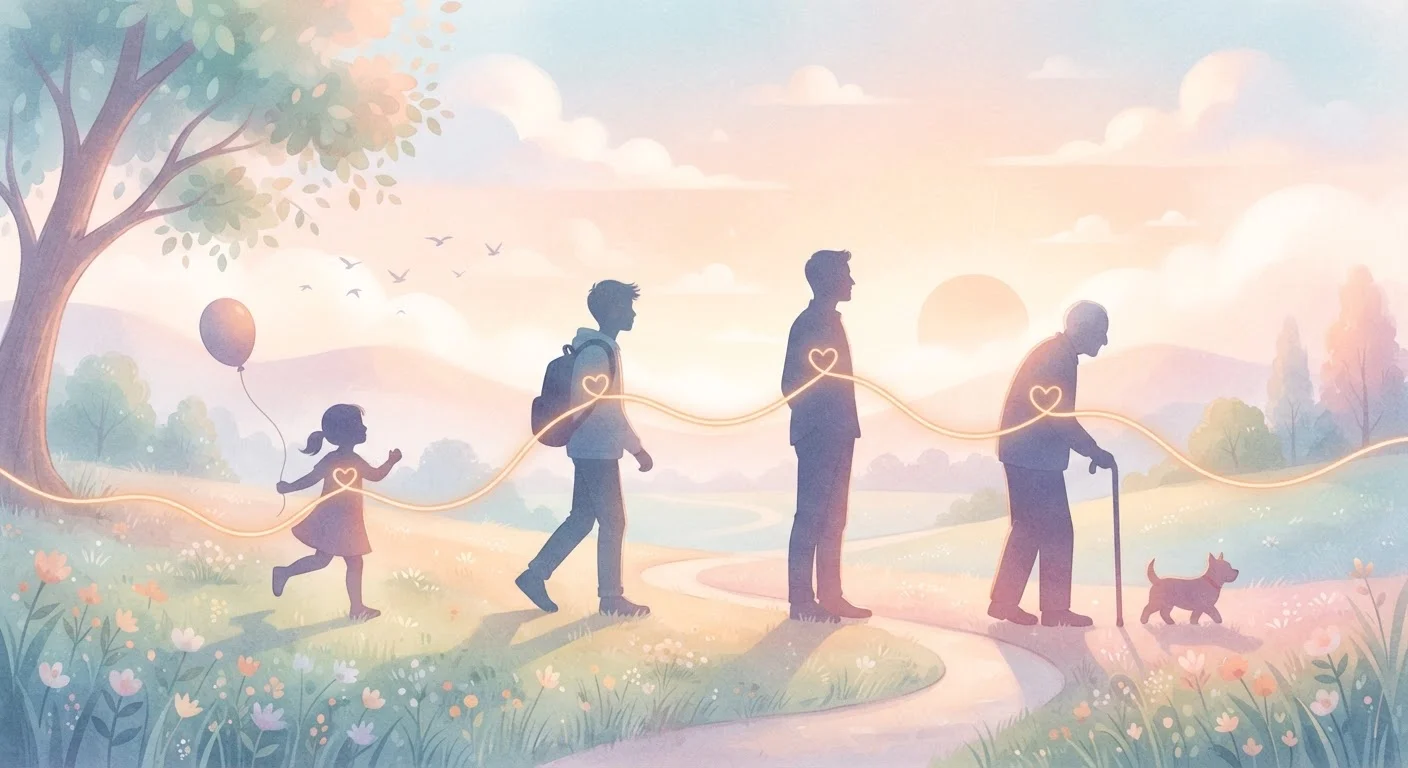
What Emotional Health Really Means
Emotional health isn't simply the absence of sadness or anxiety. It refers to the ongoing capacity to recognize, understand, and manage your feelings — and to maintain meaningful relationships and a sense of purpose even during difficult periods. Think of it as a spectrum rather than a fixed state.
To understand that spectrum more fully, our overview of what emotional balance looks like provides a strong foundation before exploring how it shifts with age.
1 in 5
U.S. adults experience a mental illness each year
According to the National Institute of Mental Health, approximately 22.8% of U.S. adults lived with a mental illness in 2021.
50%
Of lifetime mental health conditions begin by age 14
The WHO estimates that half of all mental health conditions have their onset by mid-adolescence, underscoring the importance of early emotional foundations.
26%
Reduction in depression risk linked to regular physical activity
A meta-analysis published in JAMA Psychiatry found regular exercise associated with a roughly 26% lower risk of developing depression.
Crucially, emotional health is not static. The capacities you need at age seven are genuinely different from those you need at forty-five or seventy. Recognizing that evolution — rather than judging yourself against a single standard — is itself a core emotional health skill.
This article is for general informational purposes only and is not a substitute for professional medical or mental health advice. Please consult a qualified healthcare provider regarding any personal concerns.
Childhood: Building the Emotional Foundation
The earliest years of life are not simply a prelude to "real" development — they are when the architecture of emotional health is constructed. Secure attachment to caregivers, research consistently shows, is among the most powerful predictors of later emotional resilience. When children feel reliably seen and soothed, they internalize the belief that distress is manageable.
Between ages two and six, children begin naming emotions and observing how the adults around them handle frustration, disappointment, and joy. Emotional modeling — what caregivers do, not just what they say — matters enormously here.
Try 'Emotion Coaching' at Home
Emotion coaching — a term used in developmental psychology — involves acknowledging a child's feeling before addressing the behavior. Rather than 'Stop crying,' try 'I can see you're really frustrated right now.' This approach helps children build emotional vocabulary and feel safe expressing difficult feelings. It does not mean permitting any behavior; limits can still be set warmly and clearly.
By middle childhood (roughly ages six to twelve), children develop more sophisticated understanding of mixed emotions and begin applying early coping strategies. Social relationships with peers become an important testing ground. Just as nutritional needs shift throughout childhood, so do emotional development milestones — and supporting both in tandem gives children the best start.
Adolescence: Intensity, Identity, and Regulation
Adolescence is frequently mischaracterized as simply "being dramatic." In reality, the teenage brain undergoes profound neurological reorganization. The limbic system — the brain's emotional hub — matures earlier than the prefrontal cortex, which governs planning and impulse control. This structural gap helps explain why teenagers often experience emotions with striking intensity before they have fully developed tools to regulate them.
When supporting a teenager's emotional struggles, try validating the intensity of their feeling before offering any solution. Phrases like 'That sounds genuinely hard' can do more than advice in the moment.
Adolescents whose emotions are acknowledged rather than minimized are more likely to develop healthy self-disclosure habits and seek help when needed, according to developmental psychology research.
Encourage adolescents to build at least one trusted adult relationship outside the immediate family — a coach, teacher, or mentor. This expands their emotional support network beyond peer validation alone.
Research on adolescent resilience consistently identifies non-parental adult mentors as a protective factor against anxiety, depression, and risk-taking behavior.
Identity formation is the central psychological task of adolescence. Experimenting with values, relationships, and self-image is developmentally appropriate — and emotionally taxing. Peer relationships take on outsized importance, and perceived rejection or exclusion can feel genuinely devastating, not merely melodramatic.
For adolescent girls in particular, hormonal shifts intersect with social pressures in ways that shape distinct emotional patterns. Our stage-by-stage look at women's emotional wellness explores this in greater depth.
Watch for Signs That Go Beyond Typical Teen Stress
While emotional intensity is normal in adolescence, persistent withdrawal from friends and family, significant changes in sleep or appetite, loss of interest in previously enjoyed activities, or any talk of self-harm warrants prompt attention from a qualified mental health professional. These are not phases to 'wait out.' Early intervention is associated with significantly better outcomes.
Adulthood: Stress, Relationships, and Resilience
Early and middle adulthood bring a characteristic compression of demands: career establishment, intimate partnerships, parenting, and often the early signs of caregiving for aging parents — sometimes simultaneously. Chronic stress during this phase, if unaddressed, can erode emotional regulation capacity over time.
Yet adulthood is also when many people develop their most durable coping strategies. Cognitive flexibility — the ability to reframe situations — tends to improve with experience. Social support networks, when maintained, become powerful buffers against emotional strain.
“Resilience is not a trait that people either have or don't have. It involves behaviors, thoughts, and actions that can be learned and developed in anyone.”
— American Psychological Association, Professional organization representing psychological science and practice in the U.S.
The everyday habits that quietly shape emotional health — including sleep quality, physical movement, and the depth of social connection — carry particular weight during busy adult years when self-care is often deprioritized. Similarly, the Sleep & Recovery hub offers evidence-based guidance on protecting one of emotional health's most essential inputs.
Older Adulthood: Meaning, Loss, and Emotional Wisdom
Counterintuitively, research suggests that many people experience greater emotional stability and satisfaction in older adulthood than in midlife. Psychologist Laura Carstensen's socioemotional selectivity theory proposes that as people perceive their time horizon as finite, they prioritize meaningful relationships and emotionally rewarding experiences — a shift that often yields greater day-to-day contentment.
That said, older adulthood brings genuine emotional challenges: grief from the loss of peers and partners, navigating reduced physical capacity, and — for many — the profound identity disruption of retirement. Our guide to emotional wellbeing in retirement explores why that transition can be more complex than expected.
Social isolation is a documented risk to emotional and cognitive health in later life. The Mental & Cognitive Health hub offers further resources for supporting wellbeing in older adults. Families supporting aging relatives should consult healthcare professionals about personalized strategies, particularly for those managing chronic illness.
Loneliness in Older Adults Is a Health Issue
Chronic loneliness in older adulthood has been associated with increased risk of cognitive decline, cardiovascular disease, and earlier mortality in multiple large-scale studies. It should not be treated as an inevitable part of aging. If you are concerned about an older adult's social isolation, speaking with their primary care provider is a meaningful first step toward connecting them with community resources or mental health support.
Habits That Support Emotional Health at Any Age
While emotional needs evolve across life stages, several evidence-informed practices support wellbeing from childhood through older adulthood:
- Consistent, restorative sleep — just as sleep patterns shift across the lifespan, so do strategies for protecting them.
- Regular physical movement — exercise has well-documented associations with reduced anxiety and improved mood regulation at every age.
- Meaningful social connection — quality matters more than quantity; even a few close, trusting relationships offer significant protection.
- Emotional literacy — the ongoing practice of naming and reflecting on feelings, rather than suppressing them.
- Professional support when needed — therapy, counseling, and peer support groups are appropriate resources at any life stage, not just during crisis.
Emotional Health Looks Different for Everyone
Cultural background, personal history, neurodiversity, and lived experience all shape how individuals express, process, and prioritize emotional wellbeing. There is no single template for what 'good' emotional health looks like. If general guidance doesn't feel like it fits your situation, a licensed mental health professional can help you explore approaches that are tailored to your specific context.
Caring for emotional health is not a destination — it is a practice that adapts as you do. Recognizing where you are in the lifespan, and what that stage genuinely asks of you emotionally, is itself a meaningful act of self-awareness.
The content on this site is for informational purposes only and is not a substitute for professional advice. Always consult a qualified professional for guidance specific to your situation.