

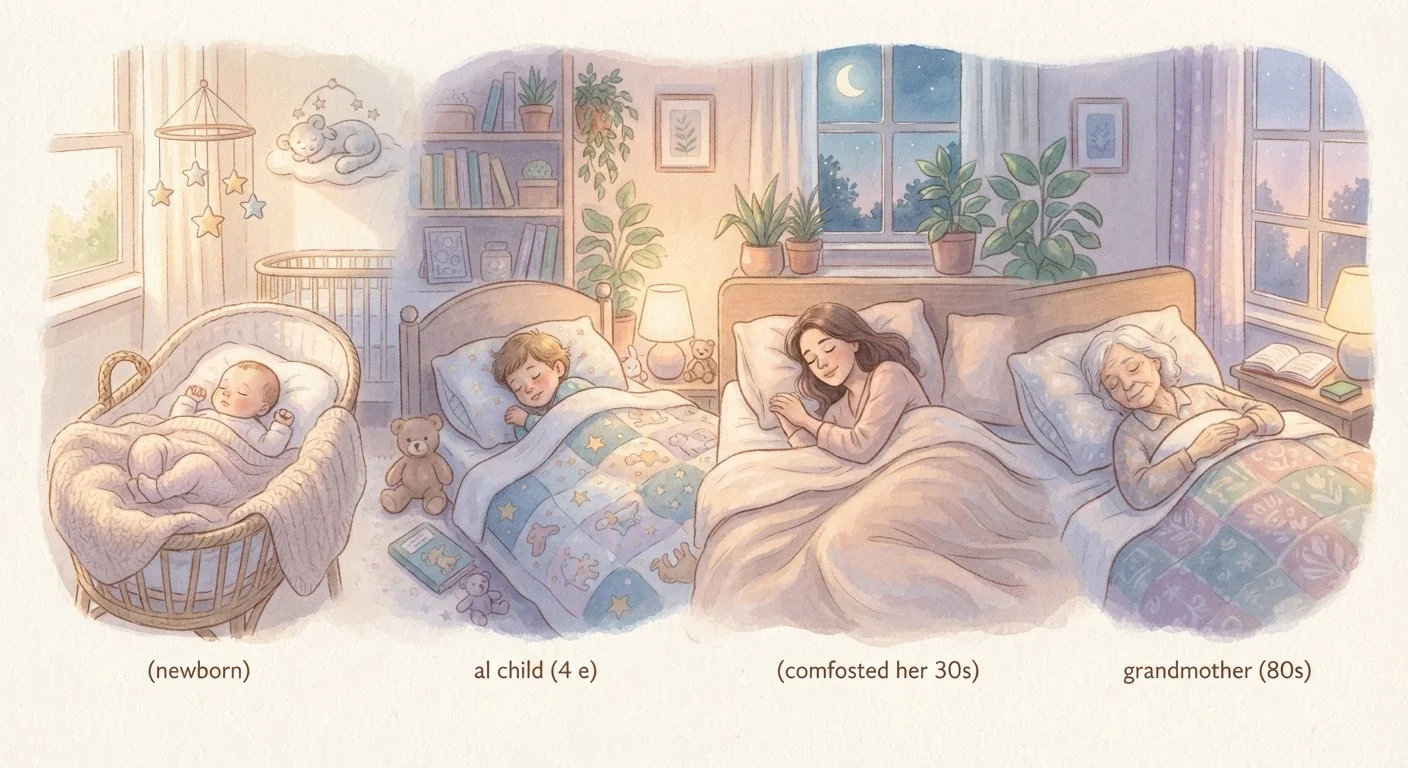
Infancy and Early Childhood: High Demand, Fragmented Delivery
Sleep in the earliest years of life is abundant but structurally unlike adult sleep. Newborns (0–3 months) require 14–17 hours per day, yet they cycle through sleep in short 2–4 hour bursts around the clock. Their sleep architecture is dominated by active sleep — the developmental precursor to REM — which occupies roughly 50% of total sleep time. This proportion supports the extraordinary pace of early brain development.
By 6 months, most infants begin consolidating sleep into longer nocturnal blocks, though nighttime waking remains common through the first year. Toddlers (1–2 years) need 11–14 hours, typically achieved through one daytime nap plus nighttime sleep. Preschoolers (3–5 years) still benefit from 10–13 hours, with naps becoming optional by age 4–5. Slow-wave (deep) sleep is at its biological peak during these years, supporting physical growth and immune function.
| Newborn sleep need (0–3 months) | 14–17 hours per day (American Academy of Sleep Medicine) |
| School-age children (6–12 years) | 9–12 hours per night (American Academy of Sleep Medicine) |
| Teenagers (13–18 years) | 8–10 hours per night (American Academy of Sleep Medicine) |
| Adults (18–64 years) | 7–9 hours per night (National Sleep Foundation) |
| Older adults (65+) | 7–8 hours per night (National Sleep Foundation) |
| REM share in newborns | ~50% of sleep (Compared to ~20–25% in healthy adults) |
School Age and Adolescence: Shifting Clocks and Shrinking Hours
School-age children (6–12 years) need 9–12 hours per night. At this stage, sleep is largely efficient and consolidated — deep sleep remains robust and REM cycles are balanced. Common disruptors include academic pressure, increased screen exposure, and after-school activities that push bedtimes later.
Adolescence introduces a well-documented biological shift: puberty delays the circadian rhythm by 1–2 hours, making it genuinely harder for teenagers to fall asleep before 11 p.m. Yet early school start times often require waking by 6 a.m., creating chronic partial sleep deprivation in this age group. Teenagers need 8–10 hours but surveys consistently show most get less. Sleep loss in adolescence is associated with impaired attention, mood dysregulation, and reduced academic performance.
A Note on Individual Variation
The sleep ranges listed throughout this article reflect population-level recommendations from sleep medicine organizations. Individual needs can vary based on genetics, health status, activity level, and other factors. If you or a family member consistently feel unrested despite meeting recommended hours, consulting a healthcare provider is advisable.
Adulthood and Midlife: Stability, Then Gradual Change
Healthy adults (18–64 years) need 7–9 hours per night. Sleep architecture stabilizes in early adulthood, with approximately 20–25% REM sleep and a moderate proportion of slow-wave sleep. Common adult disruptors include shift work, parenthood, stress, and the onset of conditions such as obstructive sleep apnea — particularly in people with obesity or anatomical risk factors.
Through the 40s and 50s, slow-wave sleep begins a gradual decline. Women experience significant sleep changes tied to hormonal transitions: perimenopause and menopause are associated with hot flashes, night sweats, and increased insomnia risk. Men see a more gradual shift. For both, this is also the period when consistent sleep hygiene practices become increasingly valuable for maintaining quality.
~50%
Newborn sleep spent in REM
This high proportion supports rapid brain development in the earliest months of life.
73%
Teens not meeting recommended sleep
According to CDC data, nearly three-quarters of high school students report sleeping less than the recommended 8 hours on school nights.
~20%
Older adults reporting insomnia symptoms
Research published in Sleep Medicine Reviews estimates insomnia symptoms affect roughly one in five older adults.
Older Adults: Earlier Rhythms, Lighter Sleep
Adults aged 65 and older still need 7–8 hours per night, but the structure of that sleep changes considerably. Slow-wave sleep decreases further, resulting in more time in lighter sleep stages and greater vulnerability to nighttime awakening. The circadian rhythm often shifts earlier — a pattern called advanced sleep phase — leading to earlier bedtimes and earlier waking times.
Sleep complaints are more common in older adults, driven by a combination of age-related changes, chronic conditions (pain, nocturia, respiratory issues), and medications. It is important to distinguish normal age-related sleep changes from treatable disorders such as insomnia or sleep apnea. Disrupted sleep in older adults has real implications for memory, mood, and cognitive health — a connection that warrants attention and, when persistent, professional evaluation. See also our companion overview on how health needs shift from 60 to 80+ for broader context.
This article is for general informational and educational purposes only and does not constitute medical advice. If you have concerns about your sleep or that of a family member — particularly children, older adults, or individuals with chronic conditions — please consult a qualified healthcare professional.
The content on this site is for informational purposes only and is not a substitute for professional advice. Always consult a qualified professional for guidance specific to your situation.