

Why Sleep Hygiene Deserves Serious Attention
Sleep hygiene refers to the set of behavioural and environmental practices that support consistent, restorative sleep. Despite the clinical-sounding name, it encompasses straightforward habits that anyone can act on — and research consistently shows they make a measurable difference. Poor sleep is linked to impaired immune function, cardiovascular risk, mood dysregulation, and reduced cognitive performance, making it one of the more consequential health levers available without a prescription.
If you're new to the concepts behind sleep health, the sleep hygiene glossary is a useful starting point for terms like circadian rhythm, sleep pressure, and sleep architecture before diving into specific practices.
Sleep Hygiene Has Limits
These practices support healthy sleep in people without underlying sleep disorders. If you experience persistent difficulty falling or staying asleep, loud snoring, gasping during sleep, or excessive daytime sleepiness despite adequate time in bed, speak with a healthcare provider. Conditions such as insomnia disorder or sleep apnoea require clinical assessment and may need treatment beyond behavioural strategies alone.
Optimising Your Sleep Environment
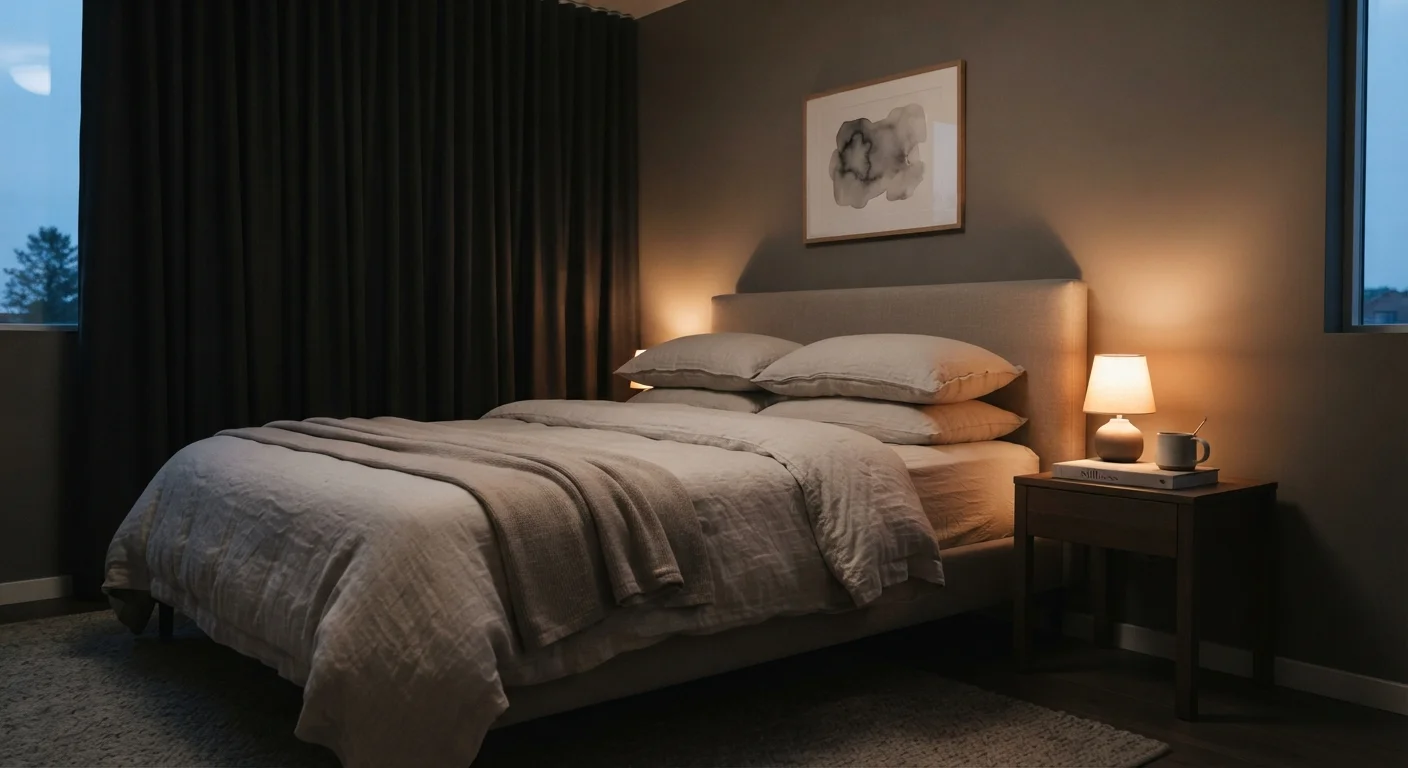
Your bedroom environment directly influences how quickly you fall asleep and how deeply you stay asleep. Three variables have the strongest evidence behind them:
- Temperature: Core body temperature naturally drops as sleep onset approaches. A cooler room — generally in the 65–68°F (18–20°C) range for most adults — supports this process. Exact preferences vary, so adjust within that range to what feels comfortable for you.
- Light: Light is the primary cue regulating the body's internal clock. Blackout curtains or a sleep mask can meaningfully reduce early-morning light intrusion. Dim lighting in the hour before bed helps signal the brain that night is approaching.
- Noise: Continuous low-level background sound (such as a white noise machine or fan) can mask disruptive environmental noise more effectively than silence alone for many people.
For a deeper look at how these needs shift across different life stages, see sleep across the lifespan.
1 in 3
U.S. adults not getting enough sleep
According to the CDC, about one-third of American adults report regularly sleeping less than the recommended seven hours per night.
~5–6 hrs
Caffeine half-life in most adults
Research on caffeine pharmacokinetics shows that caffeine consumed in mid-afternoon remains substantially active in the body at a typical bedtime.
Building a Consistent Pre-Sleep Routine
The brain responds to repeated behavioural cues. A predictable wind-down sequence — performed at roughly the same time each night — gradually becomes associated with sleep onset, reducing the mental effort of transitioning from wakefulness.
Set a fixed wake time and protect it seven days a week.
Wake time is the primary anchor for the circadian rhythm. Varying it by more than an hour on weekends creates a phenomenon sometimes called 'social jet lag,' which can make it harder to fall asleep on schedule and leave you feeling unrested even after adequate sleep hours.
Stop using screens at least 60 minutes before your target bedtime.
Blue-light exposure from devices suppresses melatonin production and keeps the brain in a more alert state. Replacing screen time with low-stimulation alternatives — reading physical books, light stretching, or listening to calm audio — helps shift your nervous system toward sleep readiness.
Reserve the bed for sleep and intimacy only.
Working, watching content, or scrolling in bed trains the brain to associate the space with wakefulness and stimulation rather than rest. This principle — called stimulus control in sleep medicine — is one of the most reliably effective behavioural interventions for insomnia.
Limit caffeine after early afternoon.
Caffeine has a half-life of roughly five to six hours in most adults, meaning a 3 p.m. coffee still has a meaningful stimulating effect at bedtime. Individual metabolism varies, so some people are more sensitive than others — but cutting off intake after 1–2 p.m. is a reasonable starting point for most.
Include a brief relaxation or wind-down activity in your routine.
Stress and cognitive arousal are among the leading contributors to difficulty falling asleep. Even 10–15 minutes of a calming activity — gentle stretching, breathing exercises, or quiet reading — can help lower physiological arousal before bed. Over time, this becomes a learned sleep cue.
For a structured checklist covering each phase of a wind-down routine, including light exposure, nutrition timing, and mindset cues, see the pre-sleep wind-down checklist.
Common Habits That Work Against Sleep
Many evening habits that feel harmless — or even relaxing — can actively disrupt sleep architecture. Screen use is the most studied: the short-wavelength (blue) light emitted by phones, tablets, and laptops suppresses melatonin secretion and delays sleep onset. Alcohol, while sedating initially, fragments sleep in the second half of the night and reduces restorative REM sleep. Irregular sleep timing — sleeping in substantially on weekends, for example — shifts the circadian rhythm in ways that make Monday-night sleep harder.
Use the evening routine audit to identify which specific patterns may be working against you. The habits recommended by mental health professionals offers additional perspective on the reasoning behind each recommendation.
This article provides general health information for educational purposes only and is not a substitute for professional medical advice, diagnosis, or treatment. If you are experiencing persistent sleep difficulties, consult a qualified healthcare provider.
The content on this site is for informational purposes only and is not a substitute for professional advice. Always consult a qualified professional for guidance specific to your situation.