

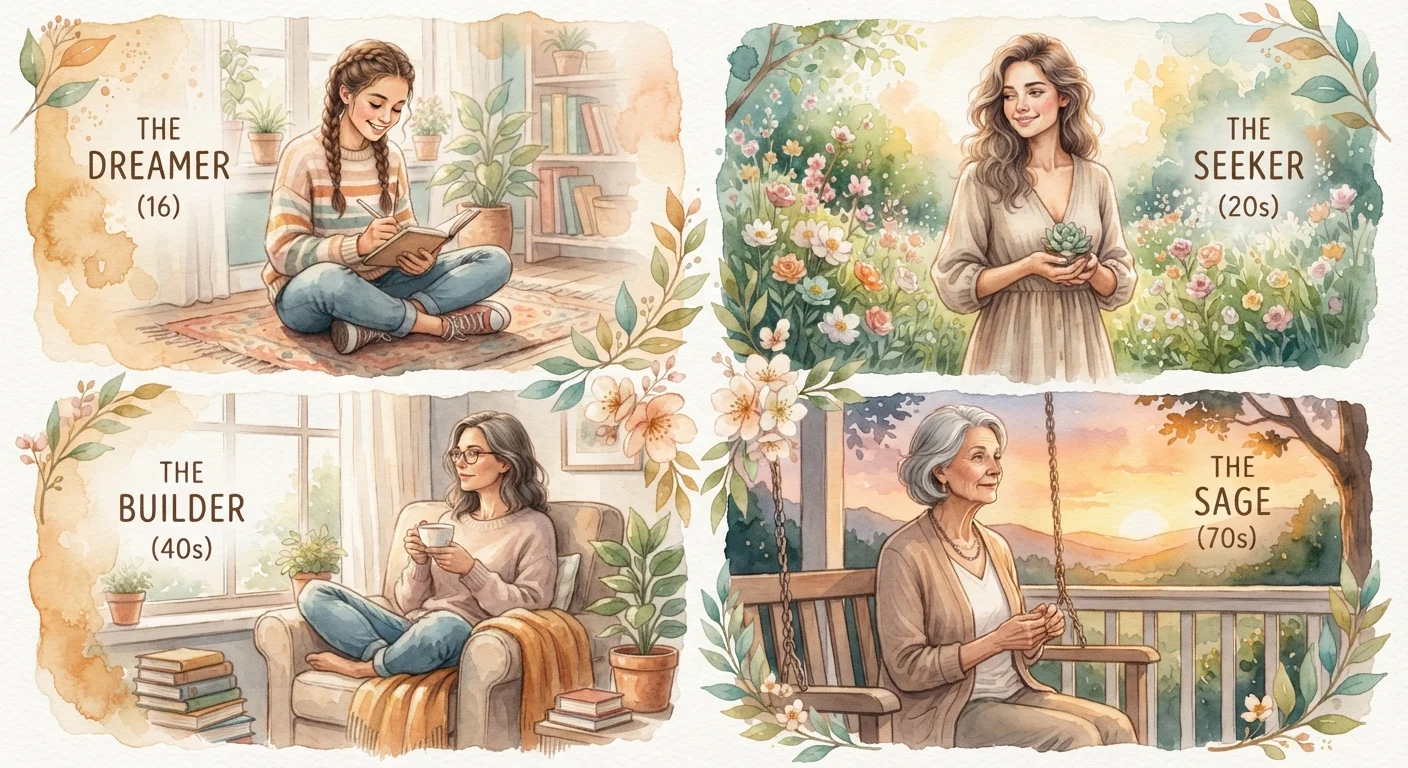
Why Women's Emotional Health Is Stage-Dependent
Emotional wellness is not a static achievement. For women, it is shaped by a continuous interplay of biology, social context, and life circumstance — factors that shift meaningfully from one life stage to the next. Fluctuating levels of estrogen, progesterone, and other hormones influence neurotransmitter systems tied to mood, anxiety, and stress response, creating distinct emotional terrain at different points across the lifespan.
Understanding these shifts helps women — and the clinicians who support them — distinguish expected transitions from conditions that warrant care. It also counters a persistent cultural tendency to dismiss women's emotional experiences as overreaction rather than recognizing them as biologically and contextually grounded realities.
For a broader look at how emotional health evolves across all people, see A Complete Overview of Emotional Health Across the Lifespan. This guide focuses specifically on the female experience.
1 in 7
Women affected by postpartum depression
Postpartum depression affects approximately 1 in 7 women, according to research cited in major obstetric and psychiatric literature.
~8%
Prevalence of PMDD among people who menstruate
Premenstrual dysphoric disorder is estimated to affect up to 8% of people who menstruate, based on peer-reviewed gynecological research.
2x
Higher depression risk for women vs. men post-puberty
After puberty, women are approximately twice as likely as men to be diagnosed with depression, a pattern documented in decades of epidemiological research.
Adolescence: Identity, Hormones, and Emotional Turbulence
Puberty triggers a dramatic hormonal reorganization that coincides with equally significant social and psychological development. Girls experience higher rates of depression and anxiety than boys starting in early adolescence — a gap that research consistently attributes to a combination of hormonal sensitivity, socialization pressures, and early exposure to gender-based stressors including body image scrutiny and social comparison.
Key concerns during this stage include:
- Mood instability tied to cyclical estrogen and progesterone changes once menstruation begins
- Social anxiety amplified by peer evaluation and identity formation
- Increased vulnerability to depression, eating disorders, and self-critical thinking patterns
Supportive relationships with trusted adults, access to school-based mental health resources, and open conversations about the menstrual cycle and its emotional dimensions are among the evidence-supported protective factors during this stage.
Teach adolescent girls to track their menstrual cycle alongside their mood — not to pathologize variation, but to build self-awareness that distinguishes cycle-related shifts from persistent mental health concerns.
Early cycle literacy helps young women recognize patterns and advocate for themselves when symptoms are disruptive rather than typical.
During perimenopause, bring a written list of emotional symptoms — not just physical ones — to your healthcare appointments. Providers may not ask, and mood changes during this transition are both common and clinically addressable.
Research shows that emotional symptoms of perimenopause are frequently underreported and underdiagnosed when patients and clinicians focus exclusively on physical changes.
The Reproductive Years: Navigating Cycles, Relationships, and Roles
The years spanning roughly the mid-20s through early 40s are often framed as peak productive years — but they carry significant emotional load. Premenstrual syndrome (PMS) affects a large proportion of women, while premenstrual dysphoric disorder (PMDD) — a clinically recognized condition involving severe mood disruption in the luteal phase — is estimated to affect up to 8% of people who menstruate, according to research published in peer-reviewed gynecology literature.
Pregnancy and the postpartum period introduce additional vulnerability. Postpartum depression (PPD) affects approximately 1 in 7 women and is distinct from the brief "baby blues" many experience in the first days after birth. PPD can emerge up to a year after delivery and requires clinical evaluation and support.
Postpartum Depression Requires Clinical Attention
Postpartum depression is not a sign of weakness or poor parenting — it is a recognized medical condition with effective treatments. Symptoms can include persistent sadness, difficulty bonding with the baby, withdrawal, and intrusive thoughts. If you or someone you know is experiencing these symptoms after childbirth, please reach out to a healthcare provider promptly. Early intervention leads to better outcomes for both parent and child.
Fertility-related challenges — including miscarriage, infertility, and pregnancy loss — also carry substantial emotional weight that is frequently underacknowledged. The research on fertility across the decades underscores how reproductive uncertainty intersects with emotional health in complex ways.
Women in this stage also navigate shifting relationship dynamics, caregiving responsibilities, and career demands — all of which interact with biological vulnerability. Grief, loss, and persistent low mood during this period deserve proper clinical evaluation. The distinction between sadness and depression matters clinically; see Grief, Sadness, and Depression for a detailed breakdown.
Perimenopause and Menopause: When Hormones Rewrite Emotional Norms
Perimenopause — the transition period leading to the final menstrual period — typically begins in a woman's mid-40s, though it can start earlier. Declining and fluctuating estrogen levels during this phase have measurable effects on serotonin and dopamine systems, contributing to mood instability, irritability, heightened anxiety, and in some women, first-onset depression with no prior psychiatric history.
Sleep disruption from night sweats compounds emotional dysregulation significantly. Cognitive changes such as memory lapses and difficulty concentrating — sometimes called "brain fog" — add to psychological distress. These experiences are explored in depth in Mood, Memory, and Menopause.
The hormonal architecture of this transition is detailed in The Hormonal Timeline, a companion resource that helps contextualize these emotional changes within their physiological drivers.
Don't Dismiss First-Onset Anxiety in Your 40s
Some women experience anxiety or depression for the first time during perimenopause, with no prior mental health history. This can lead both patients and providers to overlook hormonal contributors or to attribute the symptoms solely to life stress. If new or worsening emotional symptoms emerge in midlife, request a comprehensive evaluation that includes hormonal context. Effective support is available.
Clinicians and patients alike should recognize that emotional symptoms during perimenopause are not inevitable personal failures — they reflect genuine neurobiological change. Treatment options, including psychotherapy, lifestyle interventions, and in appropriate cases, medical therapies, should be discussed with a qualified healthcare provider.
Postmenopause and Later Life: Reframing Identity and Sustaining Wellbeing
After menopause, hormone levels stabilize at lower baselines. Many women report improved mood stability compared to the perimenopause transition, though others continue to experience anxiety or depression that warrants ongoing care. Later life introduces its own emotional landscape: shifts in social roles, retirement, changing relationships, bereavement, and evolving physical health all shape emotional experience.
The psychological adjustment that can follow major transitions like retirement is often underestimated. Emotional Wellbeing in Retirement addresses how identity and purpose shift when work-related structure is removed — a transition that disproportionately affects women who have defined themselves through multiple simultaneous roles.
Maintaining social connection is among the most well-supported strategies for emotional health in later life. Loneliness and social isolation are associated with increased risk of depression and cognitive decline in older adults, according to evidence from longitudinal population studies.
“Social relationships are among the most powerful determinants of mental health across the lifespan — for women especially, the quality of social connection is as important as any clinical intervention we can offer.”
— Julianne Holt-Lunstad, Professor of Psychology and Neuroscience, researcher on social connection and health outcomes
Cross-Stage Strategies for Lasting Emotional Resilience
Certain evidence-based approaches to emotional wellbeing hold value across every life stage, even as the specific emotional challenges shift. These are not cures or guarantees — they are practices that support a durable foundation for mental health:
- Consistent, quality sleep: Sleep is one of the most powerful regulators of mood and stress reactivity at any age.
- Regular physical activity: Exercise has demonstrated benefits for depression and anxiety symptoms across multiple clinical reviews.
- Strong social connection: Relationships that offer genuine support buffer against stress and emotional isolation.
- Routine mental health check-ins: Normalizing psychological care — not reserving it for crisis — is associated with better long-term outcomes.
- Therapeutic support: Cognitive behavioral therapy and other evidence-based approaches are effective across a wide range of mood and anxiety presentations.
Building emotional resilience is a lifelong practice, not a single achievement. It is worth investing in at every stage.
Explore the full range of emotional health topics in the Mood & Emotions hub and hormonal health guidance in the Hormones & Menopause hub.
Make Mental Health a Routine, Not a Crisis Response
Consider scheduling an annual mental health check-in with a therapist or counselor — even when you feel well. Just as routine physical exams catch issues early, routine psychological check-ins build self-awareness and coping capacity before stress escalates. Many women find that brief, periodic therapy sessions during life transitions are more sustainable and effective than waiting until a crisis point.
This article is for general informational and educational purposes only and does not constitute medical advice. If you are experiencing symptoms of depression, anxiety, or any mental health condition, please consult a qualified healthcare professional.
The content on this site is for informational purposes only and is not a substitute for professional advice. Always consult a qualified professional for guidance specific to your situation.