

Why Uric Acid Is the Root Cause
Every gout flare starts with hyperuricemia — abnormally high uric acid in the bloodstream. The body produces uric acid when it metabolizes purines, and it normally dissolves in blood and exits via the kidneys. When production outpaces excretion, uric acid accumulates and crystallizes into needle-shaped monosodium urate deposits inside joint spaces.
Those crystals are what the immune system attacks. White blood cells attempt to engulf the crystals, releasing inflammatory chemicals that cause the heat, redness, and excruciating pain of a flare. Left unmanaged, repeated inflammation can damage cartilage and lead to tophi — chalky crystal lumps visible under the skin around joints.
3–4×
Higher gout prevalence in men vs. women
Epidemiological data consistently shows men develop gout at roughly three to four times the rate of premenopausal women, largely due to hormonal differences in uric acid excretion.
~8.3M
Americans estimated to have gout
Data from national health surveys estimate that approximately 8 million adults in the United States are affected by gout, making it the most common form of inflammatory arthritis.
6.8 mg/dL
Uric acid saturation threshold for crystal formation
At serum uric acid concentrations above approximately 6.8 mg/dL, monosodium urate becomes supersaturated in blood and can precipitate as crystals in joint tissues.
The Male Risk: Hormones, Habits, and Biology
Men are diagnosed with gout at roughly three to four times the rate of women of reproductive age. The hormonal explanation is well-established: estrogen enhances renal uric acid clearance, giving premenopausal women a built-in buffer. Men have no equivalent mechanism, so uric acid tends to run higher from early adulthood onward.
Biology isn't the only factor. Behavioral and lifestyle patterns common among men also elevate risk. Heavy alcohol consumption — particularly beer, which is high in purines — is a significant driver. Diets rich in red meat, organ meats, and shellfish raise uric acid further. Obesity increases production while impairing kidney clearance. Certain blood pressure medications, especially thiazide diuretics, can also raise uric acid as a side effect.
Men with other underdiagnosed bone and joint conditions may sometimes attribute early gout symptoms to general joint soreness, delaying diagnosis.
Hydration Is a Simple Starting Point
Keeping well-hydrated supports the kidneys in excreting uric acid more efficiently. Drinking adequate water throughout the day — particularly during physical activity or hot weather — is one of the most accessible habits men can adopt to help manage uric acid levels. It won't replace medical treatment when needed, but it's a sound daily practice.
What a Gout Attack Looks and Feels Like
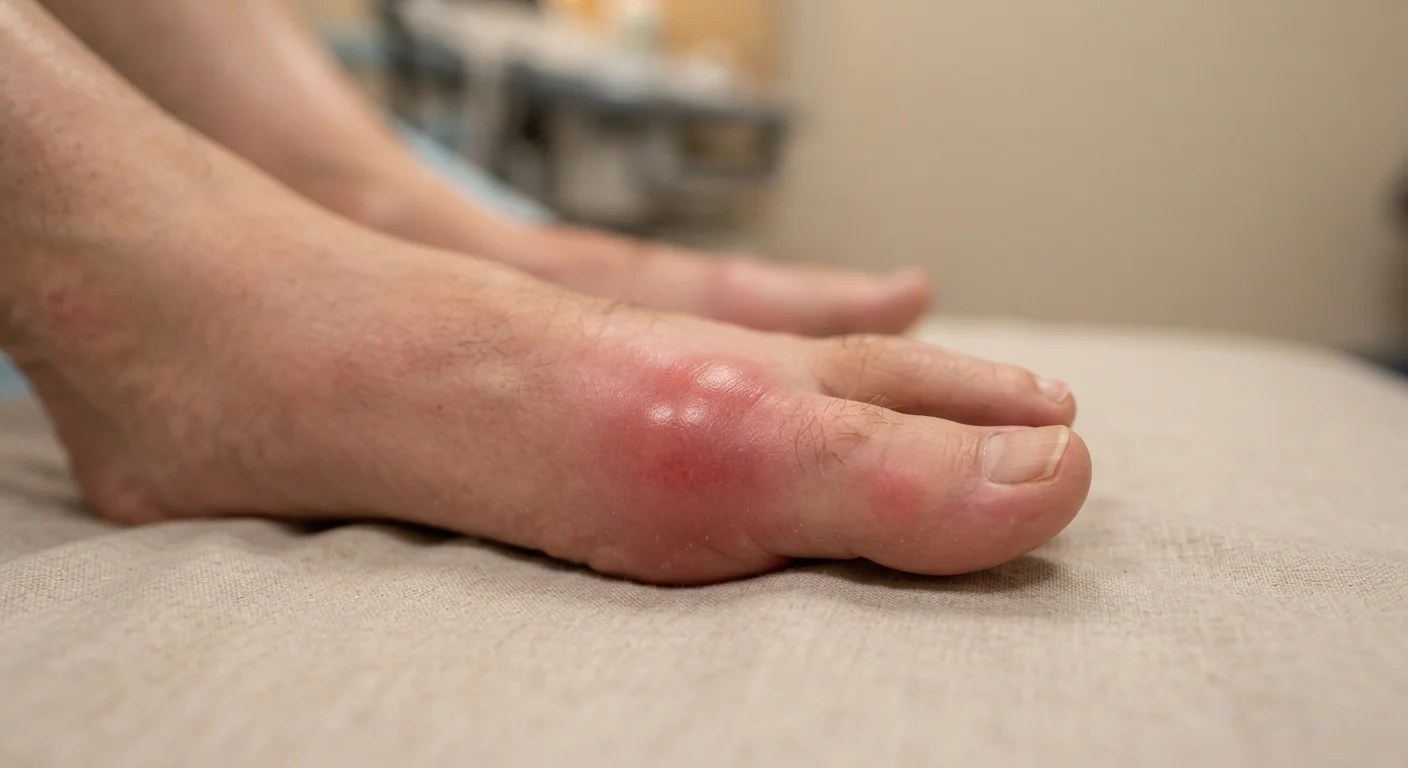
Gout attacks typically arrive suddenly, often overnight. The metatarsophalangeal joint at the base of the big toe is the site of the first flare in roughly half of all cases — a presentation so characteristic it has a dedicated clinical name: podagra. Other common targets include the ankle, knee, midfoot, wrist, and elbow.
During a flare, the affected joint becomes swollen, hot to the touch, deeply red, and intensely tender — sometimes so sensitive that the weight of a bedsheet is unbearable. Attacks typically peak within 12–24 hours and, without treatment, resolve on their own over one to two weeks. However, without addressing uric acid levels, flares recur and often become more frequent and severe over time.
It's worth distinguishing gout from other joint conditions. For a broader breakdown of how inflammatory and degenerative joint diseases differ, our article on arthritis, osteoporosis, and joint pain provides useful context.
Managing Gout: What the Evidence Supports
Managing gout involves two related goals: treating acute flares and preventing future ones by lowering uric acid long-term. Physicians typically address acute attacks with anti-inflammatory medications; the specific approach depends on a patient's overall health profile, so treatment decisions should always involve a qualified clinician.
For long-term prevention, dietary adjustments consistently show benefit. Reducing intake of high-purine foods, limiting alcohol — especially beer and spirits — staying well-hydrated, and maintaining a healthy weight all help keep uric acid levels in check. Low-fat dairy products are associated with a modest protective effect in research literature.
When lifestyle changes alone are insufficient, physicians may prescribe urate-lowering medications to bring blood uric acid to target levels below 6 mg/dL. Regular monitoring through blood tests helps gauge progress. Managing any coexisting conditions — such as hypertension, kidney disease, or metabolic syndrome — is also an important part of the overall picture, since these conditions interact with uric acid metabolism.
Gout Risk Rises With Age
While gout can occur in younger men, prevalence increases significantly with age, particularly after 40. Older men are also more likely to have coexisting conditions — such as chronic kidney disease or cardiovascular disease — that complicate both uric acid management and treatment options. Men in this age range should be especially proactive about discussing joint symptoms with their doctor.
This article is for general informational purposes only and does not constitute medical advice. Always consult a qualified healthcare professional for personal diagnosis, treatment decisions, or concerns about your symptoms.
Frequently Asked Questions
Estrogen promotes uric acid excretion through the kidneys, so premenopausal women naturally maintain lower uric acid levels. Men lack this hormonal advantage and tend to have higher baseline uric acid levels throughout their adult lives, making crystal formation more likely. After menopause, women's gout risk rises and begins to approach men's rates.
Common triggers include eating high-purine foods such as red meat, organ meats, and shellfish; drinking alcohol, especially beer; dehydration; sudden illness or surgery; and certain medications like diuretics. Even rapid changes in uric acid levels — whether rising or falling — can precipitate a flare.
No. Gout is a distinct form of inflammatory arthritis caused specifically by uric acid crystal deposits, whereas osteoarthritis involves cartilage breakdown and rheumatoid arthritis is autoimmune. See our <a href="/senior-health/chronic-conditions/arthritis-osteoporosis-and-joint-pain-understanding-the-differences">overview of joint conditions</a> for a fuller comparison.
Gout cannot be permanently cured, but it can be effectively controlled. Long-term management typically aims to lower uric acid levels below 6 mg/dL through dietary adjustments and, where appropriate, medications prescribed by a physician. Sustained control significantly reduces flare frequency and prevents joint damage.
Seek medical evaluation any time you experience sudden, severe joint pain with redness and swelling, especially in the big toe, ankle, or knee. A doctor can confirm the diagnosis — often through blood tests or joint fluid analysis — and rule out other causes like infection. Do not attempt to self-diagnose or self-treat.
The content on this site is for informational purposes only and is not a substitute for professional advice. Always consult a qualified professional for guidance specific to your situation.