

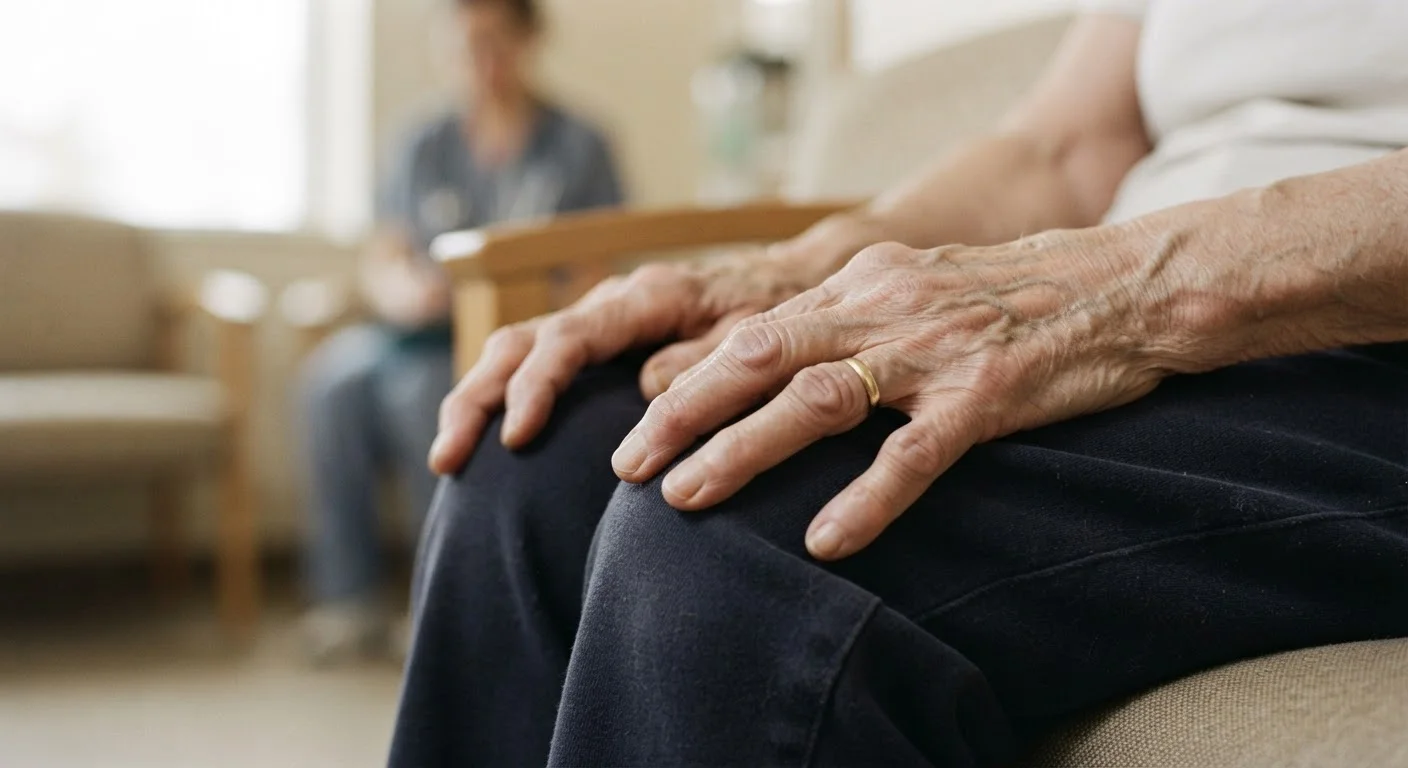
Option A
Arthritis
A joint disease driven by inflammation or cartilage breakdown.
Best for: Understanding as the primary cause of joint pain, stiffness, and swelling in older adults.
Option B
Osteoporosis
A silent bone-density condition with no pain until a fracture occurs.
Best for: Understanding as the leading driver of fragility fractures and fall-related complications in aging.
Two Different Diseases, One Confusing Overlap
Arthritis and osteoporosis are frequently mentioned together in conversations about aging, and for good reason — both become more common as we get older, and both can affect how comfortably and safely a person moves through daily life. But they are fundamentally different diseases with different mechanisms, symptoms, and treatment goals.
Arthritis refers to a group of conditions characterized by joint inflammation or degeneration. The two most prevalent forms in older adults are osteoarthritis (OA), caused by the gradual breakdown of cartilage, and rheumatoid arthritis (RA), an autoimmune disease. Both produce recognizable symptoms: joint pain, stiffness, swelling, and reduced range of motion. See our detailed comparison of rheumatoid arthritis and osteoarthritis for a deeper look at how these two subtypes differ.
Osteoporosis, by contrast, does not directly cause joint pain. It is a metabolic bone disease in which bones lose density and structural integrity over time, increasing the risk of fractures — particularly of the hip, spine, and wrist. Many people live with significant bone loss for years without any noticeable symptoms. Understanding this distinction is clinically important: treating one condition does not address the other.
| Criterion | Arthritis | Osteoporosis |
|---|---|---|
| Primary tissue affected | Joint cartilage and synovium | Bone mineral density |
| Main symptom | Pain, stiffness, swelling | Often none until fracture |
| Common diagnostic tool | X-ray, blood tests, exam | DEXA bone density scan |
| Primary fracture risk | Indirect (falls due to pain) | Direct (fragile bones) |
| Most affected populations | Adults 50+; RA affects women more | Postmenopausal women; men 70+ |
| Core treatment approach | Anti-inflammatories, PT, surgery | Bone medications, fall prevention |
| Can conditions coexist? | Yes | Yes |
Why the Distinction Matters for Diagnosis and Care
Because joint pain is such a common complaint among older adults, it can obscure the presence of underlying osteoporosis. A person managing chronic knee pain from osteoarthritis may be unaware that their bones are simultaneously becoming more fragile — a combination that significantly raises fracture risk during a fall.
54 million
U.S. adults affected by arthritis
The CDC estimates over 54 million American adults have been diagnosed with some form of arthritis.
10 million
U.S. adults with osteoporosis
The National Osteoporosis Foundation estimates approximately 10 million Americans have osteoporosis, with another 44 million having low bone density.
~50%
Women over 50 at fracture risk from osteoporosis
According to the National Institutes of Health, roughly half of women over 50 will experience an osteoporosis-related fracture in their lifetime.
Osteoporosis is diagnosed through a dual-energy X-ray absorptiometry (DEXA) scan, which measures bone mineral density. This is not a standard part of arthritis workups. The U.S. Preventive Services Task Force recommends screening for women aged 65 and older, and for younger postmenopausal women with elevated risk factors. For men, guidelines vary; clinicians typically screen based on individual risk profiles.
Arthritis, on the other hand, is typically diagnosed through physical examination, patient history, X-rays showing joint changes, and in the case of RA, blood markers such as rheumatoid factor and anti-CCP antibodies. No single imaging test covers both conditions comprehensively.
Treatment pathways diverge further. Arthritis management may include physical therapy, anti-inflammatory medications, and — in advanced cases — joint replacement. Osteoporosis management centers on bisphosphonates or other bone-building medications, calcium and vitamin D optimization, and fall prevention strategies. For an in-depth look at managing joint degeneration specifically, see our guide to osteoarthritis management approaches.
When Both Conditions Are Present
It is not uncommon for an older adult to have both arthritis and osteoporosis simultaneously. Rheumatoid arthritis in particular is associated with accelerated bone loss, partly due to chronic inflammation and partly due to long-term corticosteroid use. If you have been diagnosed with RA or are on long-term steroids, ask your provider whether bone density screening is appropriate for you.
Understanding how bone density loss connects to fall mechanics is equally important. Our article on bone density, falls, and fracture risk maps this chain of events in detail.
This article is for general informational purposes only and does not constitute medical advice. Please consult a qualified healthcare provider for evaluation, diagnosis, and personalized treatment recommendations.
The content on this site is for informational purposes only and is not a substitute for professional advice. Always consult a qualified professional for guidance specific to your situation.