

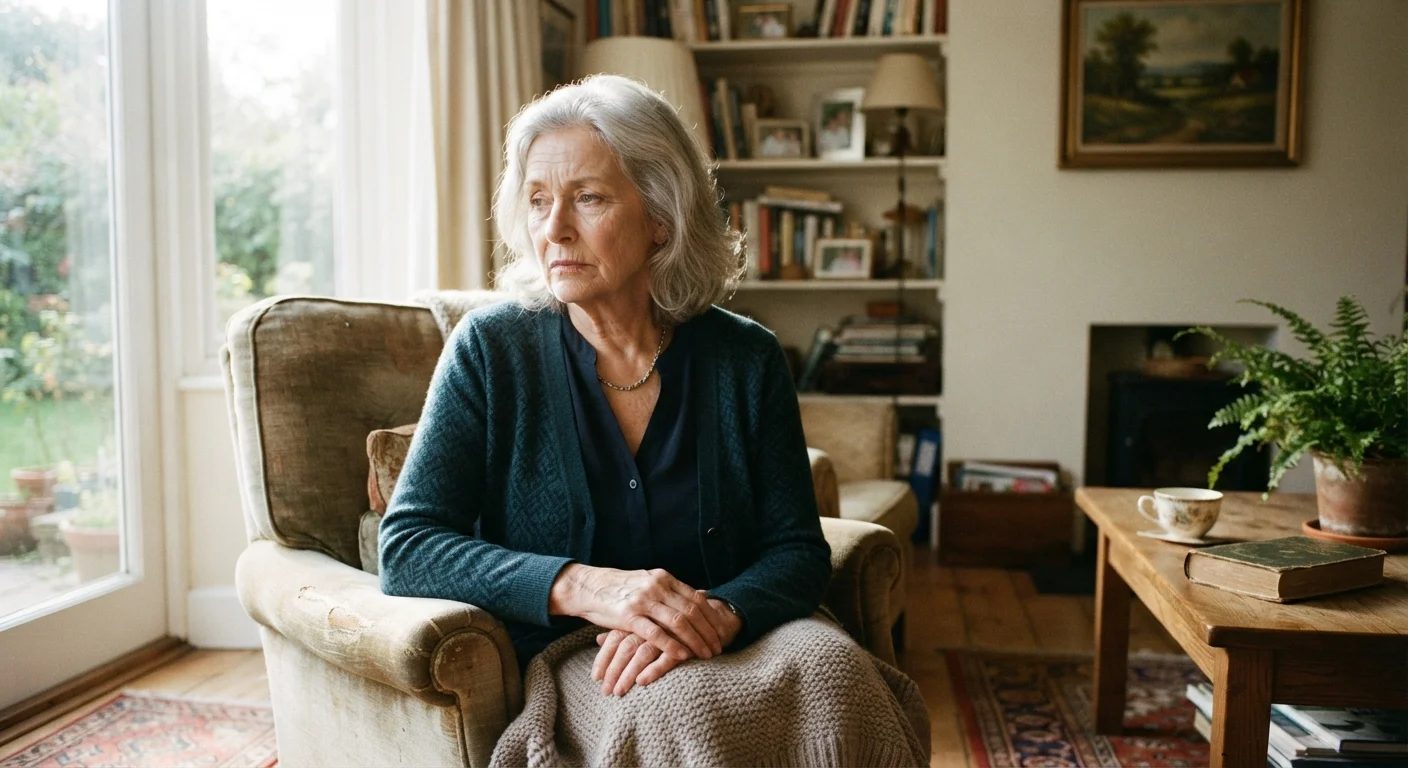
Why Anxiety Looks Different as We Age
Most people picture anxiety as persistent worrying or a racing heart. While those features can occur at any age, older adults frequently experience and express anxiety in ways that don't fit that familiar profile — which is a key reason it so often goes unrecognized.
For a deeper grounding in what anxiety is before exploring its age-specific presentation, see this introduction to anxiety. And for a clear breakdown of specific anxiety disorder types, anxiety disorders at a glance offers useful reference definitions.
Several factors shape how anxiety presents in later life. Physiological changes affect the nervous system's stress response. Accumulated chronic illness creates new, legitimate health concerns that can be difficult to disentangle from excessive worry. And generational norms — particularly among adults who grew up equating stoicism with resilience — often discourage open acknowledgment of emotional distress.
Anxiety Is Not a Normal Part of Aging
It is a common misconception — held by patients, caregivers, and sometimes clinicians — that anxiety is simply what happens when people get older and face more hardships. While later life does bring genuine stressors, an anxiety disorder is a distinct clinical condition, not an expected or inevitable feature of aging. This distinction matters because it affects whether help is sought and offered.
Common Presentations Clinicians See in Older Patients
Rather than articulating worry, many older adults with anxiety present with somatic (physical) complaints: unexplained gastrointestinal discomfort, chronic fatigue, dizziness, or muscle tension. These symptoms are real and distressing — and they also overlap substantially with common chronic conditions, making differential diagnosis genuinely challenging.
Health anxiety is especially prevalent in this age group. When an individual has multiple diagnosed illnesses and takes several medications, concern about health is not irrational. The clinical challenge is identifying when health-related vigilance has crossed into a pattern of fear and avoidance that meaningfully impairs quality of life.
Fear of falling deserves particular attention. It is one of the most clinically recognized anxiety-related presentations in older adults. A person who has fallen — or who fears falling — may progressively restrict activity, decline social engagements, and avoid leaving home. This restriction, while intended to reduce risk, paradoxically weakens strength and balance, increasing actual fall risk over time.
10–20%
Older adults affected by anxiety disorders
Population-based estimates consistently place anxiety disorder prevalence in adults aged 60 and older between 10% and 20%, with generalized anxiety disorder being the most common type.
~50%
Anxiety cases in seniors that go undiagnosed
Clinical literature suggests that anxiety in older adults is substantially underdetected, with some researchers estimating fewer than half of affected individuals receive a formal diagnosis or treatment.
2x
Increased fall risk from activity avoidance
Research indicates that older adults with fear-of-falling anxiety who restrict activity can experience accelerated physical deconditioning, doubling their actual fall risk over time compared to those who remain active.
Behavioral withdrawal is another hallmark. An older adult with anxiety may decline invitations, become reluctant to drive, or avoid medical appointments. These changes are easy to misread as personality shifts, grief, or cognitive decline — which is why attentive caregivers and clinicians need to look beneath the surface behavior.
The Overlap with Depression and Chronic Illness
Anxiety and depression co-occur at notably high rates in older adults — research consistently shows that each condition increases the likelihood of the other. This complicates both recognition and treatment. Depression in older adults is itself frequently misidentified as normal aging, and the same diagnostic blind spots apply to anxiety.
Chronic conditions add another layer of complexity. Heart disease, COPD, thyroid disorders, and even certain medications can produce symptoms — palpitations, breathlessness, restlessness — that closely mimic anxiety. Clinicians must evaluate whether anxiety is primary or whether it is being driven or worsened by an underlying physical condition. For context on related physical health concerns in seniors, our coverage of blood pressure in older adults illustrates how closely monitored physical health intersects with emotional wellbeing.
“Anxiety in older adults is both underrecognized and undertreated. Part of the problem is that we've built our diagnostic frameworks around younger patients — symptoms like somatic complaints or fear of falling don't map cleanly onto textbook descriptions of worry.”
— Dr. Carolyn Aldwin, Gerontology researcher and professor, Oregon State University
It is also worth noting that some cognitive changes associated with anxiety — slowed recall, difficulty concentrating — can superficially resemble early dementia. This is distinct from actual cognitive decline, though the two can co-exist. Readers navigating this question may find value in understanding memory changes in later life.
Pathways to Recognition and Support
Earlier recognition begins with knowing what to look for. Caregivers and family members are often better positioned than clinicians to notice gradual behavioral shifts — increasing reluctance to engage in activities, new sleep disturbances, more frequent health-related complaints, or uncharacteristic irritability. These are worth raising with a healthcare provider, framed not as a diagnosis but as an observed change.
What to Tell a Doctor About Anxiety Concerns
When raising anxiety concerns about an older adult with a healthcare provider, be specific: describe what behaviors have changed, how long they've been present, and how they differ from the person's baseline. Phrases like 'she's always been a worrier' can inadvertently minimize a clinical concern. Concrete examples — 'he has stopped leaving the house for the past three months' — are more useful for assessment.
Validated screening tools exist that clinicians can use to assess anxiety in older adults, though standard instruments may need adaptation to account for age-specific presentations. A primary care physician, geriatrician, or geriatric psychiatrist can conduct a thorough evaluation and distinguish anxiety from overlapping conditions.
Importantly, age is never a clinical reason to leave anxiety untreated. Cognitive behavioral therapy has strong evidence across age groups. Lifestyle factors — sleep quality, physical activity within appropriate limits, social connection — also meaningfully affect anxiety levels and are generally within the scope of what clinicians will discuss as part of a care plan.
It's also worth distinguishing anxiety from stress before seeking support. Stress and anxiety are not the same thing, and understanding which a person is experiencing shapes what kind of help is most appropriate.
This article is for general informational and educational purposes only and does not constitute medical advice. If you or someone you care for is experiencing symptoms of anxiety or any mental health concern, please consult a qualified healthcare professional for personalized evaluation and guidance.
Frequently Asked Questions
Yes. Anxiety disorders are among the most prevalent mental health conditions affecting older adults. Some estimates suggest they affect between 10% and 20% of the older adult population, though rates are likely underreported due to underdiagnosis. Generalized anxiety disorder is the most common type seen in this age group.
Older adults are more likely to report physical symptoms — such as fatigue, muscle tension, or stomach problems — than to identify or express worry directly. They are also more likely to anchor anxiety in concrete health concerns rather than generalized future-focused fears. Social norms around stoicism in older generations may also make self-reporting less likely.
In some cases, yes. Anxiety can impair concentration, slow processing speed, and affect memory performance, which can superficially resemble early cognitive decline. Proper assessment by a qualified clinician is essential to distinguish between conditions. It's worth noting that anxiety and early dementia can also co-exist.
Evidence-based approaches include cognitive behavioral therapy (CBT), which has strong support across age groups including older adults, as well as certain medications prescribed and monitored by a physician. Treatment decisions should account for an older adult's overall health, existing medications, and personal preferences. A qualified healthcare provider can recommend an appropriate course of action.
Treatment principles are broadly similar, but clinicians tailor approaches to account for age-related factors — including higher rates of chronic illness, polypharmacy risk, and sensory or mobility limitations that affect therapy participation. Psychological therapies are generally preferred as first-line options in older adults when feasible.
If anxiety symptoms are persistent, interfering with daily activities, causing significant distress, or leading to increasing avoidance of normal routines, a healthcare provider should be consulted. Sudden onset or sharp worsening of anxiety symptoms warrants prompt evaluation, as it can sometimes signal an underlying medical issue.
The content on this site is for informational purposes only and is not a substitute for professional advice. Always consult a qualified professional for guidance specific to your situation.