What the Research Actually Shows
Falls are the leading cause of injury-related death among adults aged 65 and older in the United States, according to the CDC — and preventing them requires more than general caution. Tai chi has emerged as one of the most rigorously studied movement interventions for reducing fall risk, with a body of evidence that goes well beyond anecdote.
A landmark systematic review published in the Journal of the American Geriatrics Society analyzed data from multiple randomized controlled trials and found that tai chi significantly reduced both the rate of falls and the number of people experiencing falls compared to control groups. A 2023 Cochrane Review on interventions to prevent falls in older adults similarly identified tai chi as among the exercise approaches with credible evidence of benefit.
The CDC has recognized specific tai chi-based programs — particularly Tai Ji Quan: Moving for Better Balance (TJQMBB) — as evidence-based fall prevention strategies under its STEADI (Stopping Elderly Accidents, Deaths & Injuries) initiative. This distinction is significant: it reflects a high bar for program evaluation, including peer-reviewed evidence and demonstrated real-world effectiveness.
~25%
Reduction in fall rate with tai chi
A 2023 Cochrane Review on fall prevention in older adults found tai chi-based programs associated with approximately a 19–25% reduction in fall rates in multiple trials.
3 million+
Older adults treated for fall injuries annually
The CDC estimates over 3 million older adults are treated in emergency departments for fall injuries each year in the United States.
12–26 weeks
Typical duration for measurable benefit
Most clinical protocols showing significant balance and fall-rate improvements involved structured tai chi practice sustained over 12 to 26 weeks.
Why Tai Chi Works: The Physiological Mechanisms
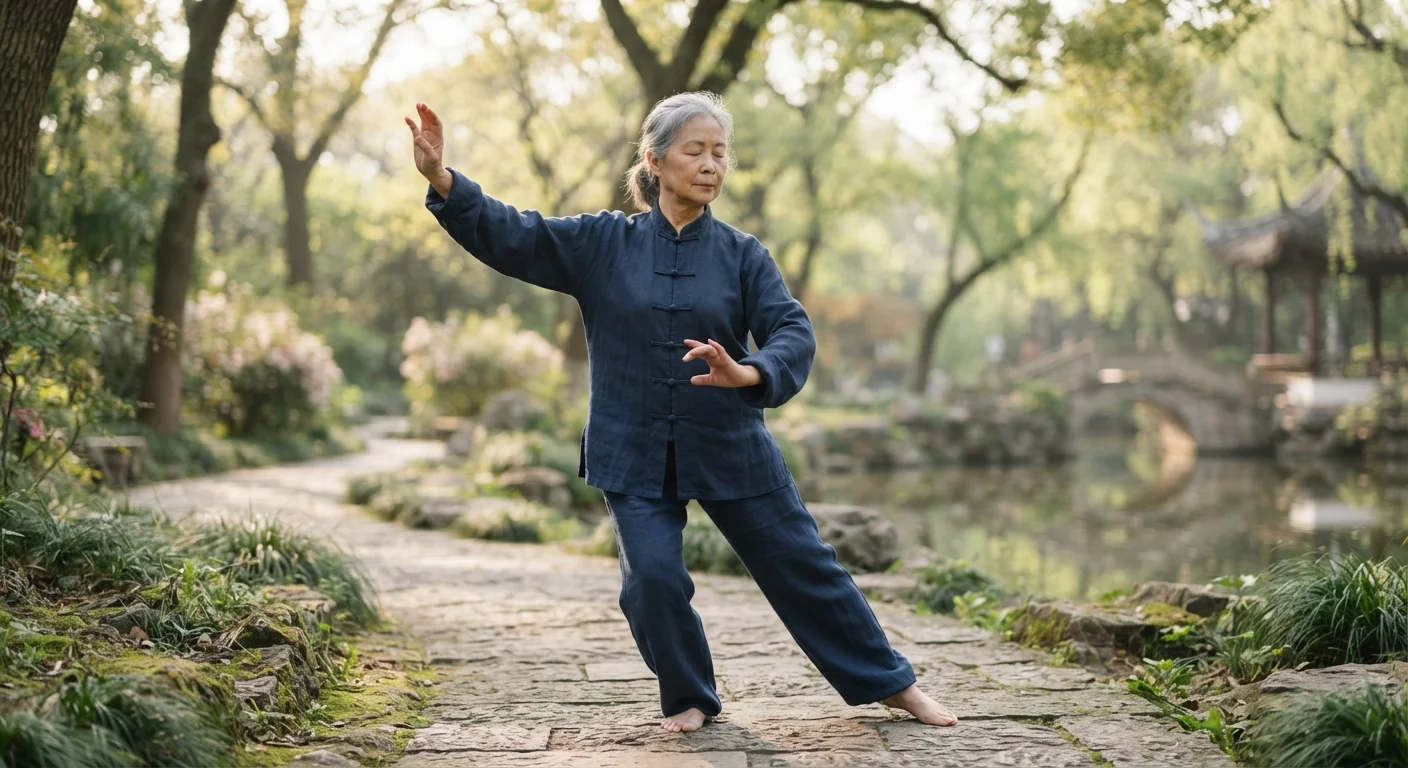
Tai chi's effectiveness is not coincidental. Its structured, slow movements target several physiological systems that directly govern fall risk in older adults.
- Dynamic balance: Unlike static balance exercises, tai chi challenges the body while in motion — shifting weight, pivoting, and stepping in controlled patterns that mirror real-life movement demands.
- Proprioception: The deliberate pace of tai chi heightens body awareness, training the sensory feedback systems that detect position and movement. Proprioceptive decline is a well-documented contributor to fall risk with aging.
- Lower-body strength: Many tai chi postures involve sustained single-leg loading and controlled knee flexion, building functional leg strength without high-impact stress on joints.
- Dual-task ability: Tai chi integrates movement with attentional focus, practicing the cognitive-motor coordination that everyday situations (walking while talking, navigating crowds) require.
Together, these mechanisms address fall risk more comprehensively than exercises targeting any single factor. For a broader look at how structured balance training works, see our complete starting point on balance training.
Look for Evidence-Based Programs
Not all tai chi classes are structured for fall prevention. When seeking instruction, look for programs formally recognized by the CDC or the National Council on Aging (NCOA) as evidence-based. The TJQMBB program and similar structured interventions are specifically designed and evaluated for older adults at fall risk, and are often available through community centers, senior centers, and health systems.
Who Benefits Most — and What the Limits Are
The evidence is strongest for community-dwelling older adults at moderate fall risk. Studies show benefit across a wide age range, including adults in their 70s and 80s, and across varying fitness levels. Notably, tai chi also meaningfully reduces fear of falling — a clinically important outcome, since fear-induced activity restriction can accelerate physical deconditioning and paradoxically raise fall risk over time.
Benefits are also relevant beyond balance alone. Because falls and fracture risk are closely linked, physical strategies that reduce fall frequency carry downstream implications for bone health outcomes — a connection explored in detail in our article on bone density, falls, and fracture risk.
That said, the evidence has limits. Most trials study relatively healthy, ambulatory older adults. Evidence is thinner for those with significant neurological conditions, advanced frailty, or severe mobility impairment. Tai chi is not a substitute for medical evaluation of fall causes — which may include medication side effects, vision problems, or vestibular disorders — and it works best as part of a multifactorial fall prevention plan.
Tai Chi Is One Part of a Broader Strategy
Falls in older adults typically have multiple contributing factors, including medications, vision, footwear, and home hazards. Tai chi addresses the physical fitness component effectively but should complement — not replace — a comprehensive fall prevention approach. Home safety modifications, discussed in our article on building a safer home environment, are an equally important layer of protection.
This article is for informational purposes only and does not constitute medical advice. Older adults, particularly those with chronic conditions or a history of falls, should consult a qualified healthcare provider before beginning any new exercise program.
Frequently Asked Questions
Most research protocols involve two to three sessions per week, each lasting 45 to 60 minutes. Consistent practice over at least 12 weeks appears necessary for meaningful improvements in balance and fall reduction. Talk with a healthcare provider or certified instructor about a schedule appropriate for your health status.
Tai chi is generally considered low-impact and is often well-tolerated by people with mild to moderate arthritis. Some forms can be adapted for those with limited mobility. However, anyone with significant joint conditions, recent surgery, or chronic pain should seek guidance from their healthcare provider before beginning a program.
Tai chi has stronger clinical evidence behind it than many general balance exercises, partly because it simultaneously addresses strength, flexibility, coordination, and attention. That said, it is one tool among several — other structured balance training approaches also show benefit. See our <a href="/senior-health/aging-mobility/balance-training-for-older-adults-a-complete-starting-point">balance training guide</a> for a broader overview.
Yes. Evidence-based programs like Tai Ji Quan: Moving for Better Balance are specifically designed for older adults with no prior experience. Classes are structured to progress gradually, and many community centers, YMCAs, and senior centers offer beginner-friendly instruction.
Yes. Studies consistently show that tai chi reduces falls-related self-efficacy concerns — meaning participants feel more confident moving and less afraid of falling. This psychological benefit is clinically significant because fear of falling can itself lead to reduced activity and greater long-term fall risk.
Research generally finds measurable improvements in balance and fall rates after 12 to 26 weeks of regular practice. Shorter durations may produce some benefit but appear less robust. Sustained, ongoing practice is typically needed to maintain gains.
The content on this site is for informational purposes only and is not a substitute for professional advice. Always consult a qualified professional for guidance specific to your situation.