

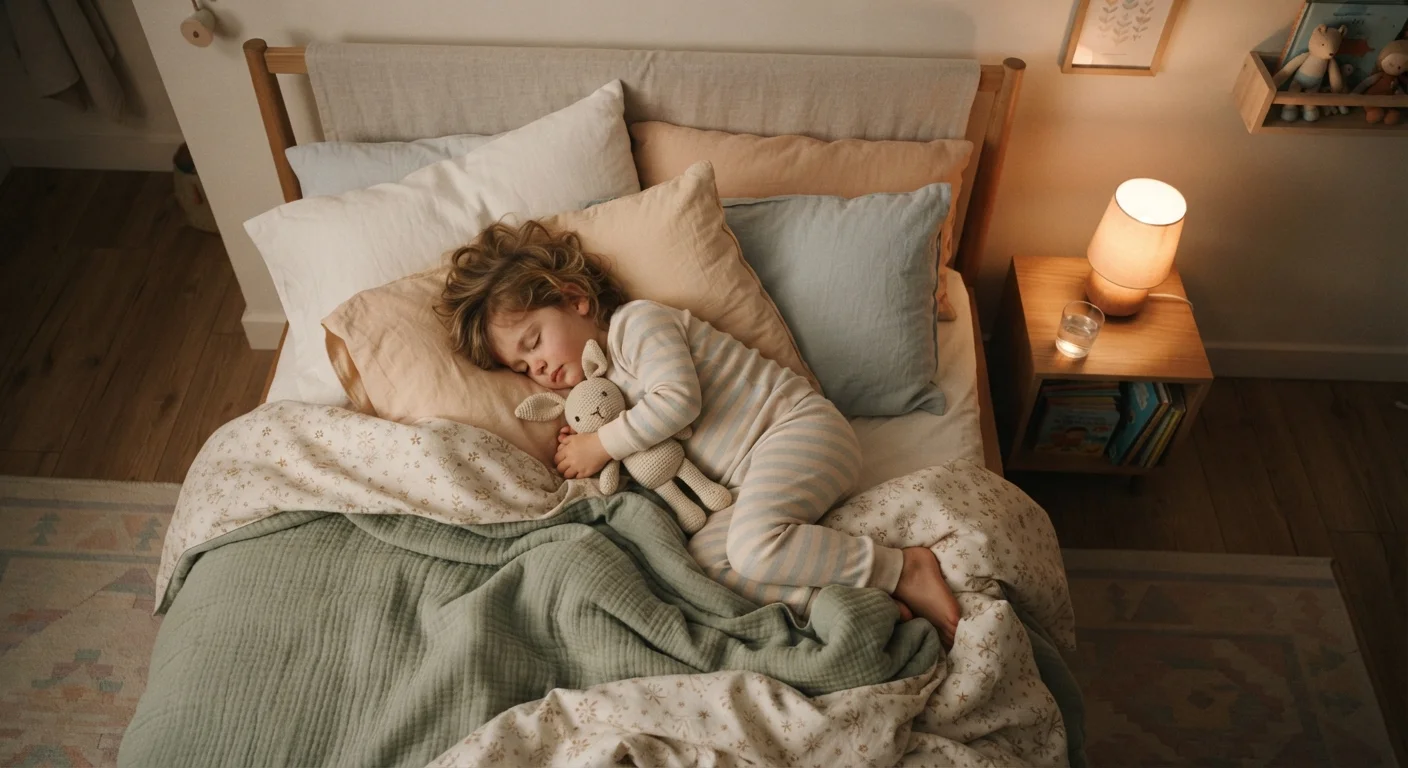
Why Sleep Is Far More Than Rest
When a child falls asleep, the body doesn't simply switch off. Instead, a carefully orchestrated sequence of biological processes begins — repairing tissues, sorting memories, calibrating emotions, and releasing hormones that drive physical growth. Understanding this helps parents see bedtime not as a struggle to win, but as a genuine health priority worth protecting.
For a broader look at how sleep needs evolve as children grow into teenagers and adults, see our guide to sleep across the lifespan.
9–12 hrs
Recommended nightly sleep for school-age children
According to the American Academy of Sleep Medicine, children aged 6–12 need 9–12 hours of sleep per night for optimal health.
~50%
Proportion of infant sleep spent in REM
Newborns spend roughly half their sleep time in REM sleep, compared to about 20–25% in adults, reflecting the brain's intensive early development.
30%+
Increase in illness risk with insufficient sleep
Research published in peer-reviewed journals suggests children sleeping below recommended hours show meaningfully higher rates of common infections.
What Each Sleep Stage Contributes
Children cycle through two main types of sleep — non-REM (which includes light and deep stages) and REM (rapid eye movement) sleep. Each serves a distinct developmental purpose.
- Deep non-REM sleep: This is when the pituitary gland releases the majority of growth hormone. It also drives immune repair and tissue regeneration. Children spend more time in deep sleep than adults do, reflecting their intensive growth demands.
- REM sleep: The brain is highly active during REM, processing emotional experiences and consolidating memories. For children navigating new social situations and learning environments every day, REM sleep is particularly important.
To understand how these stages work in more detail, our article on REM vs. deep sleep explains what each stage does for cognitive and emotional health.
“Sleep is the single most effective thing we can do to reset our brain and body health — and for children, that reset is doing active construction work, not just maintenance.”
— Matthew Walker, Neuroscientist and sleep researcher, author of 'Why We Sleep'
Sleep, Immunity, and Physical Growth
Sleep is one of the body's most powerful immune-regulating tools. During sleep, the immune system releases cytokines — proteins that help fight infection and inflammation. Children who consistently sleep less than recommended show measurably reduced immune responses, making them more vulnerable to common illnesses.
Physical growth is also directly tied to sleep quality. Because growth hormone is primarily secreted during deep sleep, disrupted or insufficient sleep can affect a child's growth trajectory over time — though it's worth noting that many factors influence growth, and parents with concerns should discuss them with their child's pediatrician.
For a deeper look at the research connecting sleep and immune health, see Sleep and Immune Function: What the Research Tells Us.
Set a Consistent Sleep Window
Try to keep your child's bedtime and wake time within 30 minutes of the same time every day — including weekends. Irregular sleep schedules disrupt the circadian rhythm and reduce sleep quality even when total hours look adequate. Predictability is more powerful than perfection.
Building Habits That Support Quality Sleep
Parents have more influence over sleep quality than they might realize. Consistency is the single most important factor: a predictable bedtime routine helps regulate a child's circadian rhythm, making it easier to fall and stay asleep. Simple steps — a consistent wake and sleep time, a calm pre-bed wind-down, a dark and slightly cool room — compound over time into much better sleep architecture.
Diet also plays a role. Heavy or sugary meals close to bedtime can disrupt sleep onset, while certain nutrients support the production of sleep-related hormones. Our article on nutrition and sleep quality explores the dietary factors most relevant to rest.
If you're new to thinking systematically about sleep health, our Restorative Sleep starter guide is a helpful foundation. And for a broader overview of sleep science and recovery strategies, visit our Sleep & Recovery hub.
This article is for general informational purposes only and does not constitute medical advice. If you have concerns about your child's sleep or development, please consult a qualified pediatrician or healthcare professional.
Frequently Asked Questions
The American Academy of Sleep Medicine recommends 12–16 hours (including naps) for infants 4–12 months, 11–14 hours for toddlers 1–2 years, 10–13 hours for preschoolers 3–5 years, and 9–12 hours for school-age children 6–12 years. Teenagers need 8–10 hours. These are general guidelines — individual needs can vary slightly.
During sleep, the brain consolidates memories from the day, clears metabolic waste, and strengthens neural pathways. REM sleep in particular supports emotional learning and problem-solving. Deep non-REM sleep is when the brain releases growth hormone and repairs tissues.
Yes. Sleep deprivation in children often manifests as hyperactivity, irritability, difficulty concentrating, and emotional outbursts — symptoms that can sometimes be mistaken for ADHD. Consistently inadequate sleep has also been linked to increased anxiety and lower academic performance.
A consistent bedtime routine — same time each night, with calming activities like reading or a warm bath — signals the brain that sleep is approaching. Limiting screens for at least an hour before bed, keeping the bedroom cool and dark, and avoiding large meals close to bedtime all support better sleep quality.
Consult your child's pediatrician if you notice loud snoring, frequent nighttime waking, persistent difficulty falling asleep, excessive daytime sleepiness, or behavioral changes that may be linked to poor rest. These can sometimes indicate conditions like sleep apnea that benefit from professional evaluation.
The content on this site is for informational purposes only and is not a substitute for professional advice. Always consult a qualified professional for guidance specific to your situation.