

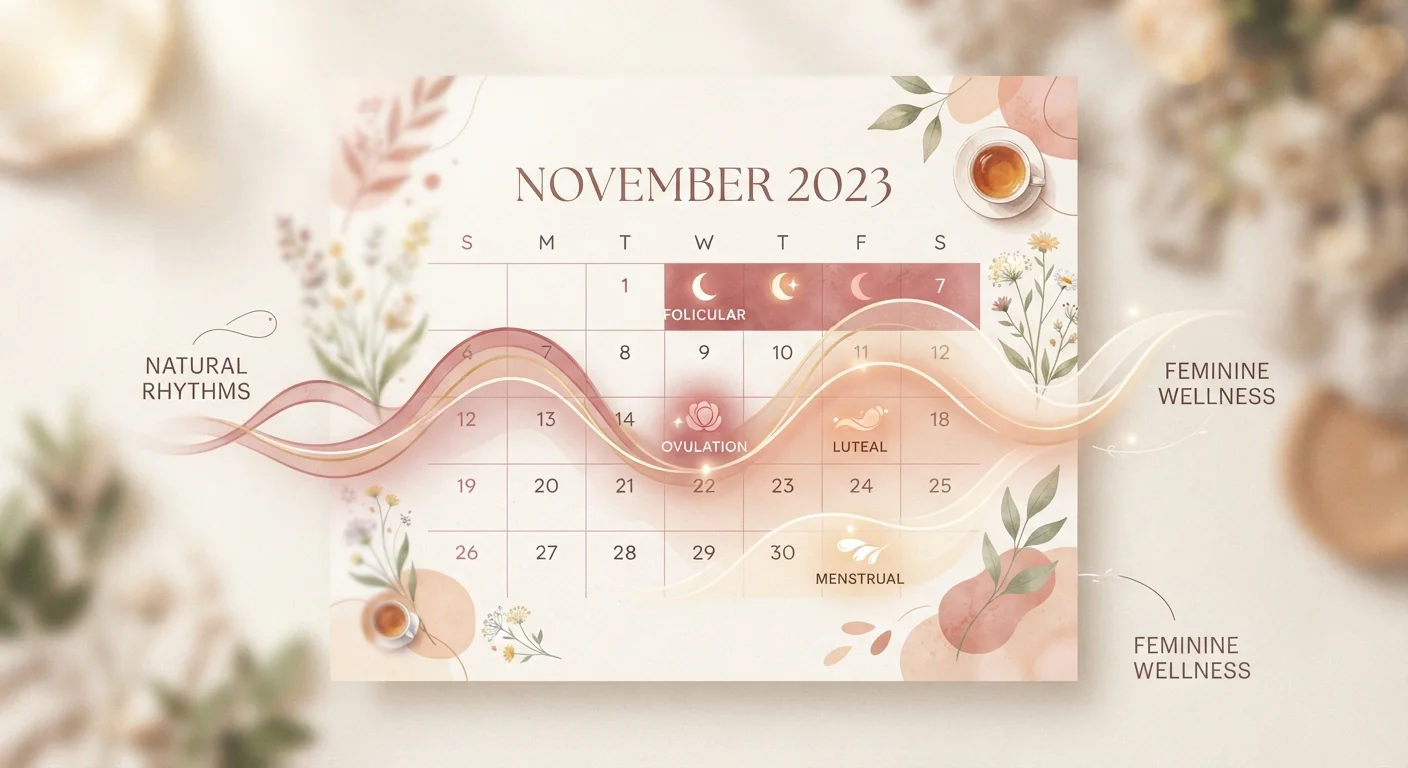
Phase 1: The Menstrual Phase
The cycle begins on Day 1 of your period — the first day of visible bleeding. This phase typically lasts three to seven days. When the previous cycle's egg goes unfertilized, estrogen and progesterone levels drop, signaling the uterine lining (endometrium) to shed. That shedding is your period.
Prostaglandins — hormone-like compounds — trigger uterine contractions to expel the lining, which is why cramping is common. Energy levels may feel lower during this phase, and many women notice a shift in mood as hormone levels reach their lowest point.
Track Your Cycle for Baseline Awareness
Keeping a simple record of when your period starts and ends — along with any symptoms — helps you identify your personal cycle patterns. This information is also valuable to share with your healthcare provider if you notice irregularities or have reproductive health concerns.
Phase 2: The Follicular Phase
The follicular phase overlaps with menstruation but extends beyond it, typically spanning days 1 through 13. During this time, the pituitary gland releases follicle-stimulating hormone (FSH), which prompts several follicles in the ovaries to develop. One dominant follicle emerges and begins producing increasing amounts of estrogen.
Rising estrogen thickens the uterine lining in preparation for a potential fertilized egg. Many women report higher energy, sharper focus, and improved mood during the late follicular phase — a reflection of estrogen's influence on serotonin and dopamine activity.
21–35 days
Normal menstrual cycle length range
According to the American College of Obstetricians and Gynecologists, a healthy cycle can range considerably around the commonly cited 28-day average.
~12–24 hours
Window during which a released egg is viable
The egg must be fertilized within this narrow timeframe after ovulation; however, sperm viability extends the functional fertile window to around five to six days.
Up to 80%
Women who report at least one PMS symptom
Research published in gynecological literature suggests the majority of menstruating women experience some premenstrual symptoms, though severity varies widely.
Phase 3: Ovulation
Ovulation is the pivotal event of the entire cycle. A surge in luteinizing hormone (LH) triggers the dominant follicle to release a mature egg, which travels down the fallopian tube toward the uterus. This typically occurs around day 14 of a 28-day cycle, though timing varies widely.
The egg is viable for roughly 12 to 24 hours after release, but sperm can survive in the reproductive tract for up to five days — making the days immediately before ovulation the peak of the fertile window. Some women experience mild one-sided pelvic pain called mittelschmerz around ovulation, along with changes in cervical mucus, which becomes clear and stretchy.
Cycle Length Affects Ovulation Timing
In cycles shorter or longer than 28 days, ovulation shifts accordingly — it is not always around day 14. For example, in a 35-day cycle, ovulation may occur around day 21. Understanding your individual cycle length is important for both family planning and health monitoring.
Phase 4: The Luteal Phase
After ovulation, the ruptured follicle transforms into a temporary endocrine structure called the corpus luteum, which secretes progesterone — and some estrogen. Progesterone's main job is to maintain the thickened uterine lining, keeping it ready for a fertilized egg to implant.
If fertilization doesn't occur, the corpus luteum breaks down after about 10 to 14 days, progesterone drops sharply, and the cycle restarts with menstruation. This hormonal withdrawal in the late luteal phase is associated with premenstrual symptoms (PMS) — including bloating, breast tenderness, irritability, and fatigue — that affect many women to varying degrees.
Hormonal shifts during the luteal phase can also affect sleep quality and heighten anxiety in some individuals. To understand this connection in depth, see how estrogen and progesterone influence anxiety. For context on how these cycles evolve over a lifetime, the Hormones & Menopause hub offers broader perspective.
As women approach midlife, these hormonal patterns begin to shift. The hormonal timeline from perimenopause through postmenopause walks through what to expect as reproductive hormones decline.
This article is for general informational purposes only and does not constitute medical advice. Always consult a qualified healthcare provider with questions about your menstrual health or reproductive concerns.
Frequently Asked Questions
A typical cycle ranges from 21 to 35 days, measured from the first day of one period to the first day of the next. Cycles outside this range, or significant variation month to month, are worth mentioning to a clinician.
Fertility peaks around ovulation, which typically occurs roughly in the middle of the cycle — around day 14 in a 28-day cycle. Because sperm can survive several days, the fertile window generally spans about five to six days leading up to and including ovulation.
Estrogen and progesterone interact with neurotransmitter systems in the brain, including serotonin and GABA pathways. These interactions can influence mood, anxiety, and energy. For more detail, see <a href="/womens-health/mental-emotional-wellness/the-hormonal-roots-of-womens-anxiety-whats-actually-happening-in-your-brain">how hormonal fluctuations affect anxiety</a>.
Yes. Significant physical or psychological stress can disrupt the HPO axis, potentially delaying or suppressing ovulation and altering cycle length. Chronic stress is a common contributor to irregular cycles.
As ovarian reserve declines, cycles may become irregular, shorter, or longer, and periods may change in flow. This transition is called perimenopause. See our guide on <a href="/womens-health/reproductive-health/perimenopause-vs-menopause-understanding-the-transition">perimenopause vs. menopause</a> for a full breakdown.
Mild cramping, bloating, breast tenderness, and mood shifts are common and generally reflect normal hormonal changes. Severe pain or symptoms that disrupt daily life should be evaluated by a healthcare professional, as they may indicate conditions such as endometriosis or fibroids.
The content on this site is for informational purposes only and is not a substitute for professional advice. Always consult a qualified professional for guidance specific to your situation.