

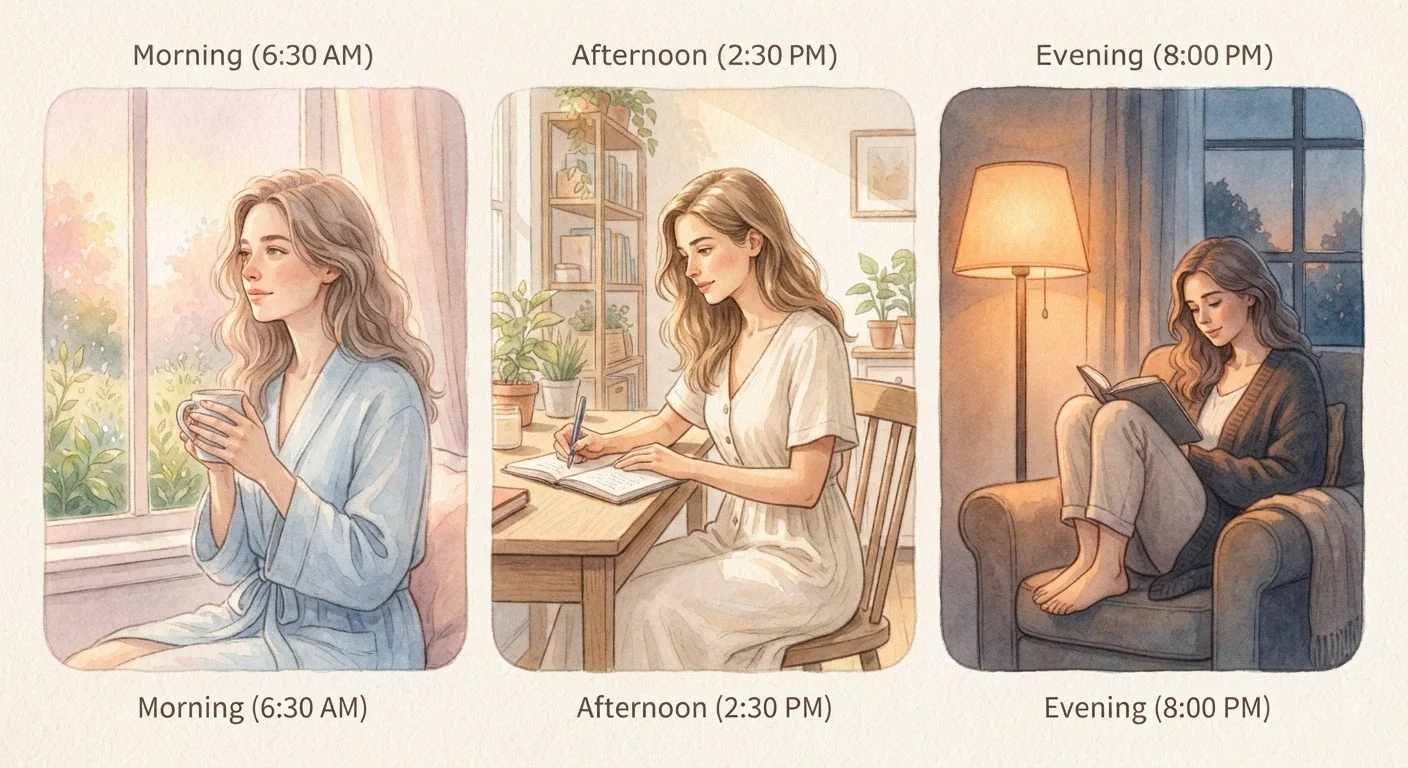
The Biology Driving Your Emotional Rhythm
If you have ever noticed that you feel unusually sharp first thing in the morning only to hit a wall by mid-afternoon, you are not imagining things — and you are certainly not alone. These shifts follow a real biological pattern that researchers have studied extensively.
At the center of this rhythm is your circadian clock, an internal timekeeping system housed primarily in a tiny brain region called the suprachiasmatic nucleus. This clock orchestrates dozens of bodily processes, including the timed release of hormones that shape how you feel hour by hour. To understand this system more deeply, see our guide to circadian rhythms.
One of the most influential of these hormones is cortisol. It rises sharply in the first 30–45 minutes after waking — a phenomenon called the cortisol awakening response — priming the body for alertness and action. For some people, this spike can feel edgy or anxious rather than energized. Cortisol then gradually declines through the day, which partly explains why energy and motivation can feel harder to sustain by evening.
“Mood is not a fixed trait — it is a dynamic state that the brain continuously adjusts in response to internal signals like hormones and sleep, as well as external cues like light, food, and social context.”
— Mental Wellness Editorial Team, Health journalists and behavioral science researchers
Neurotransmitters add another layer. Serotonin, which supports stable mood and a sense of calm, is influenced by light exposure and tends to be more active during daylight hours. Dopamine, tied to motivation and reward, also fluctuates in ways that affect how engaged or flat we feel at different points in the day. For a fuller picture of these brain-level mechanisms, our article on how the brain regulates mood explains the neuroscience in plain language.
What Amplifies or Dampens These Shifts
Biology sets the stage, but daily habits and life circumstances raise or lower the curtain. Several everyday factors have strong, well-documented effects on how pronounced your mood fluctuations feel:
- Sleep quality: Even mild sleep restriction heightens emotional reactivity. The amygdala — the brain's threat-detection hub — becomes more active after poor sleep, while the prefrontal cortex, which moderates emotional responses, becomes less effective at keeping it in check.
- Hunger and blood sugar: Drops in blood glucose can produce irritability, difficulty concentrating, and low mood. Eating regular, balanced meals helps buffer these dips.
- Light exposure: Natural light signals the circadian clock and supports serotonin activity. Reduced light — whether from indoor living, cloudy weather, or shortened winter days — can blunt mood-stabilizing effects.
- Physical movement: Even brief bouts of movement can shift mood by releasing endorphins and reducing physiological stress markers.
- Social interaction: Connection with others influences oxytocin and related systems that affect emotional tone, for better or worse depending on the interaction.
Track Your Patterns for a Week
Try noting your energy and mood at three consistent times each day — morning, early afternoon, and evening — for seven days. Most people discover a surprisingly predictable personal rhythm. This awareness alone can reduce self-criticism when you hit a low point, because you recognize it as temporary and expected.
Understanding how these factors interact with your own rhythms is explored further in our piece on everyday habits that shape emotional health.
When to Take Your Mood Patterns Seriously
Recognizing your personal emotional rhythm can be genuinely empowering — scheduling demanding work for your alert hours, protecting sleep, and eating consistently are all meaningful levers. But it is equally important to know when daily variation crosses into something that warrants professional attention.
Daily Variation vs. a Mood Disorder
Normal emotional fluctuations tend to be proportionate, short-lived, and tied to identifiable triggers like fatigue or hunger. A mood disorder involves more severe, persistent, or disabling emotional states. If your mood shifts feel extreme, last for days, or significantly affect your ability to function, please speak with a healthcare professional. You deserve proper support, not just a self-help strategy.
Normal diurnal mood shifts are relatively mild, short-lived, and usually traceable to a physical or situational cause. Persistent low mood, emotional swings that feel out of proportion or uncontrollable, or patterns that interfere with relationships and daily function are different. These deserve a conversation with a qualified healthcare provider rather than a lifestyle adjustment alone.
For people navigating hormonal transitions, it is also worth noting that mood changes tied to perimenopause or menopause can look superficially similar to ordinary diurnal variation but have distinct biological drivers. Our articles on mood and menopause and perimenopause mood swings explore that distinction in more detail.
This article is for general informational purposes only and is not a substitute for professional medical advice, diagnosis, or treatment. Always consult a qualified healthcare provider with questions about your mental or physical health.
Frequently Asked Questions
Yes, for many people morning anxiety is linked to elevated cortisol levels, which peak within the first hour or so after waking. This 'cortisol awakening response' is a normal physiological process. However, if morning anxiety is severe or significantly disrupts your life, it is worth discussing with a healthcare provider.
The early-afternoon energy dip — often called the 'post-lunch dip' — is a well-documented feature of human circadian biology, occurring independently of whether you eat lunch. Core body temperature drops slightly, alertness decreases, and mood can temporarily worsen. A brief rest or a short walk often helps.
Absolutely. Sleep deprivation disrupts the regulation of emotion-related brain regions, particularly the amygdala, making emotional reactions more intense and harder to manage. Even one night of poor sleep can noticeably amplify mood variability the following day.
Normal diurnal mood shifts are mild, temporary, and generally tied to identifiable factors like time of day, hunger, or fatigue. A mood disorder involves more intense, persistent, or disabling emotional states that interfere with daily functioning and are not easily explained by circumstance. A qualified clinician is the right person to help distinguish the two.
Yes. Cortisol follows a daily arc that influences alertness and emotional tone. Sex hormones like estrogen and testosterone also fluctuate on daily and monthly cycles and interact with neurotransmitter systems involved in mood. These interactions are complex and vary considerably between individuals.
The content on this site is for informational purposes only and is not a substitute for professional advice. Always consult a qualified professional for guidance specific to your situation.