

Start here
Why Starting After 40 Is Still the Right Call
Understand the biology
What Changes in Your Body After 40
Build your foundation
The Movement Patterns That Matter Most
Manage recovery
Recovery: The Variable Most Beginners Underestimate
Progress safely
How to Progress Without Getting Hurt
Why Starting After 40 Is Still the Right Call
If you've spent most of your adult life avoiding the weight room, the idea of starting now can feel like showing up late to a game everyone else already knows how to play. That perception is worth discarding immediately. Research consistently demonstrates that the musculoskeletal system retains its capacity to adapt to resistance training well into middle age and beyond — and that beginners often see rapid early gains precisely because they're untrained.
Strength training after 40 offers documented benefits beyond aesthetics: improved insulin sensitivity, better bone mineral density, reduced risk of falls, and meaningful protection against the muscle loss (sarcopenia) that accelerates from middle age onward. For more on what the science actually says about exercise and aging, see common misconceptions about exercise and aging.
The question isn't whether it's too late. It isn't. The question is where to start.
What Changes in Your Body After 40
Understanding what's different about your physiology at this stage helps you train smarter rather than just harder. Several changes become relevant for programming decisions:
Sarcopenia
The gradual, age-related loss of skeletal muscle mass and strength. It begins in earnest around the mid-40s and accelerates without regular resistance exercise.
Progressive overload
The practice of gradually increasing the challenge placed on muscles over time — through more weight, more reps, or more sets — to drive continued adaptation.
Muscle protein synthesis
The biological process by which the body repairs and builds muscle tissue after exercise. It is stimulated by both resistance training and adequate protein intake.
Compound movement
An exercise that involves multiple joints and muscle groups working together, such as a squat or row, as opposed to isolation exercises that target a single muscle.
Neuromuscular adaptation
Early strength gains driven by the nervous system learning to recruit and coordinate muscles more efficiently — often the primary mechanism of improvement in the first weeks of training.
- Anabolic hormone levels shift. Testosterone and growth hormone decline gradually from the mid-30s onward, which can slow the rate of muscle gain — but does not prevent it.
- Connective tissue adapts more slowly. Tendons and ligaments take longer to strengthen than muscle tissue, making load progression timing more important.
- Recovery capacity decreases. The cellular repair processes that follow training take longer, meaning adequate rest between sessions isn't optional — it's part of the training stimulus.
- Motor patterns need deliberate practice. If you haven't performed compound movements before, your nervous system needs time to learn them efficiently before heavy loading makes sense.
These changes shape how a good beginner program is structured — not to limit ambition, but to protect the investment. How exercise needs shift across decades covers this biological context in more depth.
The Movement Patterns That Matter Most
Effective strength training isn't built from dozens of exercises — it's built from six fundamental movement patterns. Mastering these gives you access to nearly the entire landscape of resistance training:
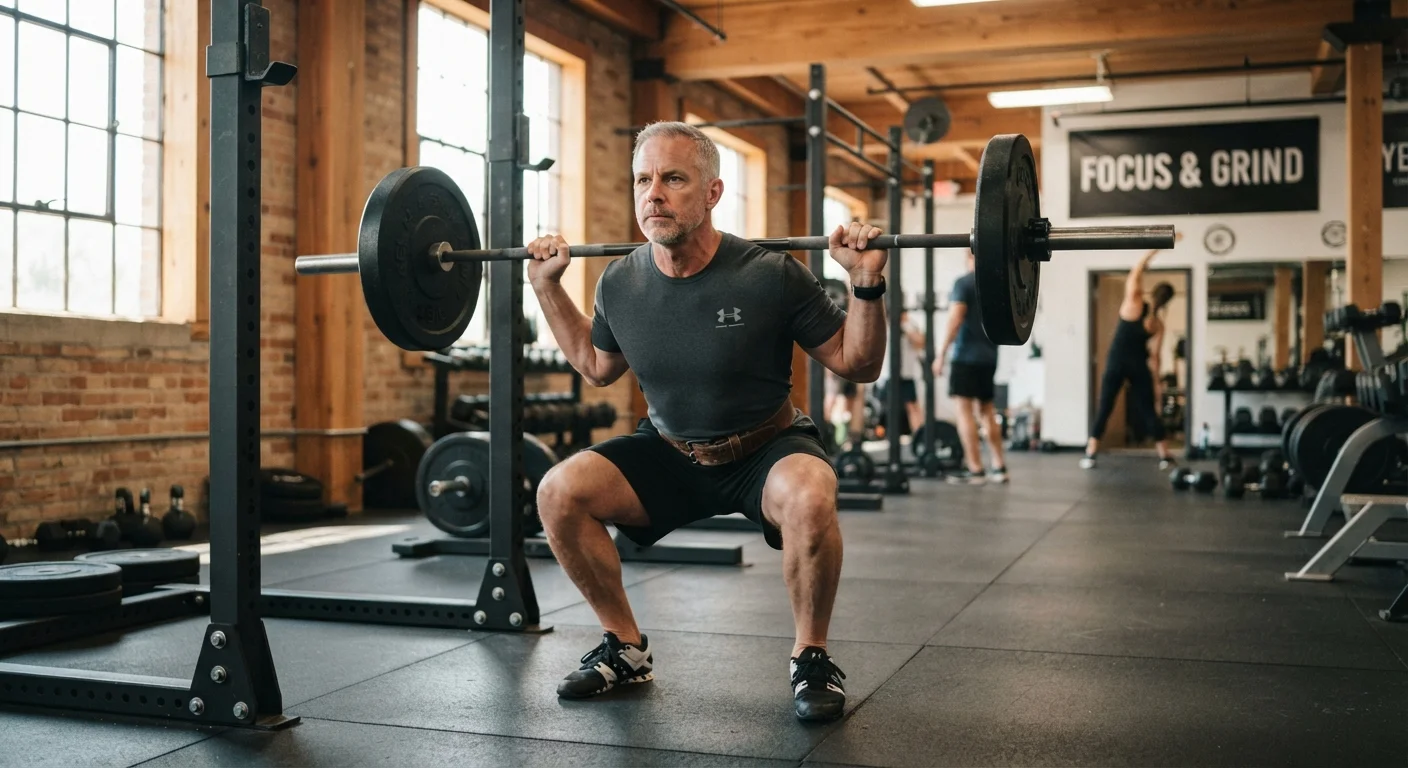
- Squat — Knee-dominant lower body loading (goblet squat, barbell back squat)
- Hip hinge — Hip-dominant lower body loading (Romanian deadlift, conventional deadlift)
- Horizontal push — Pressing away from the body in front (push-up, dumbbell bench press)
- Horizontal pull — Pulling toward the body in front (dumbbell row, cable row)
- Vertical push — Pressing overhead (dumbbell shoulder press)
- Vertical pull — Pulling from overhead (lat pulldown, assisted pull-up)
For beginners, two to three sets of eight to twelve repetitions per movement — at a load that feels challenging but allows clean form throughout — provides a solid starting point. Why compound lifts form the backbone of every evidence-based program explains the mechanics behind this approach in detail.
Technique First, Load Second
For the first four to six weeks, treat every session as a practice session rather than a performance session. Use lighter loads that let you complete all reps with consistent form. Recording yourself from the side on a phone is one of the most effective self-coaching tools available — it costs nothing and reveals errors that feel invisible in the moment.
Pairing this movement-based framework with attention to flexibility, mobility, and stability work from the start pays dividends as training loads increase.
Recovery: The Variable Most Beginners Underestimate
Most beginner programs fail not because of poor exercise selection, but because recovery is treated as passive downtime rather than an active training variable. After 40, this distinction matters more than ever.
Don't Train Through Sharp or Persistent Pain
Muscle soreness (the dull, diffuse ache that peaks 24–48 hours after a session) is normal and expected. Sharp, localized, or joint-centered pain during a lift is not. If pain persists across multiple sessions, stop the aggravating movement and consult a physician or physical therapist before continuing. Pushing through structural pain is how minor issues become significant injuries.
Practical recovery principles for this stage of training:
- Sleep. Muscle protein synthesis peaks during sleep. Seven to nine hours per night is the standard recommendation — not a luxury.
- Session spacing. A minimum of 48 hours between sessions training the same muscle groups allows adequate tissue repair.
- Protein timing and intake. Distributing protein across meals — rather than consuming most of it in one sitting — appears to optimize muscle synthesis. A registered dietitian can help identify appropriate targets for your body and health status.
- Stress management. Chronic psychological stress elevates cortisol, which impairs recovery. Training is a stressor too — the body doesn't distinguish between sources.
How to Progress Without Getting Hurt
The principle of progressive overload — gradually increasing the demand placed on muscles over time — is what drives continued adaptation. For beginners over 40, the safest and most effective approach is to increase training volume (sets and reps) before increasing load (weight on the bar). Chasing numbers before movement quality is established is the single most common path to setbacks.
A sustainable structure for a new lifter might look like: two full-body sessions per week for the first four to six weeks, adding a third session only when the first two feel genuinely manageable — not just survivable. Balancing strength and cardio within a weekly plan offers practical guidance on structuring the broader training week.
If consistency has been a historical challenge, building a sustainable exercise habit addresses the behavioral side of long-term adherence.
This article is for general informational purposes only and does not constitute medical advice. Consult a qualified healthcare provider before beginning any new exercise program, particularly if you have existing health conditions, joint concerns, or cardiovascular risk factors.
Frequently Asked Questions
For most men, yes — resistance training is widely recommended across age groups by major health organizations. Starting with bodyweight or light loads and focusing on technique first significantly reduces injury risk. Always get medical clearance if you have any cardiovascular, joint, or metabolic concerns before beginning.
Two to three full-body sessions per week is a well-supported starting point for beginners over 40. This frequency allows adequate stimulus for muscle adaptation while leaving enough recovery time between sessions. As fitness improves, volume can be gradually increased.
Early neuromuscular gains — where the nervous system learns to recruit muscle more efficiently — often appear within four to six weeks. Visible muscle growth typically becomes noticeable after eight to twelve weeks of consistent training. Individual results vary based on genetics, nutrition, sleep, and adherence.
Effective strength training can be done with minimal equipment at home, especially in the early stages. Resistance bands, adjustable dumbbells, and bodyweight movements cover all foundational patterns. A barbell and rack provide greater long-term loading options, but are not a requirement to start.
When performed with appropriate loads and good technique, resistance training generally supports joint health rather than harming it. Evidence suggests it can reduce symptoms in conditions like osteoarthritis. That said, pre-existing joint issues warrant a conversation with a physician or physical therapist before starting.
Adequate protein intake is the most consistently supported nutritional factor for muscle building at any age — older adults may need somewhat more per kilogram of body weight than younger trainees. A registered dietitian can help tailor specific recommendations to your health status and goals.
The content on this site is for informational purposes only and is not a substitute for professional advice. Always consult a qualified professional for guidance specific to your situation.