

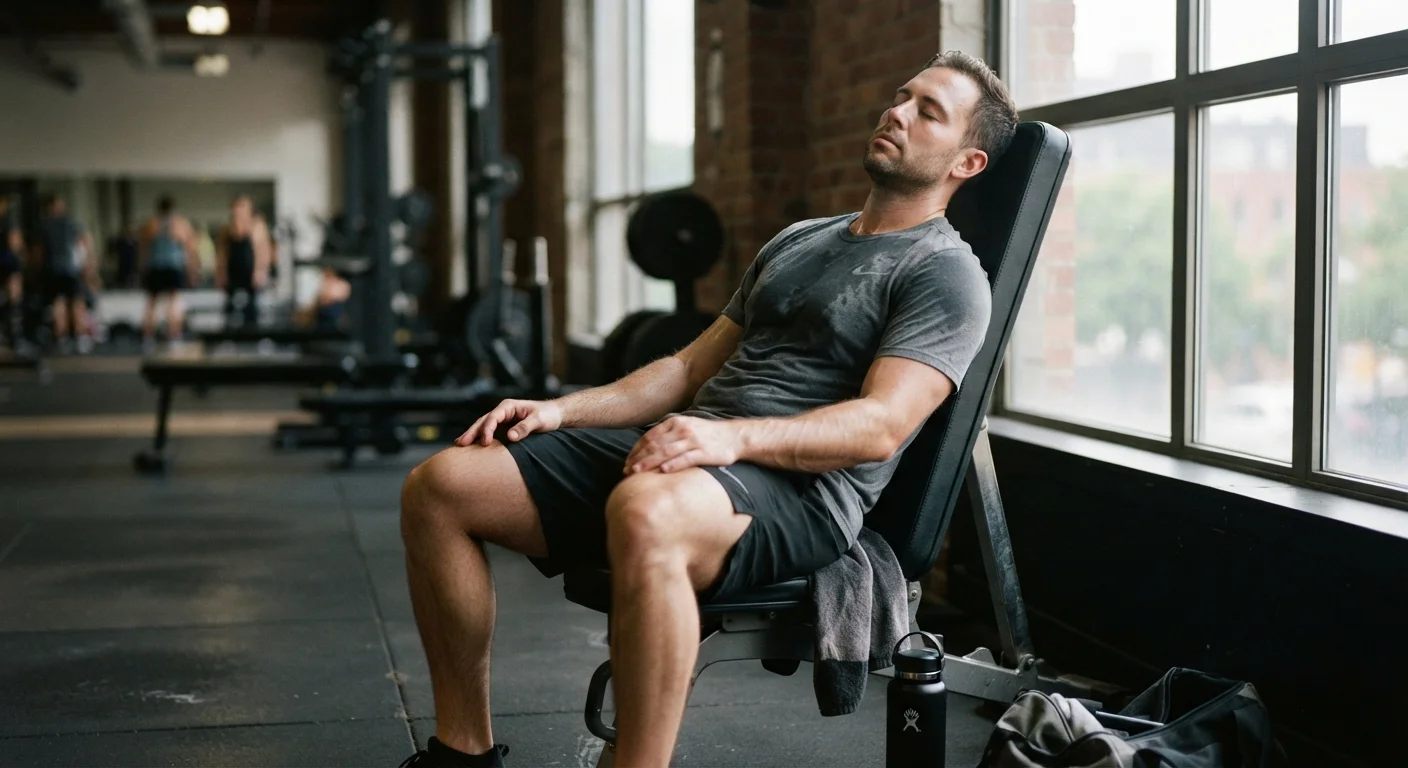
Why Recovery Is Where Progress Actually Happens
A common misconception in men's fitness is that more training automatically means more gains. In reality, exercise is a controlled stressor — it breaks down muscle fibers, depletes glycogen stores, and temporarily elevates inflammatory markers. The adaptation — stronger muscles, better endurance, improved power — happens during the recovery window that follows.
This isn't a minor detail. Without adequate recovery, the body never completes the repair cycle. Training on top of incomplete recovery leads to accumulated fatigue, declining performance, and eventually injury or overtraining syndrome. Understanding this cycle shifts the mindset from "time in the gym" to "stimulus plus recovery equals adaptation."
For a broader look at how rest fits into long-term physical health, see rest days vs. recovery — the distinction matters more than most men realize.
“The muscle is not built in the gym. It's built while you sleep and recover. Training provides the stimulus; everything else is just noise if you don't let the body respond.”
— Stuart Phillips, Professor of Kinesiology, McMaster University, Canada
Sleep as Biological Repair: What's Happening Overnight
Sleep is the single most powerful recovery tool available — and it's free. During slow-wave (deep) sleep, the pituitary gland releases the majority of daily growth hormone, which drives muscle protein synthesis and tissue repair. Testosterone — the hormone most central to male muscle development and recovery capacity — follows a similar nocturnal pattern, with peak secretion occurring during sleep.
Research consistently links inadequate sleep to reduced anabolic hormone levels, increased cortisol, impaired glycogen resynthesis, and slower reaction times. One frequently cited study found that men sleeping fewer than six hours per night showed measurable reductions in testosterone levels compared to those sleeping seven to nine hours. For men focused on training outcomes, sleep duration and quality are not optional variables.
How sleep repairs the brain is equally relevant — cognitive function, motivation, and coordination all suffer without sufficient deep and REM sleep cycles.
~70%
Daily growth hormone released during sleep
Research in endocrinology consistently indicates that the majority of daily growth hormone secretion occurs during slow-wave sleep stages.
10–15%
Testosterone reduction linked to sleep restriction
A study published in JAMA found that men restricted to five hours of sleep per night showed testosterone levels 10–15% lower than when sleeping eight hours.
48 hrs
Muscle protein synthesis window post-exercise
Exercise physiology research estimates that elevated muscle protein synthesis persists for up to 48 hours following resistance training, underscoring rest day importance.
Structuring Rest Days: Passive vs. Active Recovery
Not all rest days are identical. Passive rest means genuine physical stillness — minimal exertion, allowing the neuromuscular system to fully decompress. This is most appropriate after high-intensity training blocks, competition, or when signs of accumulated fatigue are present. Active recovery involves low-intensity movement — walking, swimming, cycling at conversational pace, or mobility work — that promotes blood flow and nutrient delivery to damaged tissue without generating a new training stress.
Both serve distinct purposes, and men often benefit from using both strategically across a training week. A hard lower-body session on Monday might call for a passive rest day Tuesday and an active recovery session Wednesday before returning to structured training.
Active recovery vs. passive rest breaks down when each approach is appropriate and what the evidence supports.
Prioritize seven to nine hours of sleep per night as a non-negotiable training variable.
Growth hormone and testosterone secretion are tightly coupled to sleep duration and quality. Consistently short sleep blunts anabolic signaling, elevates cortisol, and impairs the muscle protein synthesis that drives adaptation. Treating sleep as seriously as programming is one of the highest-leverage changes a man can make.
Build at least one to two full rest or low-intensity days into every training week.
Continuous high-intensity training without adequate rest prevents full tissue repair and gradually depletes the central nervous system. Men over 40 are particularly susceptible, as recovery timelines lengthen with age due to hormonal and cellular changes. Structured rest isn't laziness — it's programming.
Use the 48-hour rule for the same muscle groups when lifting at moderate-to-high intensity.
Muscle protein synthesis typically peaks within 24–48 hours post-exercise, then tapers. Training the same muscle group before this window closes can interrupt repair rather than extend it. Rotating muscle groups or intensities across sessions preserves the adaptation stimulus.
Manage pre-sleep habits to protect sleep architecture.
Alcohol, late-night eating, blue-light exposure, and elevated core temperature all fragment sleep architecture — reducing the proportion of slow-wave sleep where hormonal repair is concentrated. Even one or two nights of disrupted deep sleep measurably affects next-day performance and recovery markers.
Monitor for signs of overtraining rather than pushing through persistent fatigue.
Overtraining syndrome — characterized by stalled performance, chronic fatigue, mood disturbance, and hormonal disruption — develops when training load consistently exceeds recovery capacity. Early warning signs are often dismissed as mental weakness when they're actually physiological signals. Responding early prevents weeks-long setbacks.
Quick Wins: Recovery Habits You Can Start Today
Improving recovery doesn't require a complete overhaul of your routine. Several evidence-supported habits can meaningfully improve how well your body responds to training stress — and most require no equipment or cost.
This article is for general informational purposes only and does not constitute medical advice. If you have concerns about your health, hormone levels, sleep quality, or training capacity, consult a qualified healthcare professional.
The content on this site is for informational purposes only and is not a substitute for professional advice. Always consult a qualified professional for guidance specific to your situation.