

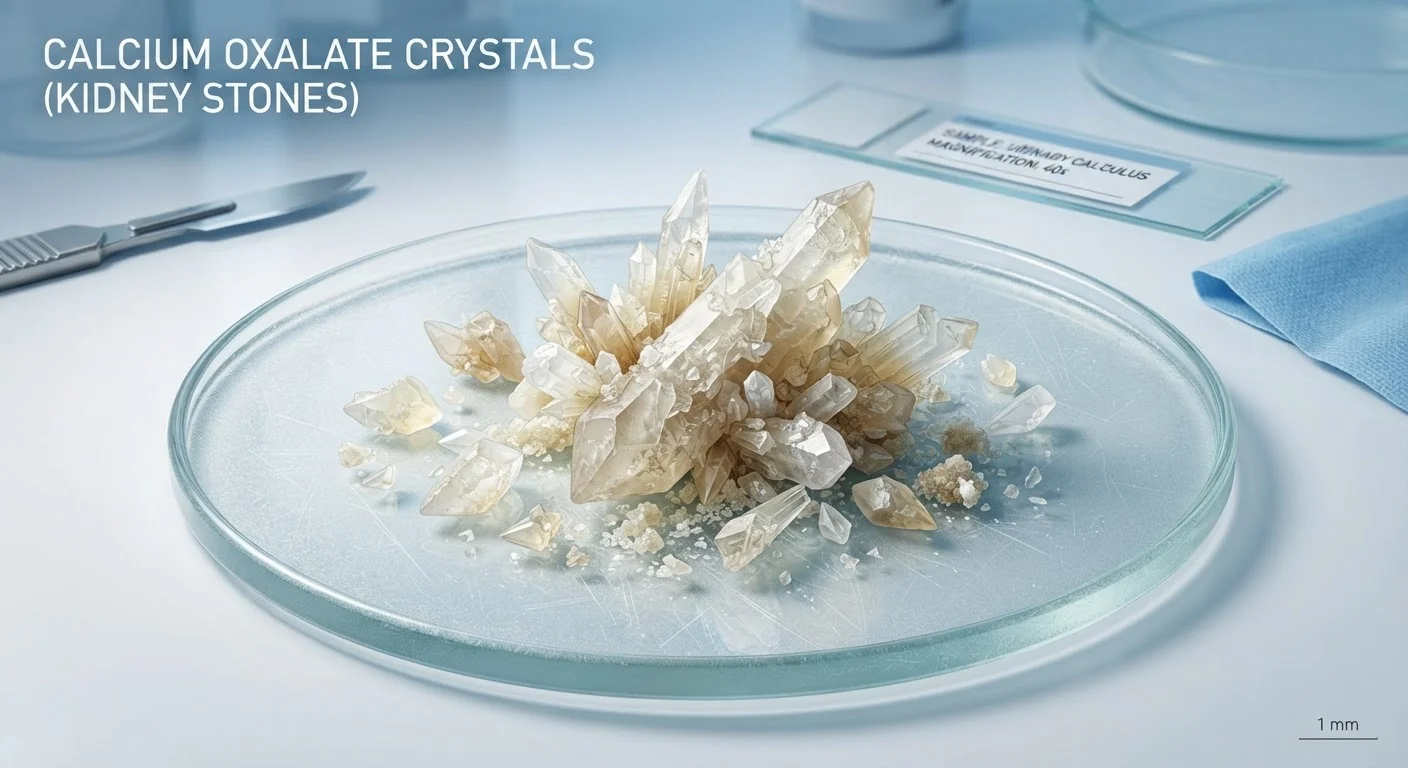
What Kidney Stones Are and How They Form
A kidney stone is a hard deposit of minerals and salts that crystallizes inside the kidneys. Stones form when urine becomes highly concentrated, allowing dissolved substances — most often calcium, oxalate, and uric acid — to bind together and solidify. They range in size from a grain of sand to a pebble and can lodge anywhere along the urinary tract.
| Most common stone type | Calcium oxalate (~80% of cases) (National Kidney Foundation) |
| Lifetime risk in men (US) | ~11–13% (Urologic Clinics of North America) |
| 5-year recurrence rate | ~35–50% without intervention (American Urological Association) |
| Primary preventable risk factor | Low daily fluid intake |
| Recommended daily urine output (prevention) | 2–2.5 liters (American Urological Association guidelines) |
Men develop kidney stones at roughly twice the rate of women, and the lifetime risk for men in the United States is estimated at around 11–13%, compared with 6–7% for women. Stones that remain in the kidney may cause no symptoms. Those that migrate into the ureter typically produce intense flank pain, nausea, and blood in the urine — symptoms that warrant prompt medical evaluation.
Types of Kidney Stones
Understanding the stone type is essential because prevention strategies differ significantly by composition.
Urolithiasis
The medical term for the formation of stones anywhere in the urinary tract, including the kidneys, ureters, and bladder.
Oxalate
A naturally occurring compound found in many plant foods. In the urinary tract, it can bind with calcium to form calcium oxalate crystals, the most common kidney stone type.
Hypercalciuria
An abnormally high level of calcium in the urine, a leading metabolic driver of calcium oxalate and calcium phosphate stone formation.
24-Hour Urine Analysis
A diagnostic test in which all urine produced over a full day is collected and analyzed. It reveals the specific chemical environment promoting stone formation and guides personalized prevention.
Cystinuria
A hereditary condition in which the kidneys cannot reabsorb the amino acid cystine, leading to its accumulation in the urine and the formation of cystine stones.
- Calcium oxalate stones are the most common, accounting for approximately 80% of cases. High oxalate foods, low fluid intake, and certain metabolic conditions all contribute.
- Uric acid stones form in persistently acidic urine and are linked to high-purine diets (red meat, shellfish) and conditions such as gout and type 2 diabetes.
- Struvite stones develop in response to certain urinary tract infections and can grow rapidly into large "staghorn" configurations.
- Cystine stones are rare and result from a hereditary disorder called cystinuria, in which the kidneys excrete excessive cystine amino acid.
Key Risk Factors
Multiple overlapping factors raise kidney stone risk. Recognizing them helps frame conversations with a healthcare provider.
2×
Men's stone risk vs. women
Men develop kidney stones at approximately twice the rate of women, according to epidemiological data from the National Kidney Foundation.
50%
Recurrence within 10 years
Without targeted prevention, roughly half of kidney stone patients experience a recurrent stone within a decade, per American Urological Association data.
80%
Stones that are calcium oxalate
Calcium oxalate remains by far the most prevalent kidney stone composition across all studied populations.
- Chronic dehydration: Low urine volume is the most modifiable risk factor. Dark, concentrated urine means minerals have less fluid to dilute them.
- Diet: Diets very high in sodium increase urinary calcium; high animal protein raises both uric acid and oxalate excretion.
- Obesity and metabolic syndrome: Excess body weight is independently associated with uric acid stones and overall stone recurrence.
- Medical conditions: Hyperparathyroidism, inflammatory bowel disease, Crohn's disease, and chronic diarrhea all alter mineral absorption and urine chemistry.
- Certain medications: Some diuretics, antacids, and antiretrovirals have known associations. Always review medications with a prescribing clinician.
- Geographic and climate factors: Residence in hot, dry regions increases fluid loss, which concentrates urine.
- Family history: A first-degree relative with stones roughly doubles personal risk.
A Note on Dietary Calcium
Restricting dietary calcium is a common misconception in kidney stone prevention. For most people with calcium oxalate stones, adequate dietary calcium actually reduces risk by binding oxalate in the gut before it reaches the kidneys. Calcium supplements, however, may behave differently and should be discussed with a clinician.
Recurrence Rates and What the Research Shows
Kidney stones have a high recurrence rate. Without intervention, roughly 50% of people who have one stone will develop another within five to ten years. Research consistently shows that targeted prevention strategies — primarily increasing fluid intake to produce at least 2–2.5 liters of urine per day — meaningfully reduce recurrence risk.
Dietary adjustments supported by evidence include moderating sodium and animal protein, maintaining adequate dietary calcium (rather than restricting it, which paradoxically raises oxalate absorption), and limiting very high-oxalate foods such as spinach, nuts, and beets for those with calcium oxalate stones. Pharmacological prevention, such as thiazide diuretics for hypercalciuria or allopurinol for uric acid stones, is prescribed based on 24-hour urine analysis results — a test your urologist may recommend after a first or recurrent stone.
This article is for general informational purposes only and does not constitute medical advice. If you experience symptoms consistent with kidney stones or have questions about your personal risk, consult a qualified healthcare professional.
The content on this site is for informational purposes only and is not a substitute for professional advice. Always consult a qualified professional for guidance specific to your situation.