

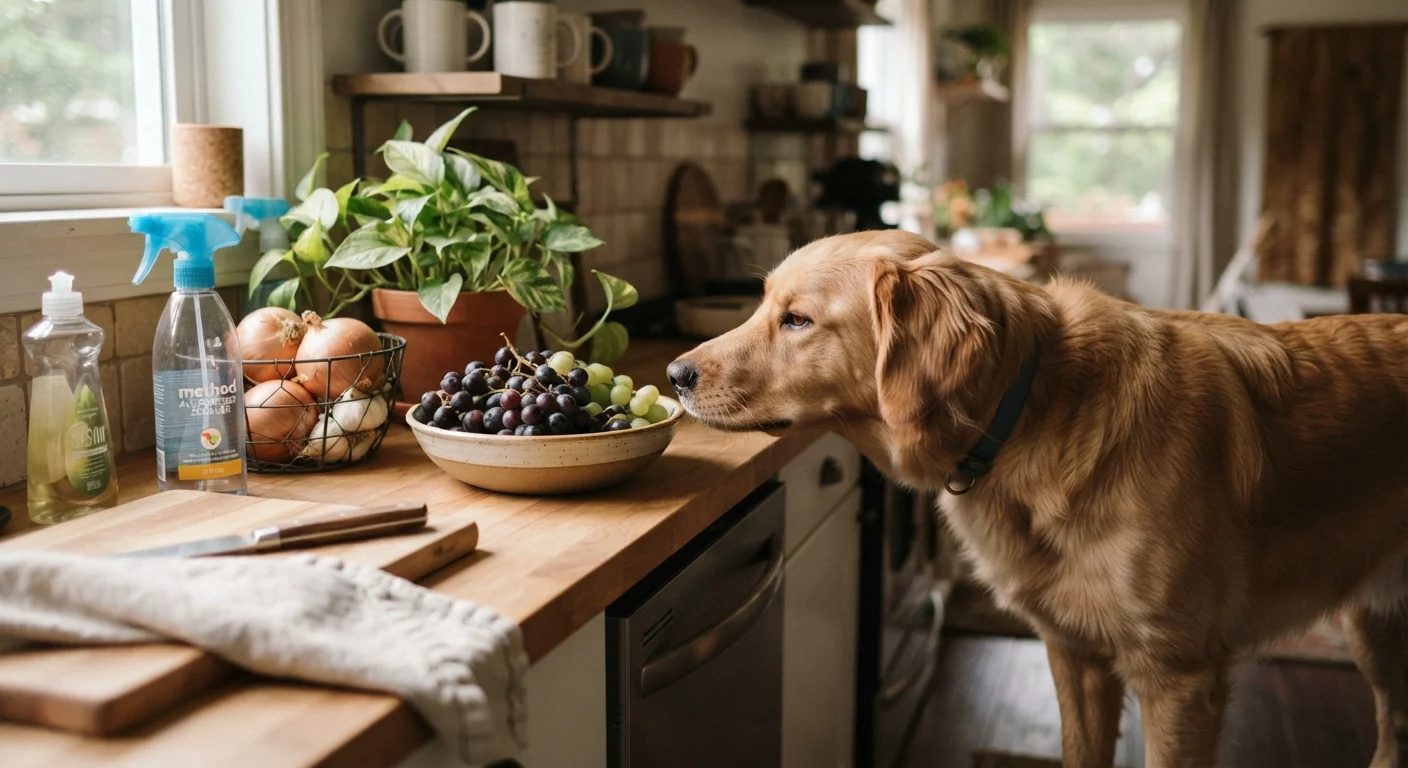
Why the Same Home Can Be Safe for You and Dangerous for Your Pet
Pets and people share living spaces, but they don't share the same biology. A snack that's perfectly healthy for you can trigger kidney failure in your dog, or send your cat into a neurological crisis. The differences come down to how each species metabolizes compounds — enzymes that humans rely on to break down certain substances are simply absent or insufficient in many animals.
Understanding these risks isn't about panicking every time your pet walks into the kitchen. It's about making informed choices — storing things safely, knowing what to watch for, and acting quickly if something goes wrong. If you suspect your pet has ingested something harmful, contact your veterinarian or the ASPCA Animal Poison Control Center (888-426-4435) immediately — don't wait for symptoms to worsen.
The list below covers the most common and clinically significant hazards veterinarians see. It applies primarily to dogs and cats, though some items are especially dangerous for small pets too — see our guide on health basics for rabbits, guinea pigs, and birds for species-specific guidance.
Grapes and Raisins
Grapes and raisins are a well-documented and potentially fatal hazard for dogs. Even small amounts have been linked to acute kidney failure in some dogs, though the exact toxic compound has not been conclusively identified. Cats are also considered at risk. What's particularly alarming is that there's no established safe dose — some dogs tolerate a small amount with no apparent effect, while others develop severe illness after just a few grapes. Because of this unpredictability, any ingestion should be treated as an emergency. Currants carry a similar risk and should be avoided as well.
There is no established safe amount of grapes or raisins for dogs — any ingestion warrants immediate veterinary contact.
Xylitol (Found in Sugar-Free Products)
Xylitol is a sugar substitute found in sugar-free gum, certain peanut butters, candies, baked goods, and even some human medications. For people, it's harmless — even beneficial for dental health. For dogs, it triggers a rapid and dangerous release of insulin, leading to low blood sugar (hypoglycemia) within 30–60 minutes. At higher doses, xylitol can also cause liver failure. Symptoms include vomiting, weakness, wobbling, and seizures. Always check the ingredients label on peanut butter or any human treat before offering it to your dog.
Xylitol causes dangerous blood sugar drops in dogs within an hour of ingestion — check labels on any sugar-free product.
Onions, Garlic, and Chives
All members of the Allium family — onions, garlic, leeks, chives, and shallots — are toxic to both dogs and cats. These vegetables contain compounds called thiosulfates, which damage red blood cells and can lead to hemolytic anemia (a condition where red blood cells are destroyed faster than they can be replaced). Cats are more sensitive than dogs, but both species are at risk. Cooked, powdered, and dehydrated forms are more concentrated and therefore more dangerous than raw. Many prepared human foods contain onion or garlic powder, making table scraps a hidden source of exposure.
Garlic powder and onion powder are more concentrated than raw forms and a common hidden hazard in table scraps.
Lilies and Other Toxic Houseplants
True lilies — including Easter lilies, tiger lilies, and day lilies — are extremely toxic to cats. Even small exposures, such as chewing a single leaf or licking pollen off their fur, can cause acute kidney failure. Dogs are less sensitive to true lilies but can still be affected by lily of the valley, which causes heart rhythm disturbances in both species. Other common toxic houseplants include pothos, philodendron, dieffenbachia, and sago palm. The sago palm deserves special mention: all parts of the plant are toxic to dogs and cats, and ingestion frequently causes liver failure. Outdoor cats face additional risks — see how lifestyle shapes long-term health in cats for more context.
A single Easter lily leaf can trigger fatal kidney failure in cats — remove all true lilies from cat-accessible spaces.
Certain Essential Oils
Essential oils have grown in popularity for home aromatherapy and cleaning, but many are harmful — or even fatal — to pets. Cats are particularly vulnerable because they lack specific liver enzymes needed to metabolize certain phenols and terpenes found in oils like tea tree, eucalyptus, clove, cinnamon, and peppermint. Even passive exposure through diffusers or skin contact can cause liver damage, neurological symptoms, and respiratory distress in cats. Dogs are somewhat more resilient but can still be affected by concentrated applications. Avoid using diffusers in poorly ventilated spaces where pets spend time, and never apply essential oils directly to pets unless directed by a veterinarian.
Cats lack the liver enzymes to process many essential oils — even diffuser exposure in enclosed spaces can be harmful.
Caffeine and Chocolate
Both caffeine and theobromine — a compound found in chocolate — are methylxanthines that dogs and cats cannot metabolize as efficiently as humans. Chocolate toxicity in dogs is one of the most common poisoning calls veterinarians receive. Dark chocolate and baking chocolate contain far higher concentrations of theobromine than milk chocolate, making them significantly more dangerous. Symptoms include vomiting, diarrhea, increased heart rate, tremors, and in severe cases, seizures. Coffee, tea, energy drinks, and caffeine supplements carry the same risk. Even small amounts of dark chocolate can be dangerous for small dogs, so keeping all chocolate and caffeinated products securely stored is essential.
Dark chocolate contains far more theobromine than milk chocolate — even a small amount can be dangerous for small dogs.
Common Cleaning Products
Many household cleaners — including bleach-based sprays, phenolic disinfectants (often found in pine-scented cleaners), and certain floor cleaners — are toxic to pets when ingested or when pets walk across recently cleaned surfaces and then groom themselves. Cats and birds are especially sensitive to phenols and strong chemical fumes. Even products labeled "pet-safe" should be used according to directions and allowed to dry fully before pets re-enter cleaned areas. Concentrated products are more hazardous than diluted forms. Store all cleaning products in locked or high cabinets, rinse surfaces with water after disinfecting, and ensure good ventilation when cleaning in spaces your pets occupy.
Pets can absorb cleaning product residue by walking on freshly cleaned surfaces and then grooming their paws.
What to Do If You Suspect Poisoning
Time matters with toxic exposures. Don't wait for your pet to become visibly ill before acting — some toxins cause irreversible organ damage within hours of ingestion. Common early warning signs include vomiting, drooling, lethargy, pale gums, muscle tremors, difficulty breathing, or sudden changes in behavior.
Act First, Then Gather Information
If you suspect your pet has ingested something toxic, call your vet or a pet poison helpline before attempting any home treatment. Inducing vomiting at home is not always appropriate and can sometimes cause additional harm. Let a professional guide your next steps — every minute counts with many toxic substances.
Keep your vet's number and the ASPCA Animal Poison Control hotline saved in your phone. When you call, be ready to describe what your pet ingested, how much, and when. If possible, bring the packaging or a sample of the substance to the vet visit.
Prevention is far easier than treatment. Store hazardous foods in sealed containers or high cabinets, use pet-safe cleaning products where possible, and research any new plant before bringing it home. For more on how feeding habits affect long-term pet health, see feeding habits that undermine pet health over time.
This article is for general informational purposes only and does not constitute veterinary advice. Always consult a licensed veterinarian for concerns about your pet's health or a potential toxic exposure.
The content on this site is for informational purposes only and is not a substitute for professional advice. Always consult a qualified professional for guidance specific to your situation.