

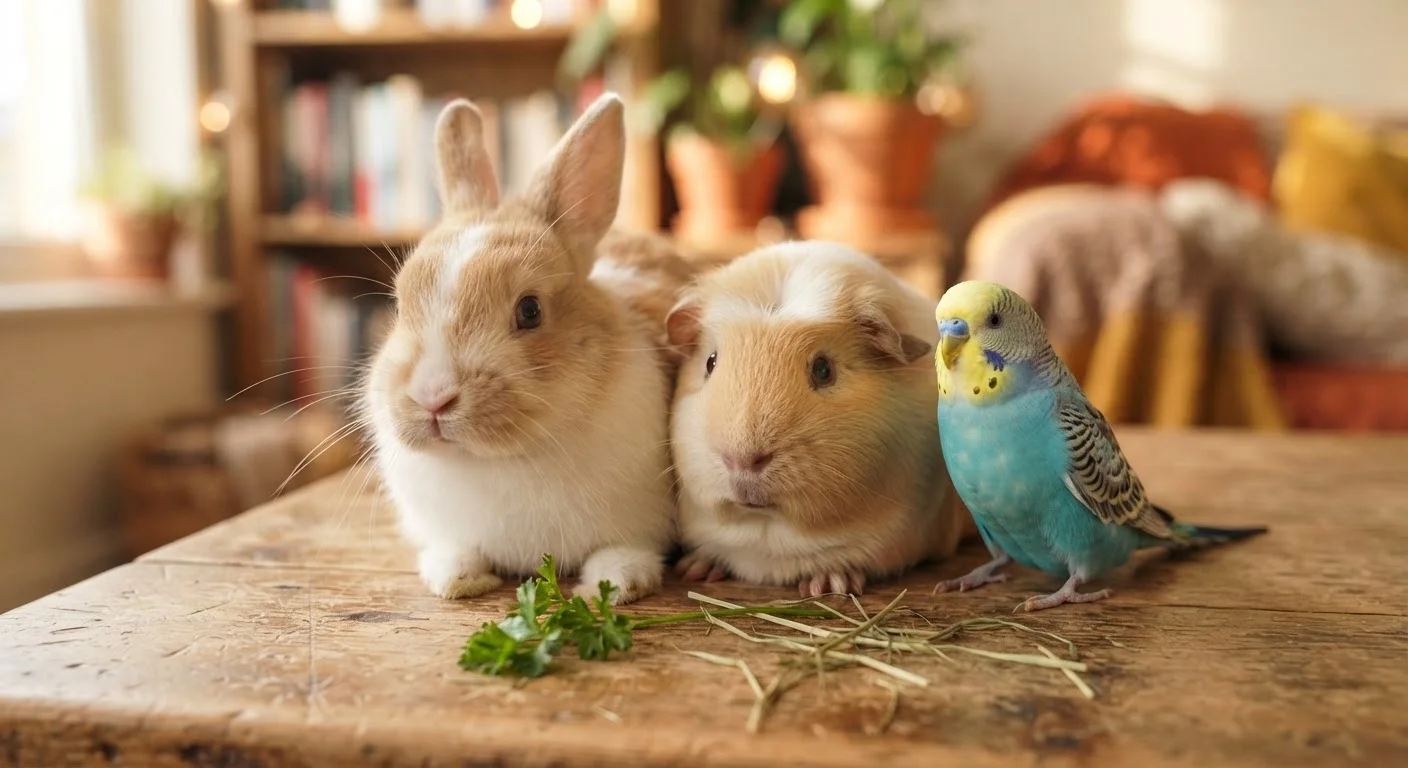
Why Small Pets Need Specialized Care
Small companion animals like rabbits, guinea pigs, and birds are popular pets — but their health needs are meaningfully different from those of dogs and cats. Many common illnesses in these species progress quickly and quietly, making early recognition critically important. Understanding species-specific baselines puts you in a much stronger position to notice when something has shifted.
Because these animals are prey species, they instinctively mask signs of illness. By the time symptoms become obvious, a problem may already be advanced. Regular, close observation is one of the most valuable habits you can develop as a small-pet owner. For a broader look at what to expect during the early stages of pet ownership, see Your New Pet's First Year.
| Average rabbit lifespan | 8–12 years (indoor domesticated) (House Rabbit Society) |
| Average guinea pig lifespan | 4–8 years (AVMA Pet Health guidelines) |
| Average budgerigar lifespan | 5–10 years (Association of Avian Veterinarians) |
| Vitamin C requirement (guinea pigs) | Requires daily dietary source — cannot self-produce (Merck Veterinary Manual) |
| Vet type recommended | Exotic animal or avian veterinarian |
| Primary rabbit dietary staple | Unlimited fresh grass hay (timothy, orchard grass) (House Rabbit Society) |
Rabbits: Digestive Health and Dental Watch
A rabbit's gastrointestinal system is highly sensitive. Rabbits need a diet made up primarily of fresh, unlimited grass hay — such as timothy or orchard grass — which keeps their gut moving and naturally wears down their continuously growing teeth. Pellets should be offered in limited amounts, and fresh leafy greens can be a healthy supplement.
GI stasis (a slowdown or halt of gut movement) is one of the most serious conditions rabbits face. Signs include reduced or absent droppings, loss of appetite, lethargy, and a bloated abdomen. This is a veterinary emergency. Similarly, dental problems — malocclusion, or misaligned teeth — can prevent proper eating and lead to rapid weight loss.
Other concerns include respiratory infections, ear mites, and flystrike (fly larvae infestation) in outdoor rabbits. A rabbit specialist or exotic animal veterinarian is the most appropriate professional for routine care and illness management. Reading your rabbit's body language can help you catch early warning signs before they escalate.
Guinea Pigs: Vitamin C and Social Wellbeing
Unlike most mammals, guinea pigs cannot synthesize vitamin C on their own. A deficiency leads to scurvy, which causes lethargy, joint swelling, dental issues, and skin problems. Fresh leafy greens — particularly romaine lettuce, bell peppers, and parsley — are excellent dietary sources and should be offered daily. Commercially prepared guinea pig pellets are typically fortified with vitamin C, though the vitamin degrades over time, so freshness matters.
Guinea pigs are highly social animals. Keeping them in pairs or small groups generally supports their emotional and physical wellbeing, as isolation can lead to stress-related health decline. Common health concerns include upper respiratory infections, overgrown teeth, and external parasites such as mites, which may cause intense scratching and hair loss.
GI stasis
A condition in rabbits where the gastrointestinal tract slows dramatically or stops moving entirely. It can become life-threatening within hours and requires prompt veterinary attention.
Malocclusion
Misalignment of the teeth that prevents normal wear and chewing. Common in rabbits and guinea pigs due to their continuously growing teeth.
Scurvy
A disease caused by vitamin C deficiency. In guinea pigs, it leads to weakness, swollen joints, and poor coat condition because they cannot produce their own vitamin C.
Psittacosis
A bacterial infection caused by Chlamydia psittaci, found in many bird species. It can be transmitted to humans and may cause flu-like illness; routine veterinary screening is advised.
Flystrike
A condition where flies lay eggs on an animal — typically in soiled fur near the hindquarters — and larvae hatch and damage tissue. It is a veterinary emergency, especially in outdoor rabbits.
Exotic animal veterinarian
A veterinary professional with specialized training in species other than dogs and cats, including rabbits, guinea pigs, birds, and reptiles.
Routine handling and gentle physical inspection — checking teeth, weight, coat condition, and energy level — helps establish your guinea pig's normal baseline. Any sudden change in eating, activity, or social behavior warrants a call to your veterinarian.
Birds: Respiratory Sensitivity and Behavioral Cues
Pet birds, including budgerigars, cockatiels, and parrots, have highly efficient respiratory systems that make them especially vulnerable to airborne toxins. Nonstick cookware fumes (from polytetrafluoroethylene, or PTFE), scented candles, aerosol sprays, and cigarette smoke can be rapidly fatal. Keeping birds in well-ventilated spaces away from kitchen fumes is essential.
Psittacosis (also called parrot fever) is a bacterial infection birds can carry and potentially transmit to humans, making hygiene and regular veterinary screening important. Signs of illness in birds include fluffed feathers, reduced vocalization, tail bobbing while breathing, discharge from the eyes or nostrils, and changes in droppings.
Birds also need mental stimulation, appropriate lighting cycles, and species-appropriate social interaction to stay healthy. A bird that is persistently quiet, sitting low on its perch, or feather-plucking may be unwell or stressed. Preparing for your bird's annual vet visit with an avian specialist is recommended at least once a year.
When to Seek Emergency Veterinary Care
For rabbits, sudden absence of droppings, labored breathing, or collapse requires same-day veterinary attention. Birds that are sitting on the cage floor, have labored breathing, or stop eating are showing serious warning signs. Guinea pigs with sudden weight loss, inability to walk normally, or discharge from the eyes or nose should be seen promptly. Exotic animal emergencies should always be directed to a veterinarian experienced with the specific species.
This article provides general health information for educational purposes and is not a substitute for professional veterinary advice. Always consult a qualified exotic animal or avian veterinarian for concerns about your specific pet's health.
The content on this site is for informational purposes only and is not a substitute for professional advice. Always consult a qualified professional for guidance specific to your situation.