

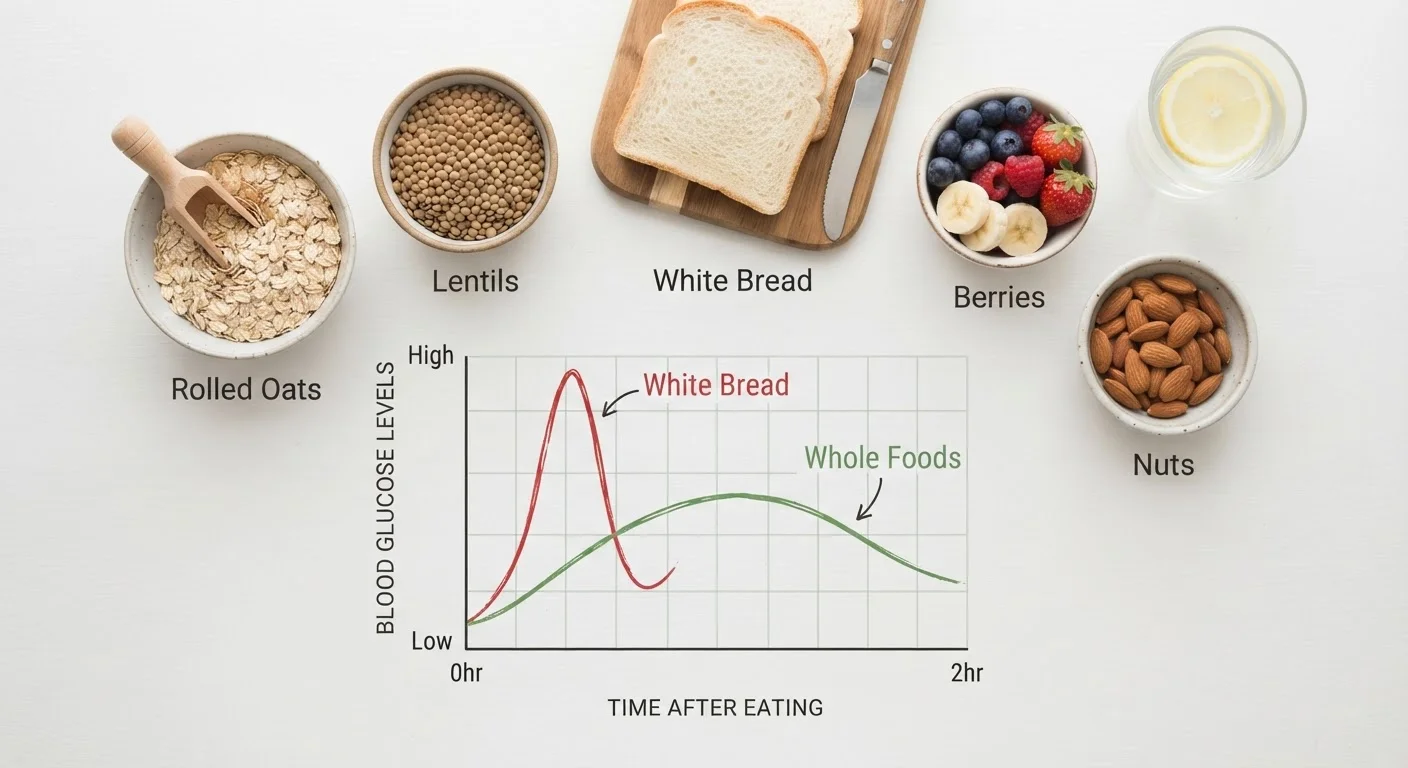
How the Glycaemic Index Is Measured
The GI of a food is calculated by feeding test participants a portion containing exactly 50 grams of available (digestible) carbohydrates, then measuring their blood glucose at regular intervals over two hours. The resulting curve is compared to the curve produced by 50 grams of pure glucose — the reference food scored at 100. The individual scores are averaged across multiple participants to produce a published GI value.
This standardized method was developed by Dr. David Jenkins and colleagues at the University of Toronto in the early 1980s. It gave researchers and clinicians a consistent vocabulary for discussing carbohydrate quality, which had previously been discussed only in vague terms like "simple" versus "complex" sugars.
GI Values Can Vary by Brand and Preparation
Published GI tables provide general averages, but the actual GI of a specific food product can differ depending on the manufacturer's formulation, cooking method, and even the variety of grain or legume used. Use GI values as approximate guides rather than precise measurements. Authoritative GI databases, such as the one maintained by the University of Sydney, are the most reliable reference sources available.
Because testing requires a fixed 50-gram carbohydrate portion, some foods — like carrots — appear misleadingly high on the GI scale when you'd need to eat an unrealistically large serving to consume that much carbohydrate. This is one key reason glycaemic load is often more informative in practice.
What GI Does Not Tell You
GI has real limitations that are easy to overlook when the number is treated as a definitive verdict on a food. The most important gap is portion size. GI is calculated from a fixed carbohydrate amount, not a typical serving. Glycaemic load (GL) corrects for this by multiplying GI by the grams of carbohydrate in an actual serving, then dividing by 100. GL gives a more realistic picture of a food's blood sugar impact at the dinner table.
GI also changes based on how food is prepared and what it's eaten alongside. Fat, protein, fiber, and acidity all slow gastric emptying, reducing the glycaemic impact of a meal as a whole. A boiled potato eaten alone carries a very different glycaemic effect than the same potato served with chicken, olive oil, and salad greens.
~73
Average GI of white bread
White bread is frequently used as an alternative GI reference food alongside pure glucose in research settings.
~21
Average GI of lentils
Lentils are among the lowest-GI carbohydrate sources, largely due to their high fiber and resistant starch content.
0.5%
Typical HbA1c reduction with low-GI diet
A Cochrane review of randomized trials found that low-GI diets produced a modest but clinically meaningful reduction in HbA1c for people with type 1 and type 2 diabetes.
When GI Is Genuinely Useful
For people managing type 2 diabetes or prediabetes, GI is a practical, evidence-supported tool. Systematic reviews have found that low-GI dietary patterns are associated with modest but meaningful improvements in HbA1c — a key marker of long-term blood glucose control. To understand what HbA1c and other blood sugar markers actually mean, see our guide to blood sugar numbers decoded.
Low-GI eating is also associated with improved satiety — the feeling of fullness after a meal — which may support weight management indirectly. Foods that score low on the GI scale tend to be rich in fiber and minimally processed, qualities that carry independent health benefits beyond blood sugar.
Combine Foods to Moderate Blood Sugar
Eating carbohydrate-rich foods alongside protein, healthy fat, or vinegar-based dressings naturally lowers the overall glycaemic response of a meal. Rather than focusing solely on the GI of individual foods, consider how your whole plate is balanced — this reflects how the body actually processes a mixed meal.
Athletes and active individuals also reference GI strategically — favoring high-GI foods for rapid energy replenishment immediately after intense exercise, and lower-GI foods for sustained energy before endurance events. This is a legitimate, evidence-informed application.
Putting GI Into Practical Perspective
The glycaemic index is most valuable as one lens among many, not a single deciding metric. A food's nutritional value includes its micronutrient density, fiber content, protein, healthy fats, and degree of processing — none of which GI captures. Whole milk, for example, has a low GI but is calorie-dense. Many highly processed snack foods are engineered with fat and protein combinations that lower their GI without making them nutritious choices.
If you find the GI framework helpful, use it as a guide toward foods like legumes, non-starchy vegetables, intact whole grains, and most fruits — all of which naturally score low and happen to align with dietary patterns broadly supported by research. But no single number replaces a varied, balanced diet and regular consultation with a healthcare professional, particularly for those managing chronic conditions.
This article is for general informational purposes only and does not constitute medical or nutritional advice. Consult a qualified healthcare provider before making significant changes to your diet, especially if you have diabetes, prediabetes, or any other health condition.
Frequently Asked Questions
A GI of 55 or below is generally classified as low and considered favorable for blood sugar control. However, a low GI value alone doesn't make a food nutritionally superior — overall diet quality, fiber content, and portion size all matter as well.
No. GI measures how fast a food raises blood sugar per gram of carbohydrate, but glycaemic load (GL) accounts for the actual amount of carbohydrate in a typical serving. A food can have a high GI but a low GL if you only eat a small portion of it, such as watermelon.
No. Blood sugar responses to the same food can vary significantly between individuals based on gut microbiome composition, insulin sensitivity, stress levels, sleep, and physical activity. GI values represent population averages tested under controlled conditions.
A low-GI dietary pattern can benefit anyone, as it often emphasizes whole grains, legumes, vegetables, and minimally processed foods. However, it is not essential for everyone, and a well-rounded diet rich in whole foods generally achieves similar health outcomes.
Yes, significantly. Cooking pasta al dente produces a lower GI than soft-boiled pasta. Cooling and reheating starchy foods like rice and potatoes can lower their GI by increasing resistant starch. Ripeness also raises the GI of fruits such as bananas.
The content on this site is for informational purposes only and is not a substitute for professional advice. Always consult a qualified professional for guidance specific to your situation.