

Our Verdict
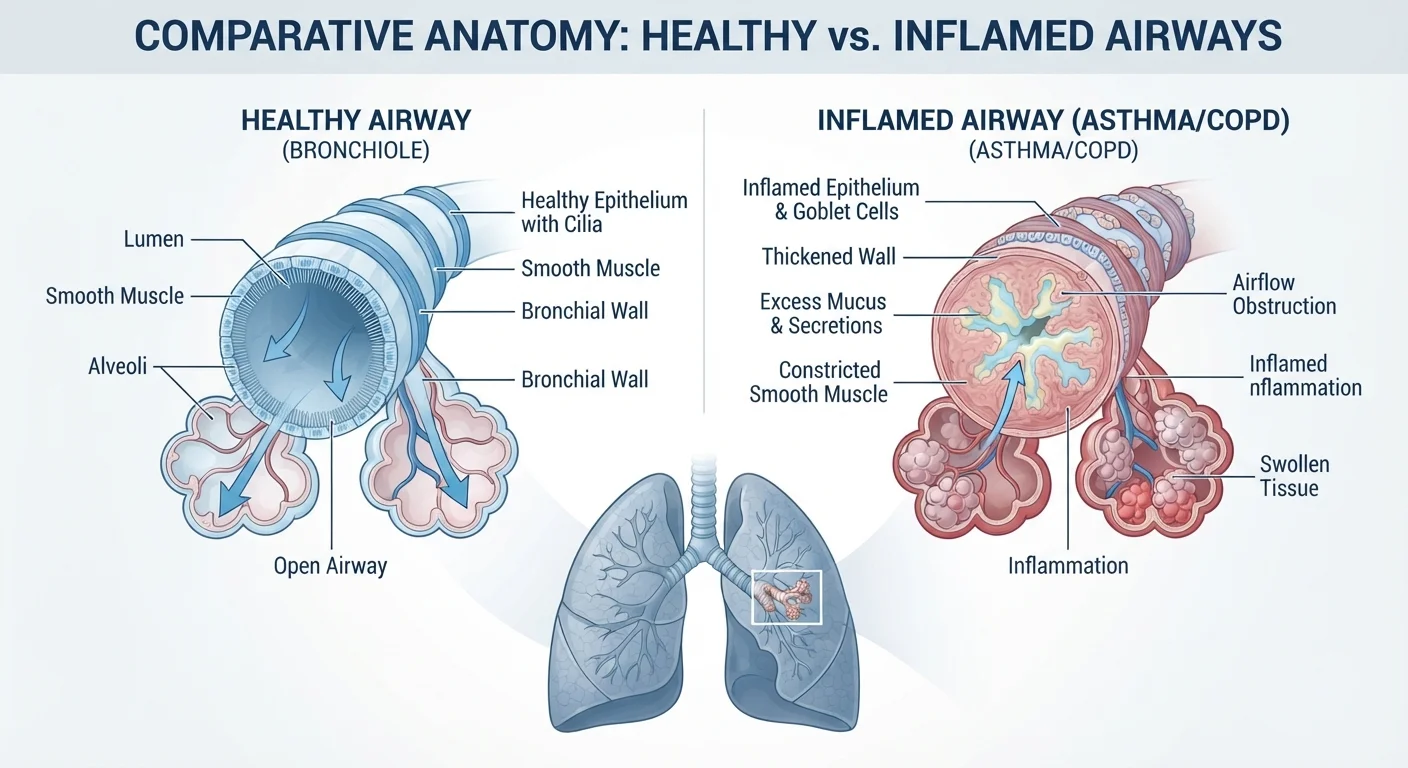
Asthma, COPD, and chronic bronchitis share surface-level symptoms but differ fundamentally in cause, mechanism, reversibility, and long-term trajectory. Asthma is largely manageable with appropriate therapy; COPD and chronic bronchitis are progressive and require different, sustained strategies. Getting the right diagnosis early is the most important step toward effective management.
| Best for | Recommended |
|---|---|
| Those with episodic wheezing and breathlessness triggered by allergens or exercise | Asthma evaluation |
| Long-term smokers with persistent cough and declining exercise tolerance | COPD/chronic bronchitis screening |
| Anyone with overlapping symptoms unsure of their diagnosis | Spirometry with a pulmonologist |
Why These Three Conditions Get Confused
Shortness of breath, wheezing, and a persistent cough are the calling cards of multiple respiratory conditions. Asthma, COPD, and chronic bronchitis can all produce these symptoms, making self-diagnosis unreliable and clinical precision essential. As our colleagues explain, overlapping respiratory symptoms complicate early recognition far more often than most people realize.
The stakes of misidentification are real. Treatments optimized for asthma — such as short-acting bronchodilators used as the sole therapy — may be insufficient for COPD, while steroid-based regimens suited to COPD management may not address the underlying inflammation pattern driving an asthma patient's episodes. Understanding the differences is a prerequisite for receiving the right care.
Track Your Symptoms Before Your Appointment
Keeping a simple log of when symptoms occur, what triggers them, and how long they last gives your physician far more to work with than memory alone. Note whether breathlessness comes on suddenly or builds gradually, and whether it resolves on its own or requires medication. This pattern information is often the first clue toward a correct diagnosis.
Defining Each Condition
Asthma is a chronic inflammatory disease of the airways characterized by episodic bronchoconstriction — the narrowing of the airways in response to triggers such as allergens, cold air, exercise, or respiratory infections. Crucially, this narrowing is largely reversible, either spontaneously or with bronchodilator medication. Asthma commonly begins in childhood, though adult-onset cases are well documented.
COPD is an umbrella term for progressive, largely irreversible airflow limitation. It encompasses two primary presentations: emphysema (damage to the air sacs) and chronic bronchitis. Unlike asthma, COPD involves structural changes to lung tissue that do not fully reverse with treatment. For a thorough overview of its stages and long-term management, see our comprehensive guide to COPD.
Chronic bronchitis is defined clinically as a productive cough lasting at least three months per year for two or more consecutive years, in the absence of another explanation. It represents chronic inflammation of the bronchial tubes and is classified as a form of COPD when airflow obstruction is present on spirometry testing.
Key Differences at a Glance
While symptom overlap is significant, several clinical features help distinguish these conditions. The table below summarizes the most diagnostically relevant contrasts.
| Asthma | COPD | Chronic Bronchitis | |
|---|---|---|---|
| Primary cause | Allergic/inflammatory triggers | Smoking, long-term irritant exposure | Smoking, prolonged airway irritation |
| Typical onset age | Childhood or any age | Usually after age 40 | Usually after age 40 |
| Airflow obstruction | Reversible with treatment | Largely irreversible | Irreversible if COPD criteria met |
| Defining symptom pattern | Episodic wheeze and breathlessness | Progressive breathlessness, chronic cough | Productive cough ≥3 months/year, 2+ years |
| Spirometry finding | Significant bronchodilator reversibility | Limited bronchodilator reversibility | Obstruction with limited reversibility |
| Disease progression | Generally stable with treatment | Progressive decline | Progressive if obstruction present |
| Relationship to other conditions | Can overlap with COPD (ACO) | Includes emphysema and chronic bronchitis | Subtype of COPD when obstruction present |
It is worth noting that some patients carry a dual diagnosis — a condition sometimes called ACO, or asthma-COPD overlap — where features of both are present simultaneously. This makes specialist evaluation particularly important for adults with a long history of both asthma and smoking.
How Doctors Diagnose Each Condition
Spirometry — a breathing test that measures how much air a person can exhale and how quickly — is the gold-standard diagnostic tool for all three conditions. In asthma, spirometry may show normal results between episodes, with obstruction that reverses significantly after administering a bronchodilator. In COPD and chronic bronchitis with obstruction, the post-bronchodilator improvement is limited, reflecting fixed airway damage.
Physicians also consider patient history carefully: age of symptom onset, smoking history, occupational exposures, allergy history, and symptom patterns (constant versus episodic). Chest imaging, blood eosinophil counts, and allergy testing may supplement spirometry depending on clinical presentation.
If you or a loved one has recently received a respiratory diagnosis and are navigating next steps, the starter guide for the newly diagnosed offers accessible foundational context. It is also worth understanding the broader distinction covered in our piece on acute versus chronic respiratory conditions, since acute bronchitis — often triggered by viral infection — is an entirely separate and temporary condition. For a focused look at how acute chest infections differ from one another, see pneumonia vs. bronchitis.
This article is for informational purposes only and does not constitute medical advice. Always consult a qualified healthcare professional regarding any symptoms, diagnosis, or treatment decisions.
The content on this site is for informational purposes only and is not a substitute for professional advice. Always consult a qualified professional for guidance specific to your situation.