

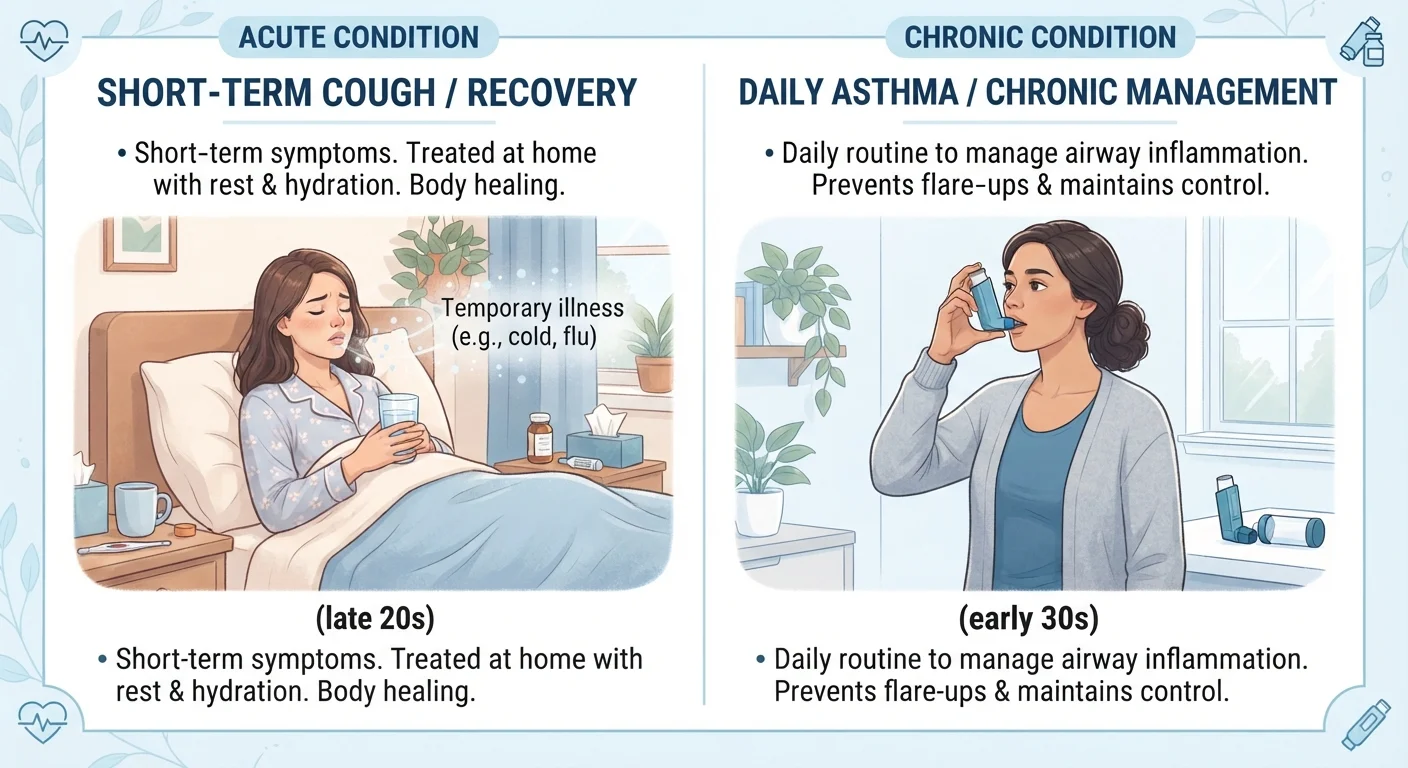
Option A
Acute Respiratory Conditions
Short-lived illnesses that resolve with appropriate care.
Best for: Understanding sudden-onset respiratory symptoms such as bronchitis, pneumonia, or influenza-related infections.
Option B
Chronic Respiratory Conditions
Persistent, lifelong diseases requiring ongoing management.
Best for: Understanding long-term diagnoses like asthma, COPD, and pulmonary fibrosis that require continuous care strategies.
What Sets Acute and Chronic Respiratory Conditions Apart
The most fundamental divide in respiratory medicine is not between conditions that affect the upper airway versus the lower airway — it's between those that are acute and those that are chronic. Acute conditions have a defined onset, a recognizable cause, and a finite course. Chronic conditions, by contrast, are persistent, often progressive, and require management rather than a simple cure.
Acute respiratory illnesses include infections such as pneumonia, acute bronchitis, and influenza-related airway inflammation. These conditions typically develop over hours to days and resolve — with or without treatment — within a few weeks. The immune system clears the pathogen, tissues heal, and lung function returns to baseline in most healthy adults.
Chronic respiratory diseases such as asthma, chronic obstructive pulmonary disease (COPD), and pulmonary fibrosis involve structural or functional changes in the airways or lung tissue that do not fully reverse. They are defined clinically by duration: the Global Initiative for Chronic Obstructive Lung Disease (GOLD) and similar bodies typically classify respiratory symptoms as chronic when they persist for three months or more across at least two consecutive years, though individual definitions vary by condition.
For readers navigating a new diagnosis, the Respiratory Conditions Starter Guide offers a clear overview of what to expect early on.
| Criterion | Acute Respiratory Conditions | Chronic Respiratory Conditions |
|---|---|---|
| Duration | Days to weeks | Months to years (lifelong) |
| Common examples | Bronchitis, pneumonia, influenza | Asthma, COPD, pulmonary fibrosis |
| Primary cause | Infection (viral or bacterial) | Structural/functional airway changes |
| Treatment goal | Full recovery and resolution | Symptom control and disease management |
| Typical management | Rest, antivirals, or antibiotics if needed | Inhalers, rehabilitation, ongoing monitoring |
| Recurrence risk | Low to moderate depending on pathogen | Ongoing; exacerbations require active prevention |
| Impact on lung function | Usually reversible | Often progressive; may not fully reverse |
How Each Type Is Managed — and Why the Difference Matters
Recognizing whether a condition is acute or chronic directly shapes treatment goals and patient expectations. For acute respiratory infections, management centers on symptom relief, rest, hydration, and — when a bacterial cause is confirmed — antibiotic therapy. The endpoint is recovery: a return to normal respiratory function.
Chronic respiratory conditions shift that goal entirely. The focus moves from cure to control: reducing symptom frequency, preventing exacerbations, slowing disease progression, and preserving quality of life. This typically involves long-term pharmacological therapy (such as inhaled bronchodilators or corticosteroids), pulmonary rehabilitation, lifestyle modifications, and regular clinical monitoring.
384M
People living with COPD worldwide
According to estimates published in the Lancet, COPD affects approximately 384 million people globally, making it one of the most prevalent chronic respiratory diseases.
~1.5M
Annual U.S. pneumonia hospitalizations
The CDC estimates that pneumonia, a common acute respiratory condition, leads to approximately 1.5 million emergency department visits annually in the United States.
262M
People affected by asthma globally
The World Health Organization estimates that asthma affects around 262 million people worldwide, highlighting the scale of chronic respiratory disease burden.
Importantly, the two categories are not always fully separate. An acute respiratory infection — such as severe pneumonia or a significant viral illness — can trigger an exacerbation in someone with an underlying chronic condition, or in rare cases unmask a chronic disease that had not yet been diagnosed. This overlap underscores why distinguishing between the two matters not just for treatment planning but for long-term health surveillance.
Older adults represent a population where this distinction carries added weight. Age-related declines in lung elasticity and immune response mean that both acute infections and chronic conditions present differently and carry greater risk. The article on managing respiratory conditions in older adults explores these specific considerations in depth.
For those living with chronic conditions, understanding the respiratory dimension of long-term health is a critical part of integrated care. And just as acute versus chronic distinctions shape respiratory care, the same framework applies across other health domains — for instance, acute versus chronic stress also follows a parallel logic of short-term response versus long-term adaptation.
This article is for general informational purposes only and does not constitute medical advice. Always consult a qualified healthcare professional for evaluation, diagnosis, and personalized treatment guidance.
The content on this site is for informational purposes only and is not a substitute for professional advice. Always consult a qualified professional for guidance specific to your situation.