

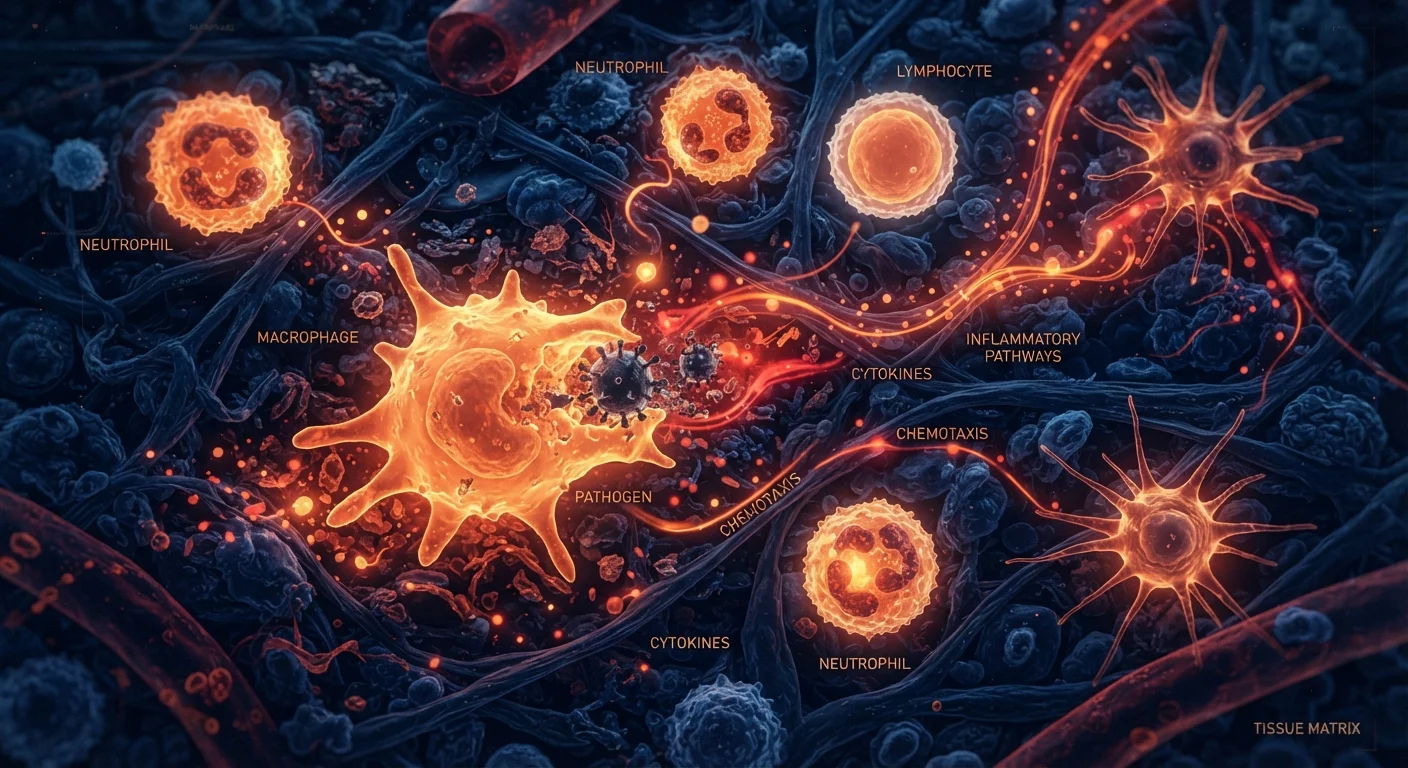
The Protective Purpose of Inflammation
When you sprain an ankle or catch a cold, the redness, swelling, warmth, and pain that follow are not signs that something has gone wrong — they are signs that your immune system is doing exactly what it should. This is acute inflammation: a rapid, coordinated mobilization of immune cells, proteins, and increased blood flow to the site of damage or infection.
Within this response, white blood cells engulf pathogens, damaged cells are cleared away, and chemical messengers called cytokines coordinate repair. In most cases, once the threat is neutralized, anti-inflammatory signals instruct the immune system to stand down. Healing follows. The process is elegant, time-limited, and life-sustaining.
The difficulty arises when that "stand down" signal never comes — or is chronically overridden.
When Inflammation Becomes the Threat
Chronic inflammation occurs when the immune system remains activated well beyond any immediate threat. The same biological machinery designed to protect the body begins to attack healthy tissue, wear down joints, stiffen blood vessels, and disrupt organ function. This low-grade, persistent state may produce few obvious symptoms for years while causing measurable cumulative damage.
3 in 5
Deaths globally linked to chronic inflammatory disease
According to research published in Nature Medicine, chronic inflammatory conditions are estimated to account for approximately 60% of all deaths worldwide.
~50%
US adults affected by at least one chronic inflammatory condition
Population health estimates suggest roughly half of all US adults live with a chronic condition in which inflammation plays a central role, including cardiovascular disease, diabetes, or arthritis.
7–10 years
Average delay before autoimmune diagnosis
The American Autoimmune Related Diseases Association has reported that autoimmune patients often see multiple physicians over many years before receiving an accurate diagnosis.
Several factors can lock the body into a chronic inflammatory state: unresolved infections, autoimmune dysfunction (where the immune system misidentifies the body's own cells as foreign), obesity, sustained psychological stress, poor sleep, and exposure to environmental toxins. In many cases, multiple factors overlap.
Importantly, chronic inflammation is not simply "more" acute inflammation — it involves different immune cell populations and molecular pathways, which is why it requires different management strategies.
The Conditions It Drives
Chronic inflammation is now recognized as a central mechanism in a wide range of serious health conditions:
- Autoimmune diseases — In conditions such as rheumatoid arthritis, lupus, and multiple sclerosis, the immune system mounts an inflammatory attack against the body's own tissues. Joints, nerves, and organs become targets.
- Cardiovascular disease — Inflammation contributes to the formation and rupture of arterial plaques. Elevated CRP (C-reactive protein), a marker of systemic inflammation, is associated with higher cardiovascular risk.
- Type 2 diabetes — Adipose (fat) tissue, particularly around the abdomen, can release inflammatory cytokines that impair insulin signaling.
- Inflammatory bowel disease (IBD) — Crohn's disease and ulcerative colitis involve dysregulated immune responses in the gut lining.
- Chronic pain — Persistent inflammation sensitizes pain receptors and neural pathways. See our explainer on why chronic pain persists after injury for a deeper look at this mechanism.
“Inflammation is a common thread running through virtually every chronic disease we know of. Understanding it is not just about treating arthritis or diabetes — it's about understanding how the body turns against itself.”
— Dr. Andrew Luster, Chief, Division of Rheumatology, Allergy and Immunology, Massachusetts General Hospital
Managing Chronic Inflammation: What the Evidence Supports
Managing chronic inflammation is rarely a matter of a single intervention. Clinical approaches typically combine pharmacological treatments — which vary considerably depending on the underlying condition — with evidence-informed lifestyle strategies.
Track Patterns, Not Just Flare-Ups
Keeping a simple symptom journal — noting pain levels, sleep quality, diet, stress, and activity — can help you and your healthcare provider identify inflammatory triggers and gauge how well your management plan is working. Even a few weeks of consistent tracking can reveal meaningful patterns that inform clinical decisions.
Dietary patterns characterized by high intake of vegetables, legumes, fatty fish, and whole grains, and low intake of ultra-processed foods and refined sugars, are associated with lower inflammatory markers in population studies. Regular moderate-intensity physical activity has also demonstrated measurable reductions in systemic inflammation. Adequate sleep and stress reduction (through approaches such as mindfulness or cognitive-behavioral therapy) round out a holistic management framework.
For those navigating a formal diagnosis, avoiding common management mistakes matters as much as following good practices. Our article on pitfalls in managing an autoimmune diagnosis outlines where things can go wrong. And when a chronic inflammatory condition goes unaddressed, the downstream effects can extend far beyond the primary diagnosis — see what happens when a chronic condition goes unmanaged for an overview of cumulative organ-level consequences.
This article is for general informational and educational purposes only and does not constitute medical advice. If you have symptoms or concerns about inflammation or any related condition, please consult a qualified healthcare professional for personalized evaluation and guidance.
Frequently Asked Questions
Acute inflammation is short-lived and purposeful — it ramps up quickly to fight infection or heal injury, then resolves. Chronic inflammation persists for months or years, often with no obvious external trigger, and can cause cumulative damage to tissues and organs.
Yes. Chronic inflammation sensitizes nerve pathways and sustains chemical signals that register as pain, even when no new tissue damage is occurring. This mechanism is closely linked to conditions like fibromyalgia and inflammatory arthritis.
Evidence supports an anti-inflammatory dietary pattern rich in vegetables, whole grains, and omega-3 fatty acids, along with regular moderate exercise, adequate sleep, and stress management. These changes support — but do not replace — medical treatment.
No. Acute inflammation is essential — without it, wounds would not heal and infections could not be cleared. The problem arises when the inflammatory response fails to resolve and becomes a persistent, low-grade state.
Rheumatoid arthritis, lupus, inflammatory bowel disease, type 2 diabetes, atherosclerosis, and certain cancers are among the conditions with established links to chronic inflammation. The relationships are complex, and inflammation may be both a cause and a consequence.
There is no single definitive test. Clinicians often use blood markers such as C-reactive protein (CRP) and erythrocyte sedimentation rate (ESR), alongside imaging and symptom history, to assess inflammatory activity and guide diagnosis.
The content on this site is for informational purposes only and is not a substitute for professional advice. Always consult a qualified professional for guidance specific to your situation.