

Start here
What Is PCOS?
Next
Recognizing the Symptoms
Then
How Is PCOS Diagnosed?
Apply it
Managing PCOS Day to Day
Take action
When to Talk to a Doctor
What Is PCOS?
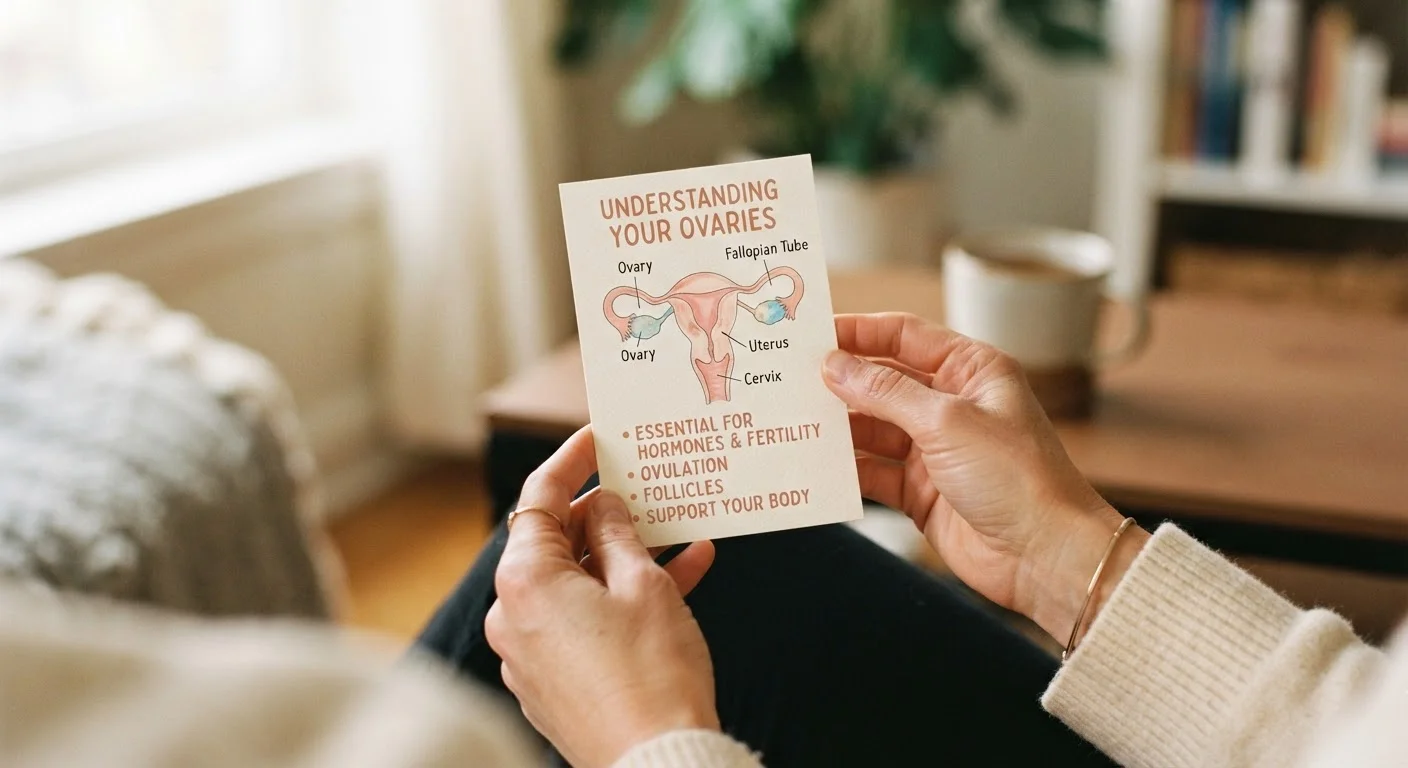
Polycystic ovary syndrome (PCOS) is a hormonal disorder that affects the ovaries and how the body uses insulin. It is one of the most common endocrine conditions among women of reproductive age, estimated to affect approximately 1 in 10 women globally, according to the World Health Organization.
The condition is characterized by a disruption in normal hormone balance — particularly an excess of androgens (often called 'male hormones,' though all women produce them in small amounts). This imbalance interferes with the regular development and release of eggs from the ovaries, which is why menstrual irregularities are a hallmark feature. To understand how ovulation normally unfolds, see our guide to ovulation signs and tracking.
Importantly, PCOS is not a single disease with one cause. Researchers believe it results from a combination of genetic predisposition, insulin resistance, and environmental factors — making it a complex, multifactorial condition rather than a simple hormonal 'glitch.'
Androgens
A group of hormones — including testosterone — that all people produce, but which are present at elevated levels in PCOS. They drive symptoms such as excess hair growth and acne.
Insulin resistance
A condition where the body's cells respond less effectively to insulin, causing the pancreas to produce more. In PCOS, this excess insulin can stimulate further androgen production.
Follicle
A small fluid-filled sac in the ovary that contains a developing egg. In PCOS, multiple small follicles may develop but not fully mature or release an egg.
Ovulation
The release of a mature egg from the ovary, typically once per menstrual cycle. PCOS frequently disrupts or prevents regular ovulation.
Hirsutism
The medical term for excess hair growth in areas where women typically grow little hair, such as the face, chest, or back — a common androgen-related symptom in PCOS.
Rotterdam criteria
The widely used diagnostic framework for PCOS, requiring at least two of three specific features: irregular ovulation, elevated androgens, or polycystic-appearing ovaries on ultrasound.
Recognizing the Symptoms
PCOS presents differently from person to person, which is one reason it frequently goes undiagnosed for years. The most commonly reported symptoms include:
- Irregular or absent periods: Cycles that are fewer than eight per year, longer than 35 days, or unpredictable.
- Signs of elevated androgens: Excess facial or body hair (hirsutism), acne along the jawline and chin, or scalp hair thinning.
- Difficulty with weight: Many — though not all — people with PCOS experience weight gain concentrated around the abdomen, linked to insulin resistance.
- Skin changes: Darkened patches of skin (acanthosis nigricans) in skin folds, associated with insulin resistance.
- Fertility challenges: Irregular ovulation makes conception less predictable.
It is worth emphasizing that not every person with PCOS will have all these symptoms — or even the most 'classic' ones. Lean individuals can have PCOS; people with regular periods can have PCOS. The variability is real and clinically recognized.
Don't Self-Diagnose Based on Symptoms Alone
Many PCOS symptoms — such as irregular periods, acne, and hair changes — overlap with other conditions, including thyroid disorders, elevated prolactin, and adrenal issues. A proper clinical evaluation is essential before assuming a PCOS diagnosis. Treating the wrong condition can delay appropriate care.
How Is PCOS Diagnosed?
There is no single definitive test for PCOS. Most clinicians use the Rotterdam criteria, which require the presence of at least two of the following three features:
- Irregular or infrequent ovulation (reflected in cycle irregularity)
- Clinical or biochemical signs of elevated androgens
- Polycystic-appearing ovaries on ultrasound (multiple small follicles arranged around the ovary's edge)
A thorough workup typically includes a detailed medical history, physical examination, blood tests to measure hormone and glucose levels, and a pelvic ultrasound. Crucially, the diagnosis also involves ruling out other conditions — such as thyroid disorders or elevated prolactin — that can mimic PCOS symptoms.
Ultrasound Findings Are Not the Whole Picture
A 'polycystic' appearance on ultrasound alone does not confirm a PCOS diagnosis — many people without PCOS have multiple ovarian follicles. Conversely, you can have PCOS without a classic ultrasound finding. This is why the Rotterdam criteria require a broader clinical assessment rather than imaging alone.
Managing PCOS Day to Day
PCOS management is highly individualized and depends on which symptoms are most affecting quality of life. Broadly, approaches fall into two categories:
Lifestyle-Based Strategies
For many people, movement and nutrition habits that support insulin sensitivity can meaningfully reduce symptom burden. Regular physical activity and a balanced dietary pattern — discussed with a registered dietitian — are frequently recommended as first-line support. These changes do not need to be extreme to have an effect.
Medical Treatments
A range of medications may be considered depending on the individual's goals — whether that's regulating periods, managing androgen-related symptoms, or supporting fertility. These options are always determined in partnership with a healthcare provider, as the right approach depends on personal health history and priorities.
Mental and emotional well-being also matters. Research consistently shows higher rates of anxiety and depression among people with PCOS. Addressing psychological health is a legitimate and important part of comprehensive PCOS care, not a secondary concern.
Keep a Symptom and Cycle Journal
Tracking your menstrual cycle, energy levels, mood, and physical symptoms over several months gives your healthcare provider valuable diagnostic context. Even a simple notes app can help you spot patterns. This record is especially useful at initial appointments when a full history is being taken.
When to Talk to a Doctor
If you suspect you may have PCOS — or have been recently diagnosed — working with a knowledgeable healthcare provider is the most important step you can take. A primary care physician, gynecologist, or endocrinologist can help confirm the diagnosis, assess for related metabolic risks (such as prediabetes or elevated cholesterol), and create a management plan tailored to your situation.
People with PCOS also benefit from periodic monitoring over time. Because the condition carries a modestly elevated long-term risk of type 2 diabetes, cardiovascular disease, and endometrial changes, ongoing check-ins — even when symptoms feel controlled — are a sensible part of care.
You don't need to wait until symptoms become severe to seek evaluation. Early diagnosis and proactive management are associated with better long-term outcomes. Advocate for yourself, ask questions, and know that PCOS is a well-recognized and actively researched condition — you are not navigating it alone.
This article is for general informational purposes only and does not constitute medical advice. Always consult a qualified healthcare professional for personal health concerns, diagnosis, or treatment decisions.
Frequently Asked Questions
Yes. Despite the name, ovarian cysts are not required for a PCOS diagnosis. The 'cysts' described are actually small, immature follicles, and their absence does not rule out the condition if other diagnostic criteria are met.
PCOS is a leading cause of irregular ovulation, which can make conception more difficult — but it does not make pregnancy impossible. Many people with PCOS conceive with or without medical support. A reproductive endocrinologist can help map out options.
PCOS is a chronic condition with no known cure, but symptoms often change over time, particularly after menopause. Consistent management — including lifestyle habits and medical care — can significantly reduce its impact on daily life.
PCOS commonly involves elevated androgens (such as testosterone), disrupted luteinizing hormone (LH) and follicle-stimulating hormone (FSH) ratios, and insulin resistance. These imbalances collectively affect the menstrual cycle and metabolism.
Weight loss in those with overweight can reduce insulin resistance and improve symptom severity, but PCOS also affects people of all body sizes and cannot be 'cured' by weight changes alone. Treatment is always individualized.
PCOS is a hormonal and metabolic disorder affecting ovulation; endometriosis involves uterine-like tissue growing outside the uterus, causing pain and inflammation. The two conditions are distinct but can occasionally co-exist in the same person.
The content on this site is for informational purposes only and is not a substitute for professional advice. Always consult a qualified professional for guidance specific to your situation.