

Understanding the Caregiver's Role in COPD Management
Chronic obstructive pulmonary disease (COPD) — an umbrella term for progressive lung conditions including emphysema and chronic bronchitis — is among the most common chronic illnesses in older adults. It is characterised by airflow limitation, chronic breathlessness, mucus overproduction, and a heightened risk of acute exacerbations (flare-ups) that can be serious and sometimes life-threatening.
For seniors living at home, a caregiver's day-to-day involvement can significantly influence disease stability and quality of life. Research consistently links strong social and practical support to better medication adherence, fewer hospitalisations, and improved emotional wellbeing in people with COPD. However, effective caregiving requires both knowledge and boundaries — knowing what to do, when to act, and when to consult the care team.
The guidance here is intended as general health information. It is not a substitute for the personalised advice of the senior's clinical team, who should remain the central reference point for all treatment decisions. Building consistent daily habits that support chronic condition management is an important complement to the steps outlined below.
What you will need
Step-by-Step Caregiver Guidance
The following steps outline the core areas where caregivers can provide meaningful, evidence-informed support. Work through these in collaboration with the senior's healthcare team, and revisit them regularly as the condition or circumstances change.
Learn the Baseline and Recognise Changes Early
Establish what is normal for the person you are caring for: their typical breathing rate, usual sputum characteristics, exercise tolerance, and energy levels. When you know the baseline, you can detect changes — increased breathlessness, a shift in mucus colour from clear to yellow or green, or rising fatigue — before a full exacerbation develops.
Refer regularly to the written COPD action plan. Most plans use a traffic-light system (green, yellow, red) to guide caregiver response. If the plan is outdated or absent, request an updated one at the next clinical visit.
Support Consistent Medication and Inhaler Use
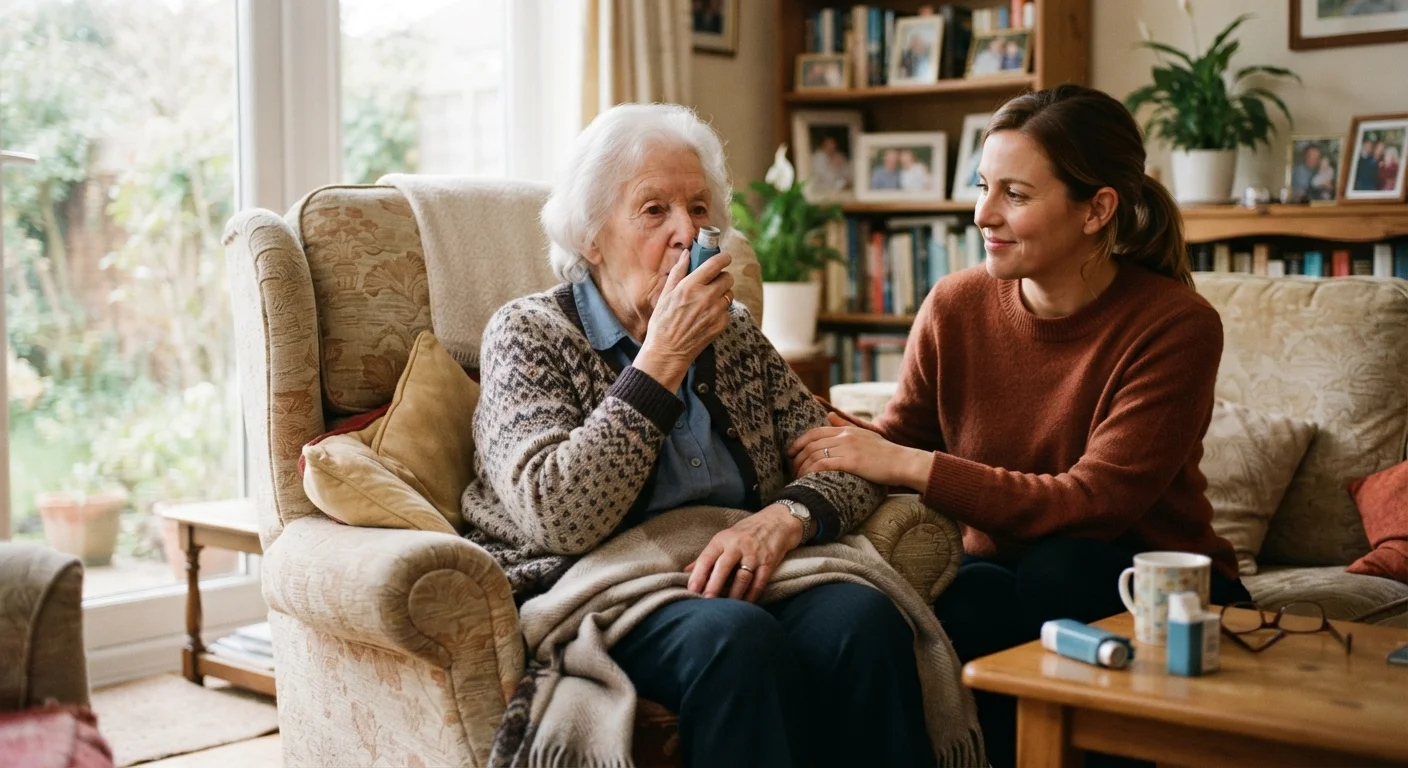
Inhaler technique is one of the most common and consequential points of failure in COPD management. Many seniors — and their caregivers — are unaware that poor technique can significantly reduce medication delivery to the lungs. Ask the prescribing clinician or pharmacist to demonstrate correct technique, and observe the senior using their devices at each medication review.
Set up a simple daily medication routine using a pill organiser or a phone reminder. Track refill dates proactively — running out of a maintenance inhaler is a preventable trigger of exacerbations. For seniors who struggle to coordinate inhaler use, spacer devices (prescribed by the healthcare team) can improve delivery without extra effort.
Reduce Indoor Triggers and Optimise Air Quality
Indoor air quality has a direct and measurable impact on COPD symptoms. Common household triggers include cigarette smoke, aerosol sprays, strong cleaning products, scented candles, mould, pet dander, and cooking fumes. Work systematically through the home to identify and minimise these exposures.
- Ensure the home is smoke-free — including visitors.
- Use unscented, low-VOC cleaning products where possible.
- Ventilate the kitchen when cooking; use an exhaust fan.
- Check for damp or mould, particularly in bathrooms and basements.
- On high-pollution or high-pollen days, keep windows closed and avoid outdoor activity during peak hours.
Pace Activities and Support Pulmonary Rehabilitation Goals
Inactivity worsens COPD over time, yet overexertion triggers breathlessness and discourages further movement. Activity pacing — breaking tasks into shorter segments with planned rest — is a well-supported approach. If the senior has been referred to a pulmonary rehabilitation programme, support their attendance and reinforce the exercises and breathing techniques taught there at home.
Encourage pursed-lip breathing during exertion: inhale slowly through the nose for two counts, then exhale through pursed lips for four. This technique, commonly taught in pulmonary rehab, helps slow breathing and reduce air trapping. Consult the principles of activity pacing during flares for strategies transferable to COPD management.
Address Emotional Wellbeing and Avoid Caregiver Overreach
Depression and anxiety are significantly more prevalent in people with COPD than in the general population, and they worsen both symptom perception and physical outcomes. As a caregiver, monitor for signs of withdrawal, persistent low mood, or increased anxiety around breathing — and raise these with the clinical team rather than attempting to address them independently.
Equally important: support independence where it is safe. Over-assistance can erode a senior's confidence and sense of control. Encouraging the senior to manage what they can — with support available rather than imposed — is both emotionally and physically beneficial. Reviewing common self-management gaps in chronic illness can help caregivers understand where support is most needed versus where stepping back is appropriate.
Know When to Call 911 Immediately
If the person in your care develops severe breathlessness at rest, bluish discolouration of the lips or fingernails (cyanosis), confusion, or is unable to speak in full sentences, call emergency services without delay. These are signs of a life-threatening exacerbation that requires immediate medical intervention — do not attempt to manage these symptoms at home.
Never Adjust Prescribed Oxygen Without Guidance
If the senior uses supplemental oxygen, resist the temptation to increase the flow rate during a difficult breathing episode unless the healthcare provider has explicitly authorised this in a written action plan. Incorrectly adjusted oxygen levels can worsen outcomes in people with COPD due to complex changes in respiratory drive. Always follow the clinician's documented instructions.
Keep a Symptom and Trigger Log
A brief daily record — noting breathlessness levels, sputum colour and amount, activity tolerance, and any potential triggers — gives the care team invaluable data at follow-up appointments. Even a simple notebook or phone note works well. This approach mirrors the structured tracking used in respiratory and asthma trigger management programmes and is equally valuable for COPD.
Written COPD Action Plan
Guides caregiver and patient responses across symptom severity levels — green, yellow, and red zones.
Pulse Oximeter
Measures blood oxygen saturation at home; useful for tracking changes if the care team recommends monitoring.
Spacer Device
Attaches to metered-dose inhalers to improve medication delivery, especially for seniors with coordination difficulties.
Medication Organiser or Pill Dispenser
Supports daily medication adherence by providing a clear, structured visual cue for doses taken and remaining.
Symptom and Trigger Log (notebook or app)
Records daily breathing status, sputum changes, and potential triggers to share with the clinical care team.
This article is for general informational and educational purposes only. It does not constitute medical advice and should not replace consultation with a qualified healthcare professional. Always seek guidance from the senior's care team for decisions related to their specific condition, medications, or care plan.
The content on this site is for informational purposes only and is not a substitute for professional advice. Always consult a qualified professional for guidance specific to your situation.