

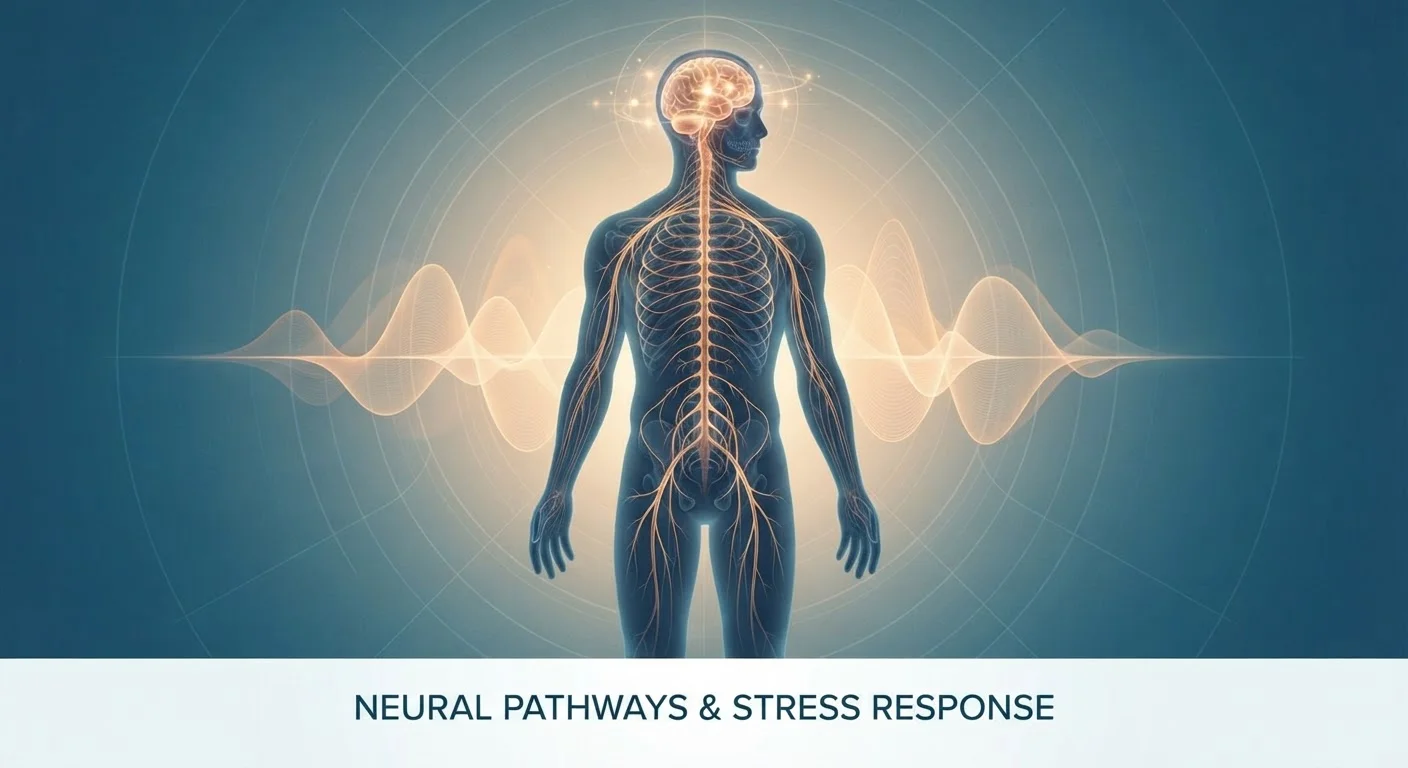
Your Body on High Alert: The Fight-or-Flight Cascade
When your brain perceives a threat — whether it's a near-miss in traffic or a tense email from a supervisor — a rapid signal fires from the hypothalamus down through the nervous system. Within seconds, the adrenal glands release adrenaline, producing the familiar sensations of a pounding heart, quickened breath, and heightened alertness. This is the fight-or-flight response, a survival mechanism refined over millions of years of evolution.
Moments later, the HPA axis — the hormonal communication loop connecting the hypothalamus, pituitary gland, and adrenal cortex — triggers the release of cortisol. Cortisol sustains the response by mobilizing glucose for energy, suppressing non-essential functions like digestion and reproduction, and modulating immune activity. Once the perceived threat passes, cortisol levels are designed to return to baseline — but that recovery depends heavily on whether the stressor is truly resolved.
77%
Adults reporting physical symptoms of stress
According to APA survey data, a large majority of U.S. adults report experiencing physical symptoms they associate with stress.
~30 min
Time for cortisol to peak after a stressor
Research shows cortisol typically peaks roughly 20–30 minutes after a psychological stressor and then gradually declines in healthy individuals.
2–3x
Increased cardiovascular risk with chronic stress
Studies in occupational health have found that prolonged work-related stress is associated with a meaningfully elevated risk of cardiovascular events.
What Chronic Stress Does Across Your Body Systems
A single stressful event leaves no lasting damage for most healthy people. The concern arises with chronic stress — when the response fires repeatedly without sufficient recovery time. Research has linked prolonged HPA axis activation to measurable effects across multiple body systems.
- Cardiovascular: Sustained cortisol and adrenaline elevate blood pressure and heart rate. Over time, this places additional load on the heart and blood vessels.
- Immune system: While short-term stress can temporarily boost immune vigilance, chronic stress is associated with both immune suppression and increased systemic inflammation.
- Digestive system: The gut has its own nervous system — the enteric nervous system — that is highly sensitive to stress hormones, contributing to symptoms like nausea, changes in bowel habits, and appetite shifts.
- Sleep: Elevated cortisol in the evening disrupts the natural hormonal rhythm needed for restful sleep. To understand this connection more deeply, see how sleep and stress hormones interact.
- Brain function: Prolonged cortisol exposure has been associated in research with changes to memory, attention, and emotional regulation.
Not all stress is equally damaging. Understanding the difference between acute and chronic stress is key to knowing when your body's response has shifted from adaptive to harmful.
Individual Stress Responses Vary Considerably
How intensely someone experiences the stress response depends on a range of factors including genetics, early life experiences, sleep quality, and existing health conditions. Two people facing the same stressor may have measurably different cortisol profiles. This variability is one reason that personalized care from a healthcare or mental health professional can be valuable.
Evidence-Based Ways to Regulate Your Stress Response
The good news is that the stress response is not fixed — it is a dynamic system that responds meaningfully to behavioral and lifestyle interventions. Several evidence-informed strategies help activate the parasympathetic nervous system, which counterbalances the fight-or-flight state:
- Slow diaphragmatic breathing: Deliberate slow breathing — particularly with an extended exhale — stimulates the vagus nerve and lowers heart rate, signaling safety to the nervous system.
- Regular aerobic exercise: Physical activity metabolizes stress hormones and promotes neuroplasticity, including in areas of the brain affected by chronic stress.
- Mindfulness-based practices: Research supports mindfulness meditation's ability to reduce cortisol reactivity and improve emotional regulation over time.
- Social connection: Positive social interaction promotes oxytocin release, which helps dampen the stress response.
For people navigating work as a major stressor, evidence-informed approaches to occupational stress offer practical starting points. It's also worth noting that hormonal factors can shape how stress manifests — stress management strategies tailored to women's physiology address this nuance directly.
Try the Extended Exhale Technique
Inhale for a count of four, then exhale slowly for a count of six to eight. Even two or three minutes of this practice has been shown in research to activate the parasympathetic nervous system and reduce perceived stress intensity. It can be done anywhere, at any time — no equipment needed.
This article is for informational purposes only and does not constitute medical advice. If stress is significantly affecting your daily functioning or physical health, please consult a qualified healthcare professional.
Frequently Asked Questions
The two main hormones are adrenaline (epinephrine) and cortisol. Adrenaline surges almost instantly, raising heart rate and blood pressure. Cortisol follows shortly after and remains elevated longer, influencing metabolism, immune activity, and inflammation. Both are produced by the adrenal glands.
Chronic stress is associated with a range of physical health concerns, including elevated blood pressure, weakened immune response, digestive problems, and disrupted sleep. Research consistently links prolonged psychological stress to increased vulnerability to illness, though stress alone rarely causes disease in isolation.
No. Short-term, manageable stress — sometimes called eustress — can sharpen focus, motivate action, and even improve performance. Problems arise when the stress response is activated too frequently or lasts too long without the body returning to a relaxed baseline.
Prolonged elevated cortisol has been associated in research with structural changes in the hippocampus, an area involved in memory and emotional regulation. Chronic stress can also affect prefrontal cortex function, making it harder to concentrate, plan, and regulate emotions effectively.
Evidence-informed approaches include slow diaphragmatic breathing, regular aerobic exercise, adequate sleep, and mindfulness-based practices. These strategies help activate the parasympathetic nervous system — your body's natural counterbalance to stress. A healthcare provider can offer personalized guidance if stress is significantly affecting daily functioning.
The content on this site is for informational purposes only and is not a substitute for professional advice. Always consult a qualified professional for guidance specific to your situation.