

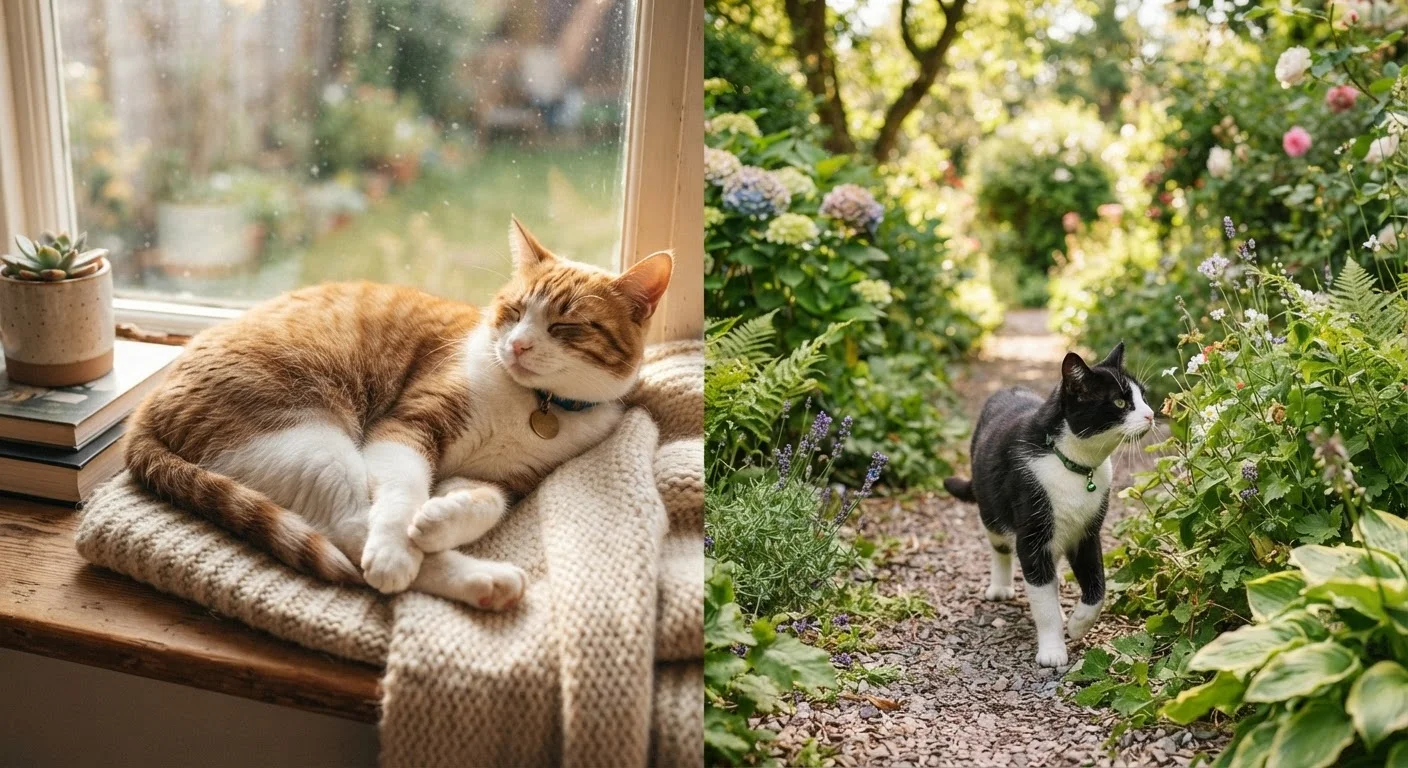
Option A
Indoor Cats
The sheltered, lower-risk lifestyle choice.
Best for: Owners prioritizing longer lifespan and reduced exposure to infectious disease, parasites, and physical trauma.
Option B
Outdoor Cats
The enriched, higher-exposure lifestyle choice.
Best for: Cats with strong hunting instincts and owners who can commit to robust preventive veterinary care.
The Lifespan Gap: What the Data Shows
One of the most consistently cited differences between indoor and outdoor cats is lifespan. Indoor cats typically live 12 to 18 years, while cats with regular outdoor access average closer to 5 to 7 years, according to estimates from veterinary epidemiologists. That gap is not trivial — and it's driven by a cluster of preventable causes.
Outdoor cats face a dramatically higher risk of trauma from vehicles, attacks by dogs or wildlife, and falls. They're also more frequently exposed to infectious diseases — including feline leukemia virus (FeLV) and feline immunodeficiency virus (FIV) — through contact with other cats. Ingestion of rodenticides, antifreeze, or toxic plants adds further risk.
For context on how these risks compound over time, a comprehensive look at cat health across life stages can help owners plan ahead.
2–3×
Lifespan advantage for indoor cats
Veterinary epidemiological estimates consistently place indoor cat lifespans at two to three times those of outdoor cats.
~90%
FIV transmission via cat bites outdoors
The American Association of Feline Practitioners notes that FIV spreads primarily through bite wounds, making outdoor cat-to-cat contact a major risk factor.
Indoor Risks That Owners Often Overlook
Indoor living removes many dangers, but it introduces others that are easy to underestimate. The most common health concern for indoor cats is obesity. Without the caloric burn of outdoor activity, cats in stimulation-poor environments are prone to overeating and weight gain — which in turn increases risk for diabetes, joint disease, and hepatic lipidosis (fatty liver disease).
Behavioral and psychological health matter too. Cats confined indoors without adequate mental stimulation can develop chronic stress and anxiety, which manifests physically as urinary tract problems, over-grooming, and gastrointestinal upset. stress is a genuine medical concern for cats, not just a behavioral inconvenience.
Additionally, indoor air quality may affect cats with respiratory sensitivities — dust, mold, cleaning product fumes, and scented candles can all irritate feline airways. research on indoor air quality and lung health is relevant for multi-pet households with older or asthmatic cats.
The 'Catio' Middle Ground
Enclosed outdoor structures — often called catios — allow cats to experience fresh air, sunlight, and natural stimuli while remaining protected from traffic, predators, and stray cats. Veterinary behaviorists increasingly recognize supervised outdoor access as a meaningful enrichment strategy for cats showing signs of indoor restlessness. If you're considering this option, discuss it with your veterinarian to ensure your cat's vaccination and parasite prevention protocols are appropriate.
Preventive Care: Different Needs for Different Lifestyles
Veterinary guidelines distinguish clearly between indoor and outdoor cats when it comes to vaccination schedules and parasite prevention. Core vaccines — rabies, feline panleukopenia, herpesvirus, and calicivirus — are recommended for all cats regardless of lifestyle. However, outdoor cats typically require additional protection against FeLV, and in some regions, against Bordetella or Chlamydia.
Parasite prevention is especially critical for outdoor cats. Fleas, ticks, ear mites, intestinal worms, and heartworm (in regions where it's endemic) are all significantly more prevalent in cats with outdoor exposure. Many of these parasites are zoonotic — meaning they can transfer to humans — making prevention a household health matter, not just a pet concern.
| Criterion | Indoor Cats | Outdoor Cats |
|---|---|---|
| Average lifespan | 12–18 years | 5–7 years |
| Trauma risk | Very low | High (vehicles, predators) |
| Infectious disease exposure | Low (if no new cats) | High (FeLV, FIV, URI) |
| Parasite burden | Low | High (fleas, ticks, worms) |
| Obesity risk | Moderate to high | Lower with active roaming |
| Behavioral enrichment needs | Must be provided actively | Partially met by environment |
| Vaccine requirements | Core vaccines only | Core + lifestyle vaccines |
| Toxin exposure risk | Low (controlled environment) | High (plants, rodenticides) |
Feeding practices also interact with lifestyle. Outdoor cats may eat prey animals, complicating caloric estimates and exposing them to secondary toxins. feeding habits that quietly undermine pet health are worth reviewing for both lifestyle types.
Recognizing Warning Signs Across Both Lifestyles
Regardless of whether a cat lives indoors or out, early recognition of illness is one of the most important things an owner can do. Cats are instinctively good at masking discomfort, which means changes in behavior often precede obvious physical symptoms.
Watch for: changes in litter box habits (frequency, straining, blood), unexplained weight loss or gain, shifts in grooming behavior, increased vocalization, or sudden withdrawal. Outdoor cats may also come home with wounds, limping, or signs of respiratory infection after contact with strays.
As cats age, monitoring becomes even more important. recognizing age-related changes in senior pets outlines which signs warrant a prompt veterinary call — relevant for indoor and outdoor cats alike.
This article is for general informational purposes only and is not a substitute for professional veterinary advice. Always consult a licensed veterinarian for guidance specific to your cat's health needs.
The content on this site is for informational purposes only and is not a substitute for professional advice. Always consult a qualified professional for guidance specific to your situation.