

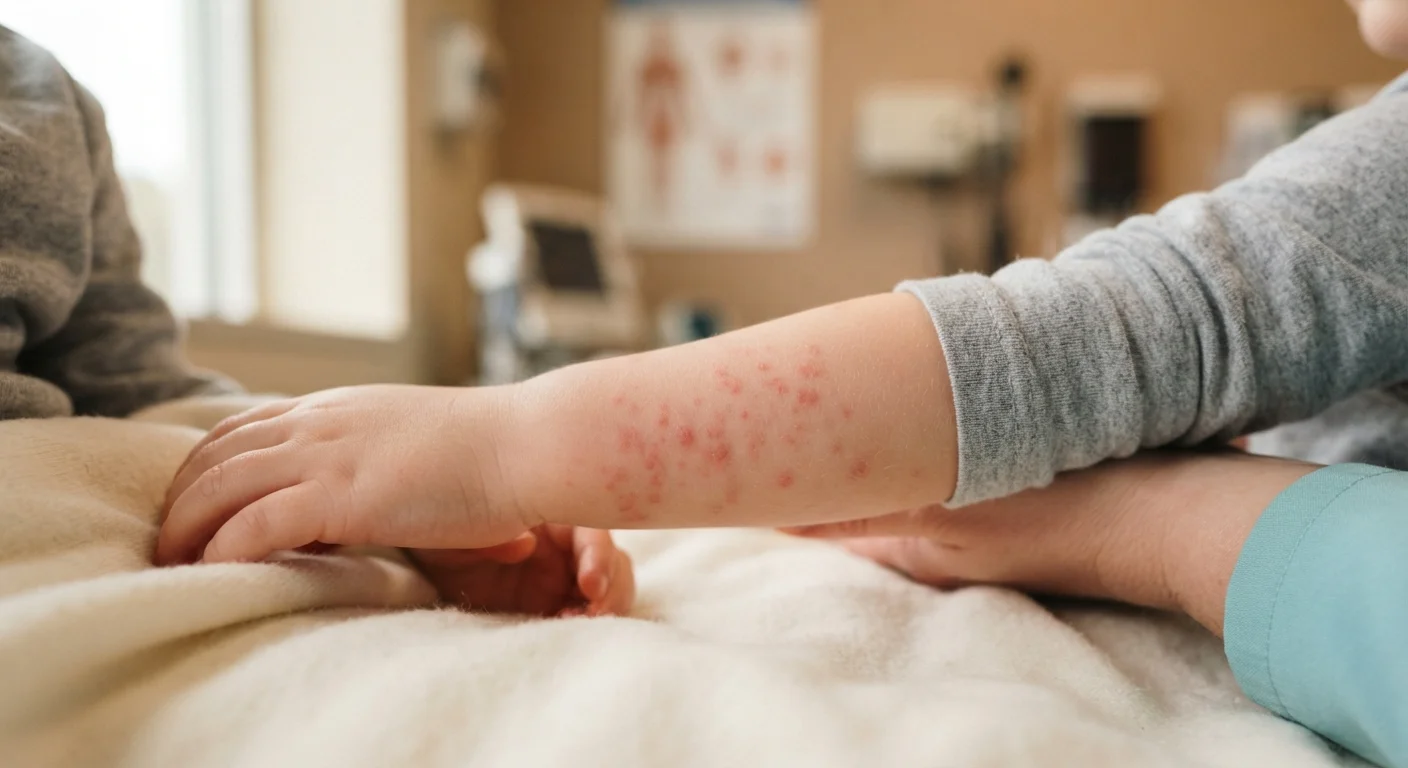
Why Childhood Rashes Are Easily Confused
Rashes are one of the most common reasons parents call a pediatrician. Red spots, bumps, patches, and blisters can all look remarkably similar, yet they stem from very different causes — viral infections, immune responses, heat, or skin-barrier problems. Knowing what distinguishes one from another helps parents stay calm, monitor symptoms accurately, and know when to seek care.
This reference covers the most frequently seen childhood rashes, what they look like, and the key features that set them apart. It is general health information only — always consult your child's healthcare provider for a diagnosis.
| Most common cause of infant rash | Contact irritation or heat (American Academy of Pediatrics) |
| Eczema prevalence in children | ~10–20% globally (World Allergy Organization) |
| Chickenpox vaccine effectiveness | ~90% against any infection (CDC Vaccine Information) |
| HFMD peak age group | Children under 5 (CDC) |
| Roseola typical rash duration | 1–2 days after fever breaks (AAP Red Book) |
A Guide to Common Childhood Rashes
The rashes below are grouped by their primary cause.
Heat Rash (Miliaria)
Tiny pink or red bumps — sometimes with small blisters — that appear where skin is hot and sweaty: neck folds, chest, diaper area. Heat rash clears on its own once the skin cools and dries. No scaling, no spreading.
Eczema (Atopic Dermatitis)
Dry, intensely itchy, thickened patches most often on cheeks, elbows, and behind the knees. Eczema is chronic and tends to flare and improve cyclically. Skin may weep or crust when scratched. It is strongly associated with a personal or family history of allergies or asthma. Parents sometimes confuse persistent eczema with food-triggered reactions — for clarity on that distinction, see how childhood allergies are often misread.
Roseola (HHV-6)
High fever for 3–5 days, followed abruptly by a pink, blotchy rash on the trunk that spreads to limbs. The rash appears after the fever breaks and fades within 1–2 days. Most common in children under 2.
Chickenpox (Varicella)
Starts as itchy red spots that rapidly progress to fluid-filled blisters and then crust over — all three stages visible at once. Spreads from trunk to face and limbs. Now rare in vaccinated populations.
Hand, Foot, and Mouth Disease (HFMD)
Shallow, painful ulcers inside the mouth plus flat red spots or small blisters on palms, soles, and sometimes buttocks. Caused by Coxsackievirus. Most common in children under 5 during warmer months.
Contact Dermatitis
Red, itchy, sometimes blistering rash confined precisely to the area that touched an irritant or allergen — soap, plant sap, metal, or elastic. The sharply defined borders and clear exposure history are key identifiers.
Impetigo
Honey-colored, crusting sores — often around the nose and mouth — caused by bacterial infection (Staphylococcus aureus or Streptococcus pyogenes). Highly contagious by touch. Requires antibiotic treatment prescribed by a clinician.
Atopic dermatitis
A chronic inflammatory skin condition causing dry, itchy patches. It is linked to an overactive immune response and often runs in families alongside asthma and hay fever.
Petechiae
Tiny, flat, pinpoint-sized red or purple spots caused by minor bleeding under the skin. Unlike most rashes, they do not fade when pressed and may signal a serious condition requiring urgent evaluation.
Contact dermatitis
Skin inflammation triggered by direct contact with an irritant or allergen. The rash is typically confined to the area of contact and resolves once exposure is removed.
Miliaria
Commonly called heat rash, miliaria occurs when sweat ducts become blocked, causing small red bumps or blisters. It clears when the skin is kept cool and dry.
Varicella
The virus that causes chickenpox, producing an itchy, blister-forming rash that progresses through distinct stages. A vaccine is routinely recommended in childhood.
When to Seek Medical Attention
Most childhood rashes are benign and self-limiting. Contact your child's healthcare provider promptly if the rash:
- Is accompanied by difficulty breathing, swelling of the face or throat, or a sudden drop in alertness
- Looks like small purple or red pinpoints that do not fade when pressed (petechiae or purpura)
- Spreads rapidly or is associated with high fever, neck stiffness, or significant pain
- Shows signs of infection: increasing warmth, swelling, pus, or streaking
- Has not improved within 7–10 days or keeps recurring
The "Press Test" for Rashes
A simple way to check a rash at home is to press a clear glass firmly against it. If the rash fades under pressure, it is likely caused by dilated blood vessels and is usually less urgent. If the spots remain visible through the glass (non-blanching), contact a healthcare provider promptly — this can indicate bleeding under the skin that warrants immediate attention.
This article is for general informational purposes only and is not a substitute for professional medical advice, diagnosis, or treatment. Always consult your child's healthcare provider about any rash or skin concern.
The content on this site is for informational purposes only and is not a substitute for professional advice. Always consult a qualified professional for guidance specific to your situation.