

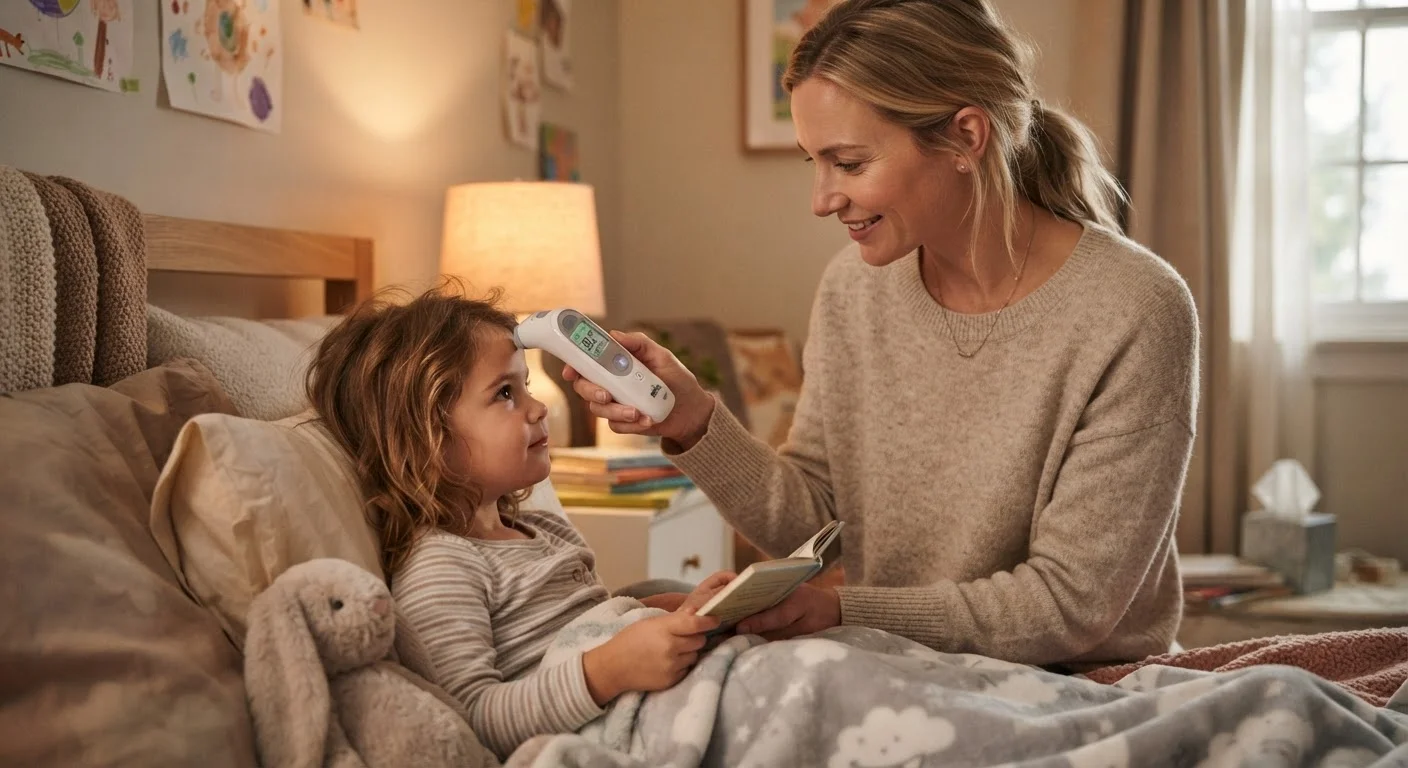
How to Read the Thermometer
Not all thermometers — or readings — are equal. Rectal temperatures are the gold standard in children under 3 years because they most accurately reflect core body temperature. Oral readings are reliable in cooperative children over age 4, and temporal artery (forehead) thermometers are convenient but slightly less precise.
As a general guide to temperature ranges:
- Below 100.4°F (38°C): Normal. No fever present.
- 100.4°F–102.9°F (38°C–39.4°C): Low-to-moderate fever. Often manageable at home in children over 3 months.
- 103°F–104°F (39.4°C–40°C): High fever. Warrants monitoring and likely a call to your pediatrician.
- Above 104°F (40°C): Very high fever. Medical evaluation is strongly recommended.
- Above 107°F (41.7°C): Rare and serious. Seek emergency care immediately.
Remember: the number is a starting point, not the whole story. Just as growth chart percentiles aren't report cards, a temperature reading only gains full meaning in context.
Thermometer Type Affects Accuracy
Axillary (armpit) temperatures typically read 0.5°F to 1°F lower than rectal temperatures, so they may underestimate a true fever. For infants under 3 months, the AAP recommends rectal thermometers as the most reliable method. When reporting a temperature to a nurse or doctor, always mention how and where you measured it.
Age Changes Everything
A child's age is the single most important factor in evaluating fever severity. Newborns and young infants have immature immune systems and can become seriously ill very quickly, sometimes without showing obvious symptoms.
- Under 3 months: Any fever of 100.4°F or higher requires an immediate call to your pediatrician or an emergency visit — do not wait to see if it resolves.
- 3–6 months: Fever above 102°F or any fever lasting more than 24 hours warrants medical attention.
- 6 months–2 years: Watch behavior closely. A child who is playful, drinking fluids, and consolable is generally lower risk than one who is limp, inconsolable, or refusing all fluids.
- Over 2 years: Most fevers can be managed at home initially, but ongoing or very high fevers should still be discussed with a healthcare provider.
Watch the Child, Not Just the Thermometer
Pediatricians often emphasize that a child's behavior — how alert they are, whether they're drinking fluids, and how they respond to comfort — is as informative as the temperature reading. A child with a 104°F fever who is alert and interactive may be lower risk than a lethargic child with a 102°F reading. Always factor both the number and your child's overall condition into your decision to call the doctor.
What Causes Fever — and What It Means
Fever is the body's deliberate response to infection and other immune triggers — raising temperature actually helps slow the replication of many viruses and bacteria. The most common causes in children include viral upper respiratory infections, ear infections, roseola, and influenza.
Importantly, fever alone cannot tell you whether an infection is bacterial or viral, which is why antibiotics are not automatically needed. Overuse of antibiotics contributes to antibiotic resistance, so a diagnosis matters before treatment begins.
~70%
Childhood fevers caused by viruses
The majority of fevers in children are viral in origin and do not require antibiotic treatment, according to pediatric infectious disease literature.
2–5%
Children who experience febrile seizures
Febrile seizures occur in roughly 2–5% of children between ages 6 months and 5 years, per estimates from the American Academy of Pediatrics.
1 in 5
Pediatric ER visits related to fever
Fever is one of the most common reasons children are brought to emergency departments, though most cases do not require emergency-level intervention.
Less commonly, fever can accompany reactions to vaccines (usually mild and short-lived), inflammatory conditions, or rarely, more serious infections. Context — including other symptoms, recent exposures, and vaccination history — helps your pediatrician determine the cause.
When to Call, When to Watch
Managing fever at home is appropriate in many situations, but there are clear signals that warrant professional evaluation. Contact your child's pediatrician if:
- Your child is under 3 months with any fever.
- Fever exceeds 104°F in any child.
- Fever lasts more than 2–3 days without improvement.
- Your child has a febrile seizure (stiffening or uncontrolled shaking).
- Your child shows signs of dehydration: no tears when crying, dry mouth, very dark urine, or no wet diapers for 8+ hours.
- A rash appears alongside the fever.
- Your child seems unusually difficult to wake, confused, or in severe pain.
At home, keep your child comfortable, encourage fluids to prevent dehydration, and dress them lightly. Fever-reducing medications can help with comfort but are not required for every fever. Always dose by weight, not age, and consult a pharmacist or physician if unsure of the correct amount.
This article provides general health information for educational purposes and is not a substitute for professional medical advice. Always consult a qualified healthcare provider with concerns about your child's health.
Frequently Asked Questions
A rectal temperature of 100.4°F (38°C) or higher is considered a fever by most pediatric guidelines. Oral readings run slightly lower, and armpit (axillary) readings are less reliable. Always use the measurement method appropriate for your child's age and note which method was used when calling a doctor.
A temperature of 103°F is high but not automatically dangerous in an otherwise healthy child over 3 months. What matters most is how your child looks and acts — if they are alert, drinking fluids, and responding normally, close monitoring at home may be appropriate. Always contact your pediatrician if you are unsure or if the fever persists.
Seek emergency care if your child is under 3 months old with any fever, has difficulty breathing, a non-blanching rash, stiff neck, won't wake up or is difficult to rouse, or appears very ill. Trust your instincts — if something feels seriously wrong, get medical care promptly.
Fever-reducing medicines like acetaminophen or ibuprofen (for children over 6 months) are primarily used to improve comfort, not to cure illness. A mild fever does not always require medication. Follow dosing instructions precisely based on your child's weight and age, and consult a pharmacist or physician if you are unsure.
Teething may cause a very slight rise in temperature, but research does not support teething as a cause of a true fever (100.4°F or above). If your teething baby develops a fever, it is more likely due to a concurrent infection and deserves evaluation if it meets fever criteria.
The content on this site is for informational purposes only and is not a substitute for professional advice. Always consult a qualified professional for guidance specific to your situation.