

Summary
22 items · 20–40 minutes
Why Every Family Needs a Dedicated First-Aid Kit
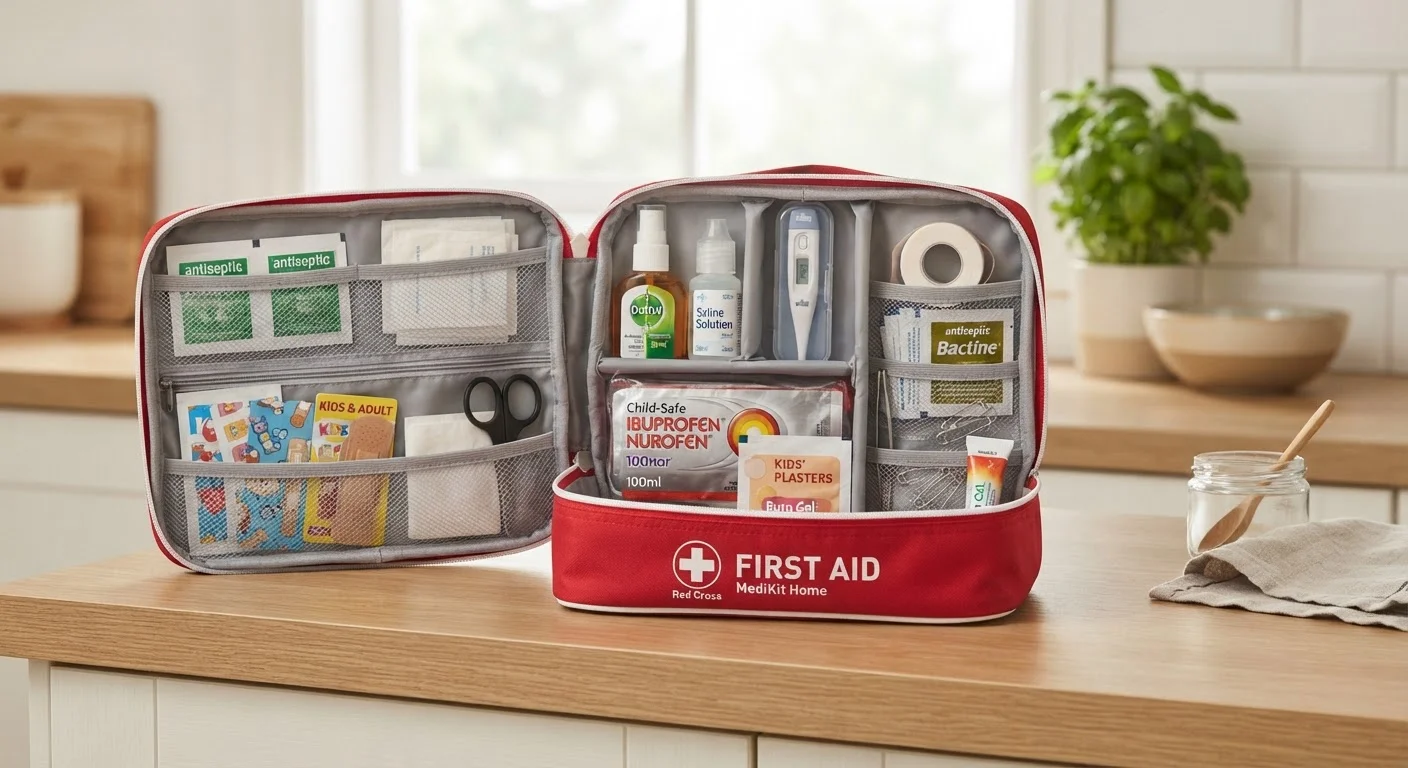
Scraped knees, low-grade fevers, and splinters are part of growing up. When those moments happen, hunting through drawers for a bandage or trying to remember where you put the thermometer adds stress to an already stressful situation. A ready-made, well-organized first-aid kit changes that dynamic — keeping you calm and in control.
The goal isn't to replace professional care. It's to handle common minor injuries and illnesses safely at home, and to stabilize or monitor your child confidently while you decide whether a doctor's visit is needed. For guidance on what to expect at those appointments, see our tips for preparing your child for a doctor's appointment.
Below you'll find a grouped checklist of what to stock, why each item matters, and how to keep your kit current.
Durable storage container with a secure lid
Keeps all supplies organized, protected from moisture, and in one easily portable location.
Permanent marker
Useful for labeling medication doses, writing the date supplies were opened, and marking expiration dates on the inside lid.
Flashlight or clip-on light
Helps you examine wounds, pupils, or the throat in low-light situations — especially useful during power outages.
Magnifying glass
Makes it significantly easier to locate and safely remove small splinters or foreign particles from skin.
The Full Checklist
Work through each group to audit what you already have and fill in the gaps. Items marked must are considered core supplies by most pediatric first-aid guidelines; should items are strongly recommended add-ons; nice to have items are helpful but not urgent.
Wound Care
Temperature and Pain Management
Allergy and Skin Reactions
Digestive and Oral Health
Reference and Emergency Information
Call Emergency Services for Serious Situations
A home first-aid kit is designed for minor injuries and illnesses only. Dial 911 immediately for difficulty breathing, severe allergic reactions, uncontrolled bleeding, loss of consciousness, suspected poisoning, or any injury that seems serious. Do not attempt to manage these situations with home supplies alone.
Check Medication Ages and Expiry Dates
Many over-the-counter medications are not approved for children under a certain age — always read the label and confirm appropriate use with your pediatrician before stocking. Expired medications may be less effective or, in rare cases, unsafe. Remove and properly dispose of any expired items during each six-month review.
Keeping Your Kit Safe and Up to Date
Building the kit is only half the job. A first-aid kit with expired medications or empty bandage rolls is far less useful in a moment of need. Schedule a brief review every six months — many families tie this to daylight saving time changes as a built-in reminder.
Store the kit in a consistent, accessible location that adults can reach quickly but young children cannot access unsupervised. A high shelf in a linen closet or a locked cabinet works well. If your home has multiple floors, consider keeping a smaller secondary kit upstairs.
Finally, make sure every regular caregiver — babysitters, grandparents, older siblings — knows where the kit is and can identify its key contents. A kit no one knows about offers no protection at all.
This article provides general health information for educational purposes only. It is not a substitute for professional medical advice, diagnosis, or treatment. Always consult a qualified healthcare provider for any concerns about your child's health or in any emergency situation.
The content on this site is for informational purposes only and is not a substitute for professional advice. Always consult a qualified professional for guidance specific to your situation.