

Our Verdict
For most generally healthy adults, portion awareness offers a practical, sustainable path to balanced eating without the cognitive burden of numerical tracking. Calorie counting can be valuable in specific clinical or therapeutic contexts, but as an everyday tool, it often creates unnecessary stress. The best approach is the one you can maintain consistently and that supports a positive relationship with food.
| Best for | Recommended |
|---|---|
| Most healthy adults seeking sustainable eating habits | Portion Awareness |
| Individuals with specific clinical nutrition goals under professional supervision | Calorie Counting |
| Those new to mindful eating or transitioning away from restrictive dieting | Portion Awareness |
| Athletes or patients with precise energy needs documented by a dietitian | Calorie Counting |
Two Approaches to Managing What You Eat
When it comes to eating well, two strategies dominate popular conversation: tracking every calorie consumed, or simply developing an intuitive sense of how much food lands on your plate. Both aim at the same goal — supporting a diet that aligns with your body's needs — but they work very differently in practice.
Calorie counting involves logging foods and drinks to stay within a target energy intake, typically using apps, labels, or databases. Portion awareness, by contrast, focuses on recognizing appropriate serving sizes using practical tools like your hand, a divided plate, or standard measuring guides — without tallying numbers. Understanding how these approaches differ can help you choose the one that fits your life. For a complementary perspective, see building a nutritionally balanced plate without overcomplicating your meals.
Calorie Counting vs. Portion Awareness: A Direct Comparison
The table below captures the core differences across criteria that matter in everyday eating.
| Calorie Counting | Portion Awareness | |
|---|---|---|
| Precision | High (numerical targets) | Moderate (visual estimates) |
| Ease of use day-to-day | Low — requires logging every meal | High — uses simple visual cues |
| Tools required | App, food scale, label data | Your hand, a plate, basic knowledge |
| Long-term sustainability | Moderate — high dropout rates reported | Higher — lower cognitive burden |
| Risk of food anxiety | Higher for some individuals | Generally lower |
| Best clinical use | Supervised therapeutic nutrition plans | General healthy eating and weight balance |
Calorie counting's precision is its main strength — and its main limitation. When every gram must be weighed and logged, the method becomes burdensome for routine meals, social eating, or anyone prone to anxiety around food. Studies have also noted that calorie counts on labels and menus carry inherent inaccuracies, sometimes varying by 20% or more from actual values.
Portion awareness sidesteps numerical precision in favor of pattern recognition. Once you understand that a serving of cooked grains fits in a cupped hand, or that a palm-sized piece of protein covers typical needs at one meal, those cues travel with you — no app required.
Start With One Meal at a Time
If portion awareness feels unfamiliar, begin by applying it to just one meal per day — lunch is often a manageable starting point. Notice what a standard serving of each food group looks like on your plate before adjusting the rest of your meals. Small, consistent changes tend to stick far better than overhauling your entire diet at once.
The Evidence Behind Portion-Based Eating
Research in behavioral nutrition consistently shows that people struggle to maintain calorie-logging habits over months or years. Dropout rates from calorie-tracking interventions are high, and for some individuals, the practice is associated with increased food preoccupation or disordered eating patterns — particularly among those with a history of restrictive dieting.
Portion-focused frameworks, including the USDA's MyPlate model and plate-division methods used in diabetes education, have demonstrated real-world effectiveness precisely because they lower the cognitive load of healthy eating. They also naturally encourage food quality: when half your plate is filled with vegetables, the nutritional composition tends to improve regardless of exact calorie tallies.
~20%
Calorie label inaccuracy margin
Research has found that calorie counts on packaged foods and restaurant menus can differ from actual values by up to 20% or more.
Half
Plate devoted to vegetables (MyPlate)
The USDA MyPlate framework recommends filling half of every meal plate with fruits and vegetables as a practical portion guide.
That said, portion awareness isn't a perfect system. It requires some baseline knowledge of what a standard serving looks like, and it can be less precise for people with specific therapeutic nutrition goals. If you're managing a condition like diabetes or recovering from an eating disorder, work with a registered dietitian rather than relying on either method independently. It's also worth reviewing habits that quietly undermine an otherwise healthy diet to ensure portion awareness isn't masking other nutritional gaps.
Practical Ways to Build Portion Awareness
Developing portion awareness doesn't require specialized tools. A few consistent habits make a meaningful difference:
- Use your hand as a guide. A palm-sized portion covers typical protein needs; a cupped hand approximates one serving of grains or starchy vegetables; a thumb represents a serving of fats like nut butter or oil.
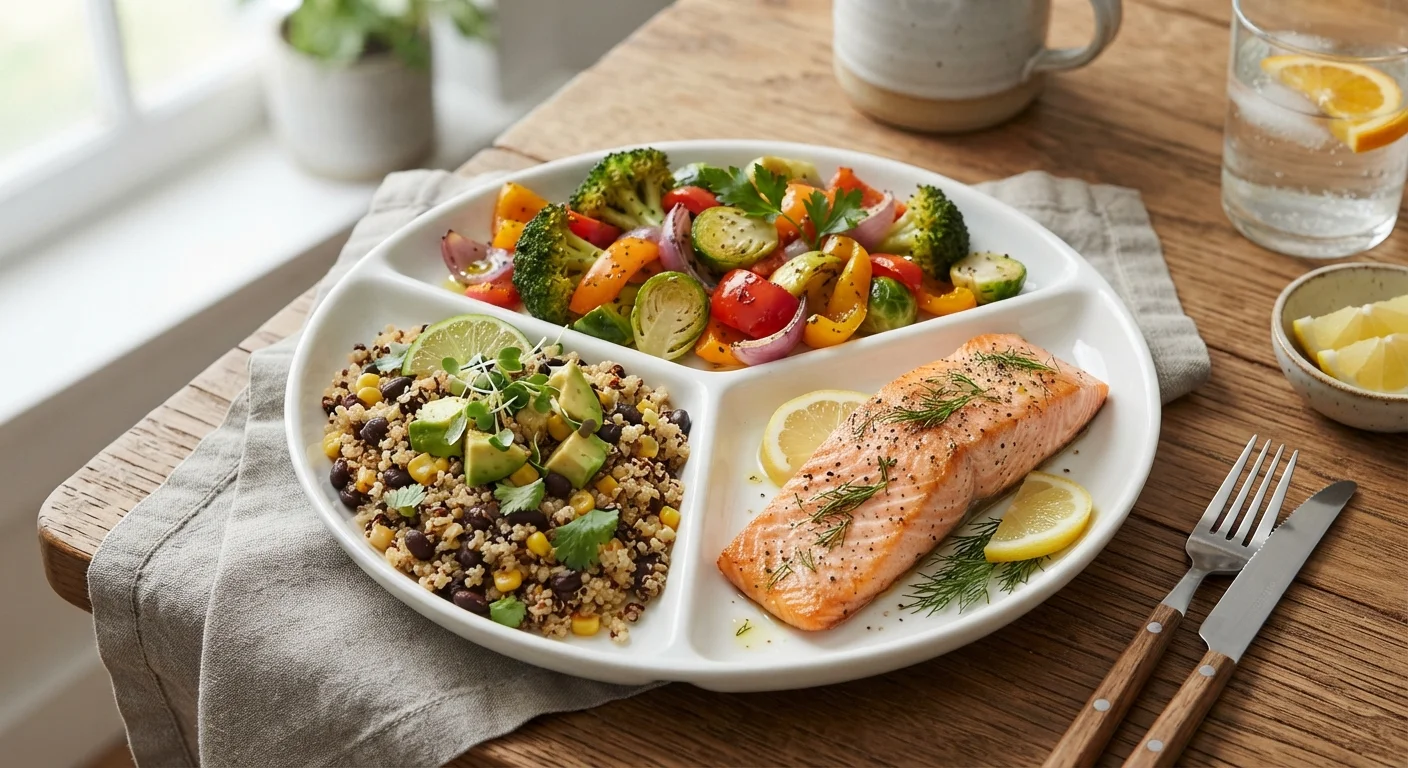
- Divide your plate visually. Aim for roughly half non-starchy vegetables, one quarter protein, and one quarter whole grains or starchy foods at most meals.
- Slow down between bites. Hunger and fullness signals take time to reach the brain. Eating more slowly allows those cues to inform how much you actually need.
- Check labels for context, not arithmetic. Nutrition labels can anchor your sense of what a serving is without requiring you to add up a daily total. Learn how to read a nutrition label effectively for day-to-day decisions.
Over time, these habits become automatic. You can also use a weekly nutrition self-audit to spot patterns and gaps across your meals as a whole rather than meal by meal.
This article is for general informational purposes only and does not constitute medical or dietary advice. Always consult a qualified healthcare provider or registered dietitian for guidance tailored to your individual health needs.
The content on this site is for informational purposes only and is not a substitute for professional advice. Always consult a qualified professional for guidance specific to your situation.