

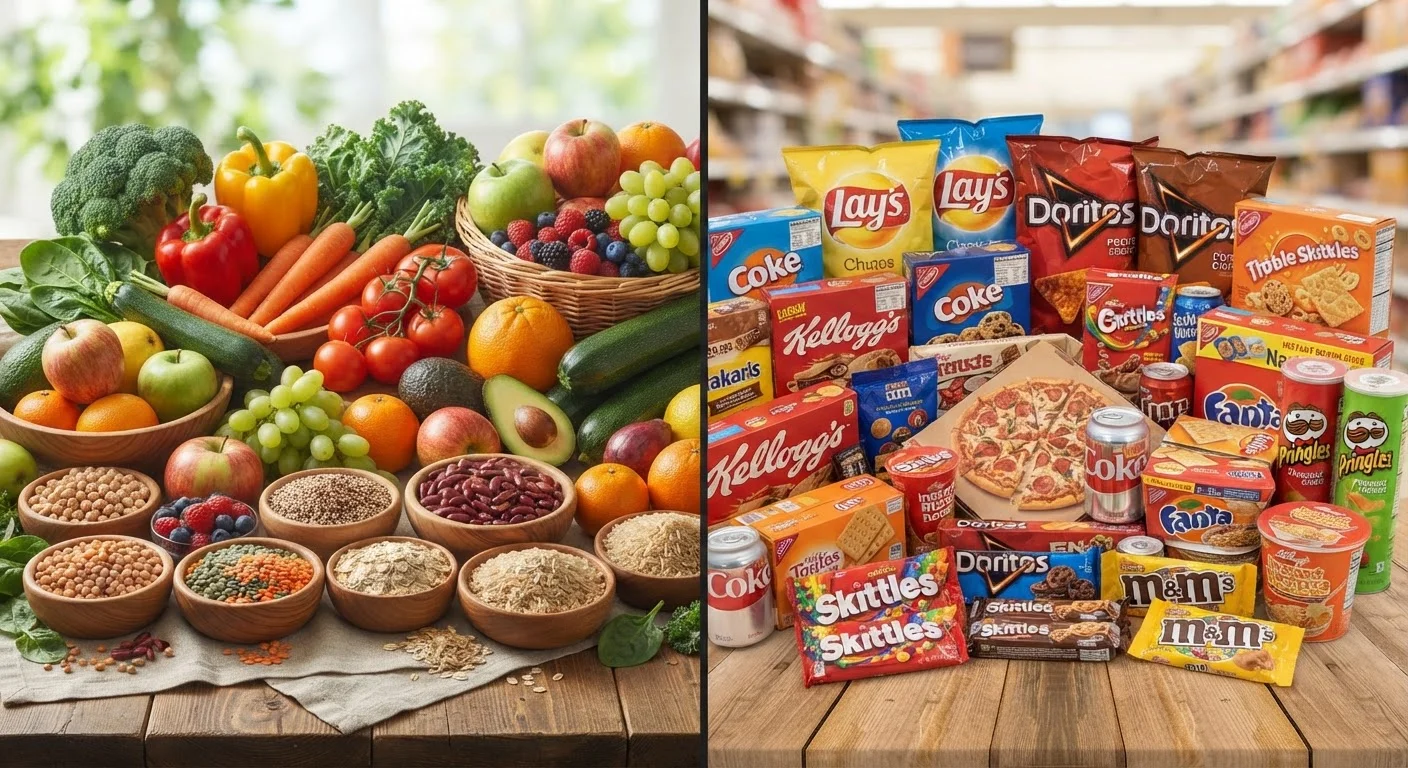
Option A
Whole Foods
Minimally processed, nutrient-dense foods close to their natural state.
Best for: People seeking to maximize micronutrient intake, support digestive health, and reduce chronic disease risk through diet.
Option B
Ultra-Processed Foods
Industrially formulated products with added sugars, refined fats, and synthetic additives.
Best for: Understanding what to limit — not a recommended dietary pattern, but a category most people encounter daily.
How Are These Two Categories Defined?
The distinction between whole foods and ultra-processed foods is not simply about freshness or packaging. Researchers use the NOVA classification system — developed by nutrition scientists at the University of São Paulo — to categorize foods based on the extent and purpose of their industrial processing.
Whole foods include unprocessed or minimally processed items: fresh vegetables and fruits, legumes, whole grains, eggs, plain meats, nuts, and seeds. Minimal processing — washing, cutting, freezing, or fermenting — does not change their fundamental nutritional character.
Ultra-processed foods (UPFs) are industrial formulations containing ingredients rarely found in home kitchens: hydrolyzed proteins, interesterified fats, high-fructose corn syrup, artificial flavors, emulsifiers, and color stabilizers. Common examples include packaged snacks, flavored cereals, reconstituted meat products, and most soft drinks. The defining feature is that these products are engineered for palatability, shelf life, and profit margin — not nutritional quality.
Not All Processing Is Equal
The NOVA system distinguishes four groups, from unprocessed foods to ultra-processed formulations. Minimally processed foods — such as plain frozen vegetables, pasteurized milk, or canned legumes without additives — retain strong nutritional value and should not be conflated with ultra-processed products. The concern is specifically with Group 4 items engineered with industrial ingredients absent from typical home cooking.
It is worth noting that not all processing is harmful. Minimally processed foods like pasteurized milk, canned tomatoes without additives, or frozen plain vegetables remain nutritionally valuable. The concern centers specifically on ultra-processed products in NOVA Group 4.
What the Research Actually Shows
The body of evidence linking ultra-processed food consumption to adverse health outcomes has grown substantially over the past decade. Large prospective cohort studies — including analyses from the NutriNet-Santé study in France and the UK Biobank — have found associations between high UPF intake and elevated risks of cardiovascular disease, type 2 diabetes, colorectal cancer, depression, and all-cause mortality.
10%
Higher all-cause mortality risk
A 2019 JAMA Internal Medicine study found each 10-percentage-point increase in UPF dietary share was associated with a 14% higher all-cause mortality risk.
500 kcal/day
Extra calories consumed on ultra-processed diet
Hall et al. (2019, Cell Metabolism) found participants ate approximately 500 more calories per day on an ultra-processed diet versus a minimally processed one.
57%
Of average US adult caloric intake from UPFs
Research published in BMJ Open estimated that ultra-processed foods account for more than half of total daily calorie intake among US adults.
Mechanistically, researchers propose several pathways: UPFs are typically low in fiber, displace more nutrient-dense foods in the diet, promote overconsumption through hyperpalatable formulations, and may disrupt gut microbiome composition. A landmark randomized controlled trial published in Cell Metabolism (Hall et al., 2019) found that participants assigned to an ultra-processed diet consumed significantly more calories and gained more weight over two weeks compared to those eating a minimally processed diet matched for nutrients — suggesting that food form and matrix matter beyond macronutrient ratios.
Whole food diets, by contrast, are consistently associated with healthier weight trajectories, lower inflammatory markers, and better cardiometabolic profiles. Diets built around whole plant foods in particular — explored in greater depth in our overview of plant-based eating trade-offs — show strong associations with reduced chronic disease burden.
| Criterion | Whole Foods | Ultra-Processed Foods |
|---|---|---|
| Processing level | None to minimal | Extensive industrial formulation |
| Fiber content | Naturally high (in plants) | Typically low or removed |
| Micronutrient density | High; vitamins and minerals intact | Often low; some are fortified |
| Added sugars | None inherently | Frequently high |
| Additives and preservatives | Absent or minimal | Emulsifiers, flavors, colorings common |
| Satiety effect | High due to fiber and food matrix | Lower; engineered to encourage overconsumption |
| Chronic disease association | Inversely associated with disease risk | Positively associated with several chronic diseases |
| Shelf life | Variable; shorter for fresh items | Extended via preservatives and packaging |
Practical Steps for Shifting Your Dietary Pattern
Overhauling a diet overnight is rarely sustainable. The research supports incremental substitution as an effective strategy. Consider these evidence-aligned shifts:
- Swap refined grain snacks for whole grain alternatives — oats, popcorn (plain), or whole grain crackers with fewer than five recognizable ingredients.
- Replace sugary beverages with water, plain sparkling water, or unsweetened teas to reduce added sugar without major lifestyle disruption.
- Use whole food bases for meals — dried or canned legumes, frozen vegetables, and whole grains are affordable, convenient, and nutritionally intact.
- Read ingredient lists rather than nutrition facts panels — a long list of unfamiliar additives is a reliable signal of ultra-processing regardless of calorie count.
Food access and affordability are real barriers for many households. Frozen and canned whole foods are comparable in nutritional value to fresh options and are generally more economical than branded ultra-processed products on a per-nutrient basis.
This article provides general health information for educational purposes only and is not a substitute for personalized medical or dietary advice. Consult a registered dietitian or qualified healthcare provider before making significant changes to your diet, especially if you have a chronic health condition.
The content on this site is for informational purposes only and is not a substitute for professional advice. Always consult a qualified professional for guidance specific to your situation.