

Why Water Belongs in the Nutrition Conversation
Nutrition discussions tend to focus on macronutrients — protein, carbohydrates, and fats — and increasingly on micronutrients like vitamins and minerals. Water, however, is rarely framed as a nutrient in its own right. That framing matters, because hydration is not a separate health habit sitting alongside nutrition; it is embedded within it.
Every nutrient you consume must be dissolved, transported, or processed in an aqueous environment. Vitamins, minerals, glucose, and amino acids travel through the bloodstream — a water-based fluid. Digestive enzymes work within the water-rich environment of the gastrointestinal tract. Without sufficient fluid, even an otherwise excellent diet cannot function at full capacity.
A Note on Individual Fluid Needs
Population-level fluid recommendations are averages based on sedentary adults in temperate climates. Physically active individuals, pregnant or breastfeeding women, people in hot climates, and those with certain medical conditions have substantially higher fluid needs. Children's hydration needs also differ from adults. Individuals in these groups should seek personalized guidance from a qualified healthcare provider rather than applying general figures.
This article provides general nutrition education and is not a substitute for personalized medical advice. If you have specific health conditions affecting hydration — such as kidney disease, heart failure, or diabetes — consult your healthcare provider for individualized guidance.
How Hydration Interacts With Digestion and Nutrient Absorption
Water's role in digestion begins in the mouth, where saliva — mostly water — starts breaking down food. In the stomach, gastric juices depend on adequate fluid volume to dilute and begin digesting proteins. Further along, the small intestine absorbs both water and water-soluble nutrients simultaneously, meaning dehydration can impair how efficiently your body captures vitamins like B12, folate, and vitamin C from food.
The relationship between hydration and dietary fibre is especially important. Soluble fibre absorbs water to form a gel-like substance that slows digestion and supports healthy blood sugar and cholesterol levels. Without adequate water intake, this process is compromised — and insoluble fibre, which adds bulk to stool, can contribute to constipation rather than regularity. If you're working to increase fibre intake — a goal worth pursuing, as explored in our article on dietary fibre and why most adults need more of it — increasing fluid intake in parallel is essential.
~60%
Of adult body weight is water
The U.S. National Academies of Sciences, Engineering, and Medicine cites water as the body's most abundant compound, essential to all physiological processes.
~20%
Of daily fluid intake comes from food
Research published in nutrition literature consistently estimates that food contributes roughly one-fifth of total daily water intake in populations eating varied diets.
1–2%
Body water loss before performance declines
Studies in exercise physiology show that fluid losses as small as 1–2% of body weight can measurably impair physical and cognitive performance.
Food as a Source of Fluid
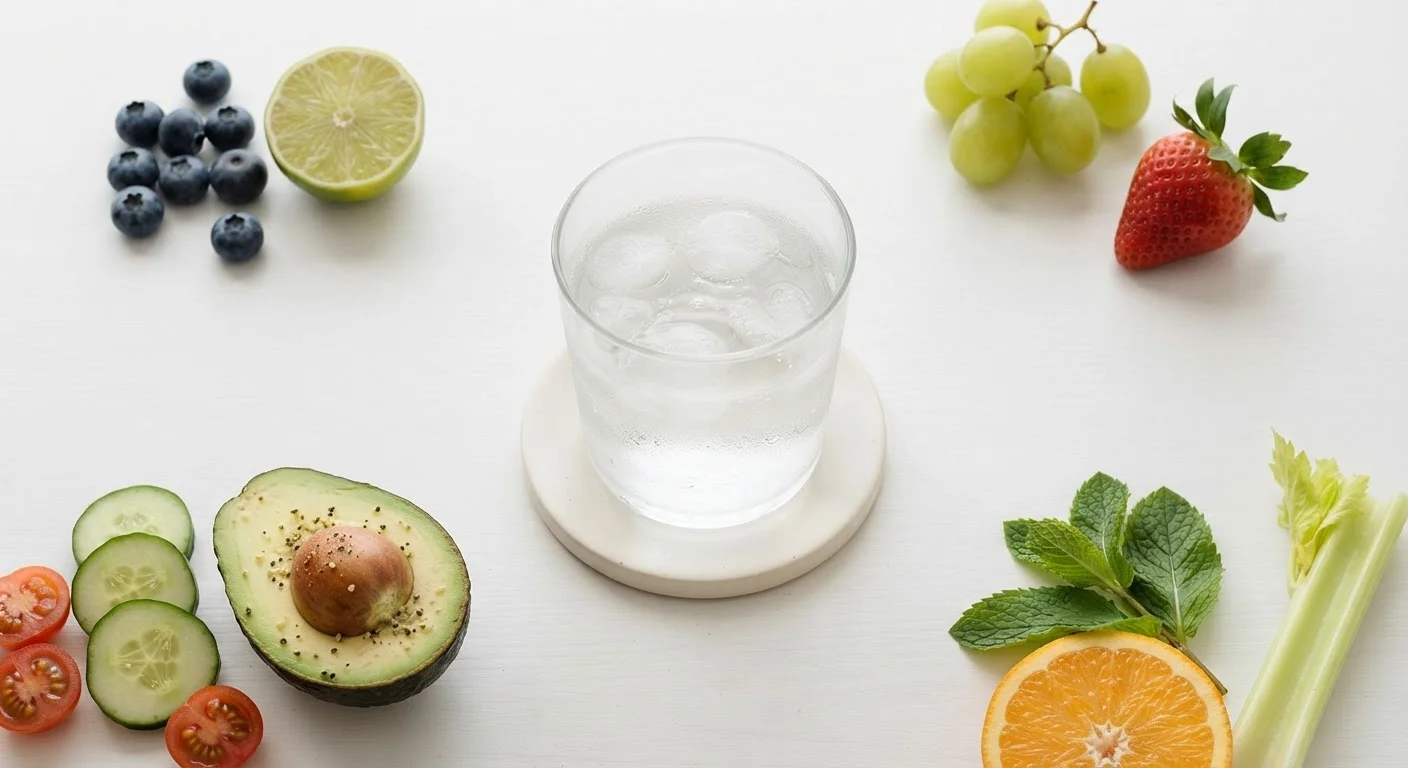
Approximately 20% of total daily water intake comes from food rather than beverages. Fruits and vegetables are the most concentrated food sources — cucumbers and lettuce are over 95% water by weight, while watermelon, strawberries, and oranges each exceed 90%. Soups, stews, yogurt, and cooked grains also contribute meaningfully to fluid intake.
This overlap between food and hydration reinforces why thinking about hydration separately from eating habits can create blind spots. A weekly nutrition self-audit that tracks food variety is also, implicitly, a partial hydration audit — a diet rich in whole fruits and vegetables naturally supports fluid balance.
Build Hydration Into Meal Habits
Pairing a glass of water with each meal and snack is one of the simplest ways to distribute fluid intake consistently across the day. It also supports digestion directly — fluid consumed alongside food helps gastric juices work efficiently. You don't need a rigid schedule; anchoring hydration to existing eating habits makes it easier to maintain.
Practical Habits for Consistent Daily Hydration
Hydration is most effective when it is consistent throughout the day rather than concentrated in large amounts at once. The kidneys can process roughly one liter of fluid per hour under normal conditions — consuming far more than this rapidly can, in rare cases, dilute blood sodium to dangerous levels. Steady, distributed intake is both safer and more physiologically useful.
Urine color remains one of the most accessible self-monitoring tools: pale straw-yellow generally indicates adequate hydration, while dark amber suggests a need for more fluid. Needs increase during physical activity, hot weather, illness involving fever or vomiting, and during pregnancy or breastfeeding — populations that should consult a healthcare professional rather than rely on general population estimates.
Plain water is the most effective primary hydration source. Beverages with added sugars contribute calories without nutritional benefit proportional to their fluid value, and should not be the main hydration strategy for most healthy adults.
This article is for general informational and educational purposes only and does not constitute medical advice. Always consult a qualified healthcare professional for guidance specific to your health needs.
Frequently Asked Questions
General guidance from health authorities suggests roughly 3.7 liters (125 oz) total water per day for men and 2.7 liters (91 oz) for women, including water from all foods and beverages. These are average estimates, not personal prescriptions. Your actual needs depend on body size, physical activity, climate, and health status — consult a healthcare provider if you have specific concerns.
Yes. Despite the mild diuretic effect of caffeine, research consistently shows that caffeinated beverages like coffee and tea still contribute net fluid to the body when consumed in moderate amounts. They should not replace plain water entirely, but they do count toward overall hydration.
Food typically contributes around 20% of total daily fluid intake. High-water foods like cucumbers, watermelon, strawberries, and broth-based soups are meaningful contributors. However, most people still need additional beverages — primarily water — to meet total daily fluid needs.
Common early signs include darker-than-usual urine, decreased urine frequency, fatigue, difficulty concentrating, and mild headaches. Thirst often appears after fluid losses have already begun, so using urine color as a daily check — pale yellow indicates good hydration — is a practical monitoring tool.
Yes. Carbonated water hydrates just as effectively as still water. The primary difference is texture and taste preference. Plain sparkling water without added sugars or sodium is a perfectly valid hydration choice for most healthy adults.
The content on this site is for informational purposes only and is not a substitute for professional advice. Always consult a qualified professional for guidance specific to your situation.