

Summary
18 items · 20–40 minutes
Why a Weekly Structure Makes All the Difference
Consistency is the single greatest predictor of long-term fitness gains — not intensity, not duration, not the type of exercise you choose. Yet most people undermine their consistency not through lack of effort, but through lack of structure. When movement isn't planned, it's perpetually optional.
Public health guidelines from the U.S. Department of Health and Human Services recommend that adults get at least 150 minutes of moderate-intensity aerobic activity or 75 minutes of vigorous-intensity activity per week, plus muscle-strengthening activities on two or more days. That may sound like a lot, but spread across seven days, it becomes very manageable — especially when you plan proactively.
This checklist is designed to help you build a weekly movement plan that fits your real schedule, reflects evidence-based principles, and is flexible enough to survive the unpredictability of everyday life. If you're newer to consistent exercise, you may also want to read our guide to building sustainable activity habits before diving in.
Weekly planner or calendar app
Block specific time slots for each planned movement session so they appear as fixed commitments.
Activity tracker or pedometer
Monitor daily step counts and active minutes to verify you're meeting your weekly targets.
Resistance bands or bodyweight workout guide
Enable strength training sessions at home without equipment barriers.
Journal or simple tally sheet
Record completed sessions week by week to visualize your consistency streak.
Your Weekly Movement Planning Checklist
Work through each group below when setting up or auditing your weekly schedule. Items marked must are foundational; should items meaningfully improve sustainability; nice-to-have items help you optimize over time.
Assess Your Starting Point
Set Your Weekly Activity Targets
Design Your Weekly Schedule
Review and Adjust Weekly
Avoid Overloading Your First Week
A common mistake is scheduling too much activity upfront after weeks or months of inactivity. Starting with a volume your body isn't adapted to increases injury risk and makes it harder to sustain the routine. Begin conservatively — below what you think you can handle — and build gradually. Sustainability always outperforms ambition in the short term.
For guidance on balancing cardio and strength work in the same week, see our article on structuring a weekly training plan. And since physical activity is one of the most effective tools for managing stress, consider pairing your movement plan with the strategies in our daily stress-management routine guide.
Putting the Plan Into Practice
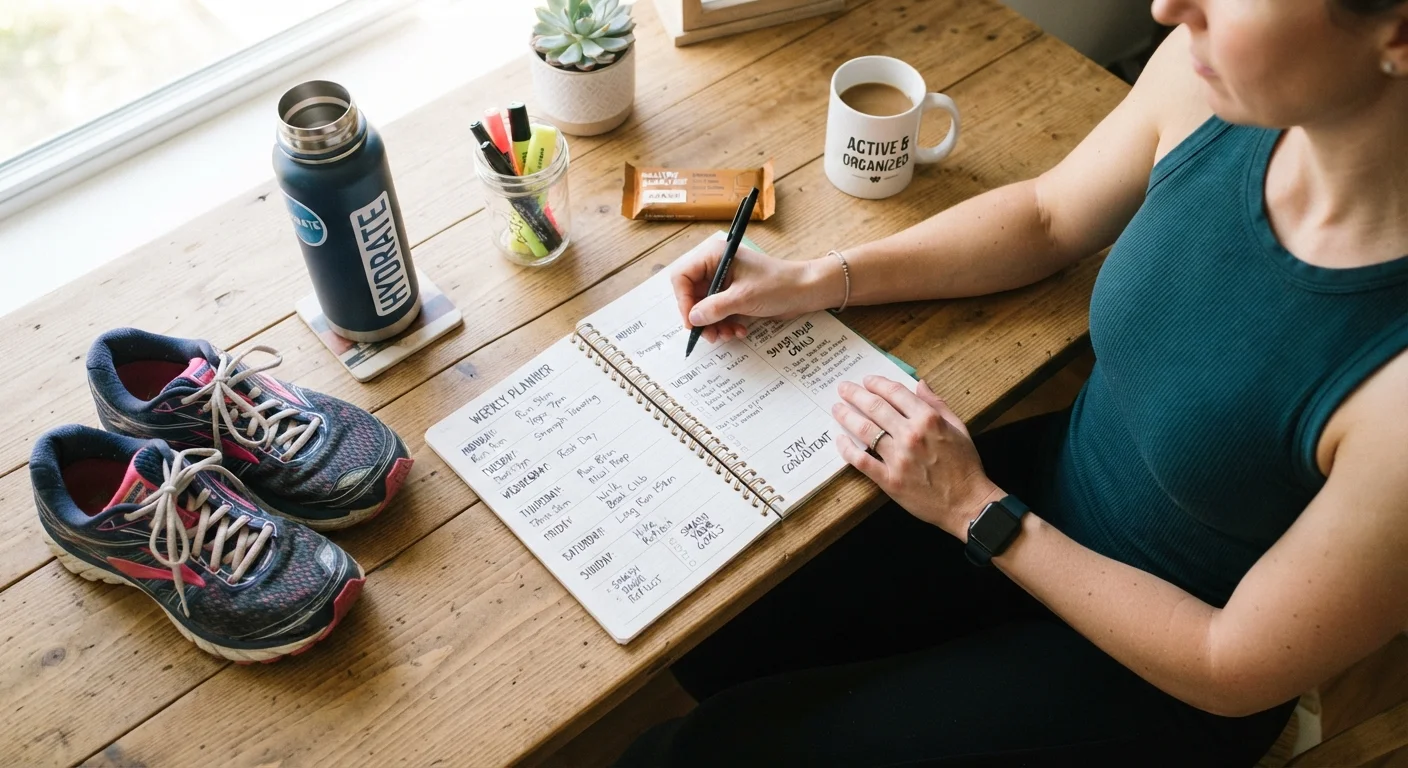
Once your checklist is complete, write your plan somewhere visible — a phone calendar, a whiteboard, or a paper planner. Research consistently shows that implementation intentions (specifying when, where, and how you will act) significantly improve follow-through compared to vague goals like "exercise more."
Review your plan weekly, not just when things go wrong. A 10-minute Sunday check-in to confirm the coming week's sessions is one of the highest-leverage habits you can build. Adjust for travel, illness, or life changes without guilt — the goal is overall consistency over weeks and months, not perfection within any single week.
When to Pause and Seek Medical Guidance
If you experience chest pain, dizziness, shortness of breath disproportionate to your effort level, or persistent joint pain during exercise, stop the activity and consult a healthcare provider promptly. These symptoms can sometimes indicate conditions that require evaluation before resuming physical training. Do not attempt to push through pain signals — they exist for important reasons.
Movement also supports broader wellbeing. For older adults managing mobility changes, our Aging & Mobility hub offers tailored guidance. And if you're thinking about nutrition alongside your new routine, the weekly nutrition self-audit is a natural companion resource.
This article is for general informational and educational purposes only and does not constitute medical advice. Consult a qualified healthcare professional before beginning a new exercise program, especially if you have an existing health condition, injury, or are pregnant.
The content on this site is for informational purposes only and is not a substitute for professional advice. Always consult a qualified professional for guidance specific to your situation.