

Our Verdict
Pulmonary rehabilitation is a well-supported, non-pharmacological intervention with a strong evidence base for improving functional capacity and quality of life in people with chronic respiratory disease. It demands a meaningful commitment of time and effort, and access can vary by location and insurance coverage, but for those who complete it, the benefits are often substantial and lasting.
Best suited for individuals with moderate-to-severe chronic lung disease — particularly COPD — who are motivated to actively participate in managing their condition and have received a physician referral.
What Is Pulmonary Rehabilitation?
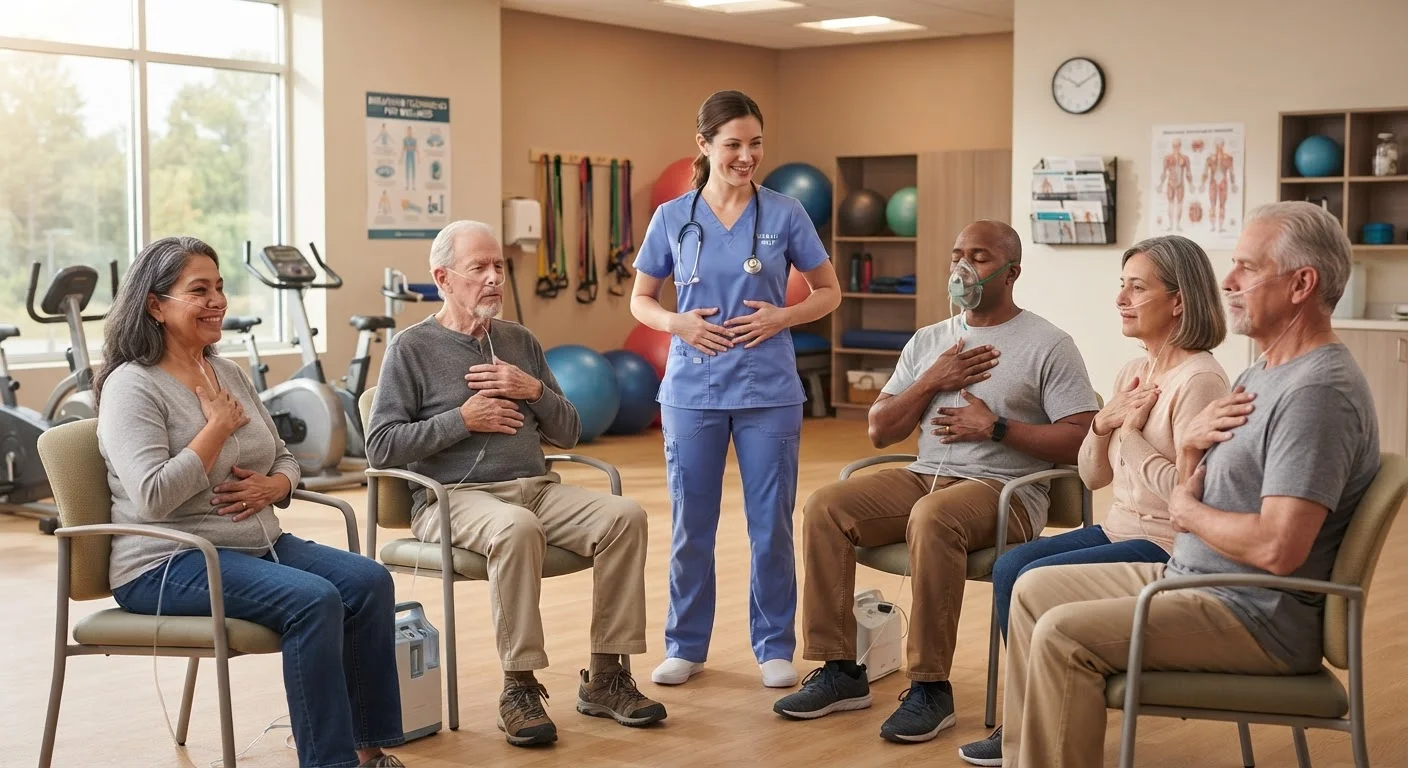
Pulmonary rehabilitation (PR) is a comprehensive, evidence-based program designed to reduce symptoms, improve physical function, and enhance the quality of life for people living with chronic respiratory conditions. It is not a standalone treatment but rather a structured complement to medical therapy — including medications and oxygen therapy — that addresses the whole person, not just lung function alone.
Programs are typically delivered in outpatient clinical settings over 6 to 12 weeks, with sessions running two to three times per week. Each session usually includes supervised exercise, disease education, nutritional guidance, and psychosocial support. The program is led by a multidisciplinary team that may include respiratory therapists, physiotherapists, nurses, dietitians, and psychologists.
If you are newly navigating a lung diagnosis, the Respiratory Conditions Explained starter guide provides a useful foundation before exploring rehabilitation options.
Who Is Pulmonary Rehabilitation Designed For?
The primary candidates for pulmonary rehabilitation are individuals with chronic obstructive pulmonary disease (COPD) — particularly those experiencing breathlessness that limits daily activity. However, clinical guidelines from organizations such as the American Thoracic Society recognize benefits for a broader range of conditions, including:
- Interstitial lung disease (including pulmonary fibrosis)
- Bronchiectasis
- Asthma (in select cases)
- Pre- and post-lung transplant or lung surgery
- Pulmonary hypertension
Candidates are typically referred by a pulmonologist or primary care physician after the condition is stable and optimally managed medically. For a deeper look at how COPD specifically progresses and is managed, see the COPD: From Diagnosis to Daily Life overview.
Special Considerations for Older Adults
Older adults with chronic lung conditions may experience co-existing conditions such as heart disease, osteoporosis, or frailty that affect how they respond to exercise-based rehabilitation. Programs can often be adapted for these needs, but require careful clinical assessment beforehand. Speak with your physician about whether modifications are appropriate, and consult the Managing Respiratory Conditions in Older Adults resource for further context.
Older adults with respiratory disease may face additional considerations — see Managing Respiratory Conditions in Older Adults for age-specific guidance.
Advantages and Disadvantages of Pulmonary Rehabilitation
Like any structured health intervention, pulmonary rehabilitation carries meaningful benefits alongside practical limitations. Understanding both sides helps patients and caregivers make informed decisions in partnership with their healthcare team.
Improves exercise tolerance and physical capacity
Supervised exercise training — a core component of PR — has been shown in clinical trials to significantly increase the distance patients can walk and their overall endurance, even when lung function measurements remain unchanged.
Reduces breathlessness during daily activities
Breathing techniques and strength training taught in PR help patients use their available lung capacity more efficiently, leading to measurable reductions in perceived breathlessness during routine tasks.
Lowers risk of hospital readmission
Research — including Cochrane Reviews — indicates that PR initiated after an acute exacerbation of COPD is associated with significantly reduced rates of rehospitalization within 12 months.
Addresses psychological health alongside physical symptoms
Anxiety and depression are common in people with chronic lung disease. PR programs routinely incorporate psychosocial support, which can improve emotional well-being and self-management confidence.
Provides peer support and structured accountability
Group-based sessions connect patients with others facing similar challenges, reducing isolation and providing a motivating social environment that home-based exercise alone cannot replicate.
On the other side, there are genuine barriers and limitations worth considering before enrollment.
Requires a significant time commitment over weeks
A standard program spans 6 to 12 weeks with multiple weekly sessions, which can be difficult to sustain for patients managing work, caregiving, or transportation challenges.
Geographic access can be limited
Accredited pulmonary rehabilitation centers are not uniformly available, particularly in rural areas, meaning some patients face long travel times or may have no local program at all.
Benefits may diminish without ongoing maintenance
Gains in exercise capacity and quality of life tend to decline within 12 months if patients do not continue physical activity and self-management strategies after program completion.
Insurance coverage and out-of-pocket costs vary
While Medicare and many insurers cover PR for qualifying diagnoses, coverage criteria differ and cost-sharing obligations (copays, deductibles) can be a barrier for some patients.
~50%
Reduction in hospitalization risk post-PR
Cochrane Reviews have reported that pulmonary rehabilitation following acute COPD exacerbations is associated with substantially reduced hospital readmission rates at 12 months.
6–12 weeks
Typical program duration
Most accredited pulmonary rehabilitation programs run for 6 to 12 weeks, with sessions two to three times per week, per guidelines from the American Thoracic Society and European Respiratory Society.
Clinically significant
Improvement in 6-minute walk distance
Multiple randomized controlled trials have documented clinically meaningful gains in the six-minute walk test among COPD patients who complete a full PR program.
What the Evidence Says
Pulmonary rehabilitation has one of the strongest evidence bases of any intervention in respiratory medicine. Multiple systematic reviews and clinical guidelines consistently support its role in reducing breathlessness, improving exercise capacity, and lowering rates of hospital admission for people with moderate-to-severe COPD.
A key metric used to assess PR outcomes is the six-minute walk test (6MWT), which measures how far a person can walk in six minutes. Studies have shown clinically meaningful improvements in this measure following program completion. Improvements in health-related quality of life — measured by tools such as the St. George's Respiratory Questionnaire — are also consistently documented.
Importantly, pulmonary rehabilitation differs from cardiac rehabilitation in scope and target population, though both share a supervised, multidisciplinary structure. For comparison, see our overview of cardiac rehabilitation.
Before attending your first session, you may benefit from preparing for a respiratory specialist appointment to ensure your care team has the full clinical picture.
This article is for general informational purposes only and does not constitute medical advice. Always consult a qualified healthcare professional regarding your individual health needs, symptoms, or treatment options.
The content on this site is for informational purposes only and is not a substitute for professional advice. Always consult a qualified professional for guidance specific to your situation.